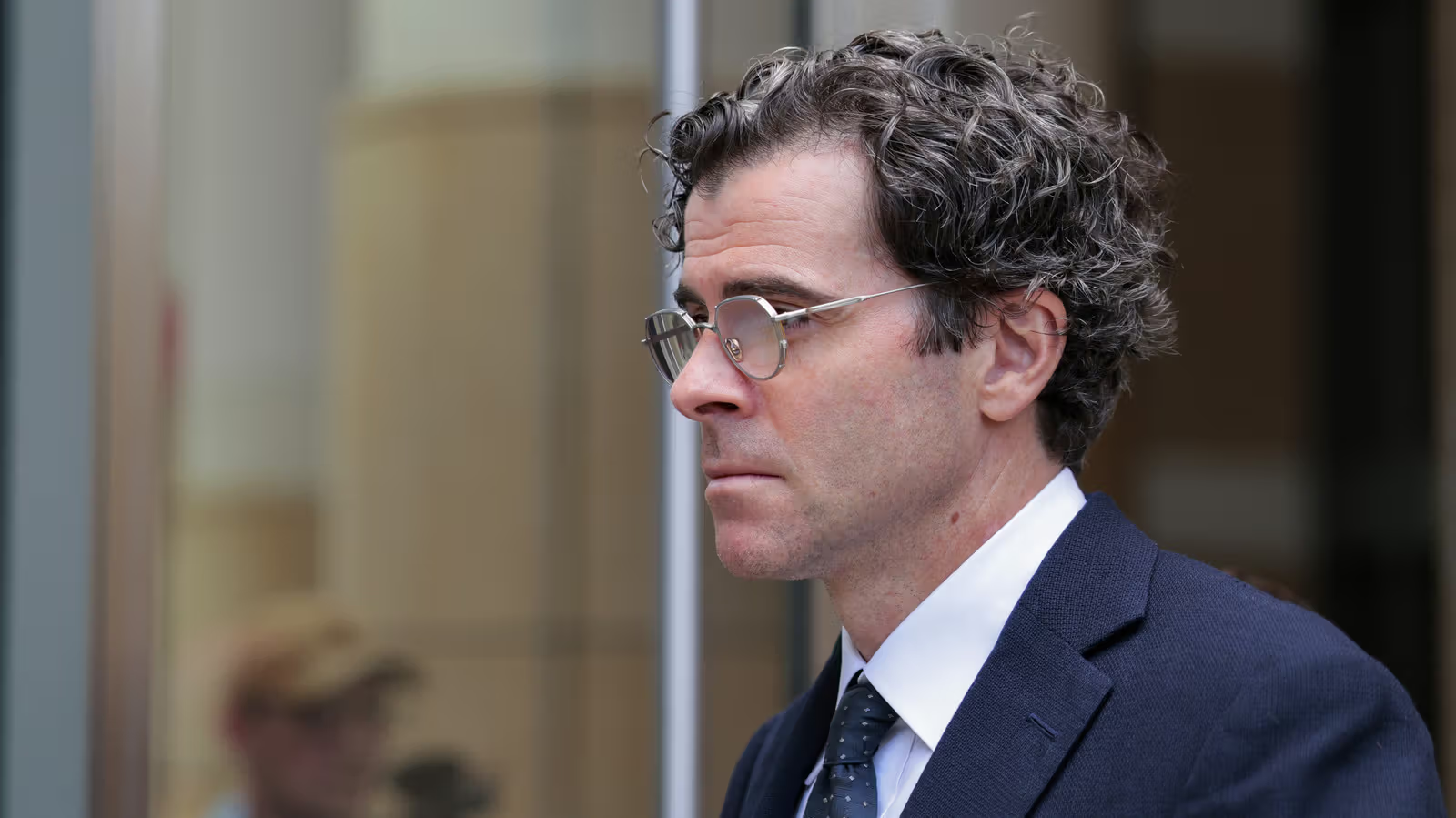
Asked in court what the peak adoption rate for the "Take a Break" feature had ever reached, Instagram's Director of Product Design Francesco Fogu answered: he didn't know. "I don't build dashboards, I don't look at data, that's not my job—I trust my team," he said. Presiding Judge Yvonne Gonzalez Rogers pressed further: "You're the person responsible for this feature, and you don't know what its highest number ever was?" This exchange took place Tuesday during the social media addiction lawsuit brought by dozens of state attorneys general against Meta.
The lawsuit alleges that Meta knowingly designed its apps to hook teen users despite being aware of the harm caused. Instagram CEO Adam Mosseri took the stand Tuesday, becoming the first executive to testify in the case. When shown a July 2023 presentation, he admitted, "This is the first I'm hearing of this"—messages presented in court showed that a Meta lawyer had asked the employee preparing the presentation to "limit" Mosseri's "access to this information."
The Deleted Numbers: Teen Exposure Rates to Self-Harm and Eating Disorder Content
The presentation, prepared by Instagram designers and others, originally included several statistics: teen users were exposed to content related to suicide, self-harm, and eating disorders at 2.5 times the rate of adult users; and even content the system flagged as "not recommended" for teens was still viewed by teens at a rate 1.5 times higher than by adults. According to messages shown in court, company lawyers subsequently asked employees to remove these statistics from the presentation.
In his testimony, Mosseri stated he was never involved in any discussion about "restricting his own access to information." "I'm not a legal expert, and I don't know why certain information was removed before the presentation reached me, but I was not encouraging the team to hide anything," he said. "My understanding is that if a matter involves legal issues, lawyers would review the content." He described the lawyers' role as ensuring documents were accurate and logically sound, "especially when it comes to whether our practices are legal." Fogu, who testified before Mosseri, said he was "surprised" when asked to "hide the data from leadership," noting it was the first time he'd encountered such a request; he was ultimately permitted to convey the numbers to leadership "verbally," and the relevant details remained in the report linked to the presentation. During cross-examination, he also mentioned that the presentation later became the "catalyst" for Instagram's rollout of teen account features.
0.165% of Teens Hit the Pause Button
Another focal point repeatedly raised throughout the testimony was Instagram's "Take a Break" reminder feature, launched in 2021. According to Meta's own data, only 1.8% of users opted in during the feature's initial rollout, and Fogu also expressed uncertainty about the accuracy of this statistic. Former Meta data scientist George Volichenko testified that after the feature was targeted at teens in 2022, adoption was "very low, disappointing": initially only 0.165% of teens chose to hit the 10-minute pause button, later rising slightly to 0.2%. He described it as a feature that was "easy to overlook."
When pressed further about the low adoption rate of "Take a Break," Mosseri sounded impatient: "This is a feature with disappointingly low usage, but it has since improved significantly." He pointed out that Instagram's teen accounts, now mandatory for users under 16, come with built-in time limits by default. "There are a lot of features that work, and a lot that don't," he said, offering an example: "Today, only 1 in 50 people will post a photo or video on Instagram—that's a 2% engagement rate."
Mosseri is the first Meta executive to take the stand in this lawsuit, in which state attorneys general are seeking damages of up to $1.4 trillion and demanding that Meta change its product design practices. Meta CEO Mark Zuckerberg is also expected to testify, and Mosseri's testimony will continue into Wednesday.