TIDEZINE.

The GameCube That Could Play DVDs: Why the Panasonic Q Now Fetches Over $1,000

Released exclusively in Japan in 2001, the Panasonic Q crammed a GameCube and a DVD player into a single case—but switching between the two systems required a manual button press and a full reboot. Today, it's selling better on the collector's market than it ever did when new.

The GameCube That Could Play DVDs: Why the Panasonic Q Now Fetches Over $1,000

To watch a DVD or play a GameCube game on this console, you first had to press a physical button on the unit itself—because it couldn't automatically tell whether you'd inserted a game disc or a movie. The moment you switched modes, the system would shut down whichever half was running and reboot the other. This wasn't a bug; it was baked into the Panasonic Q's core design logic. Rather than a true hybrid console, it was really two separate machines that just happened to share the same shell.

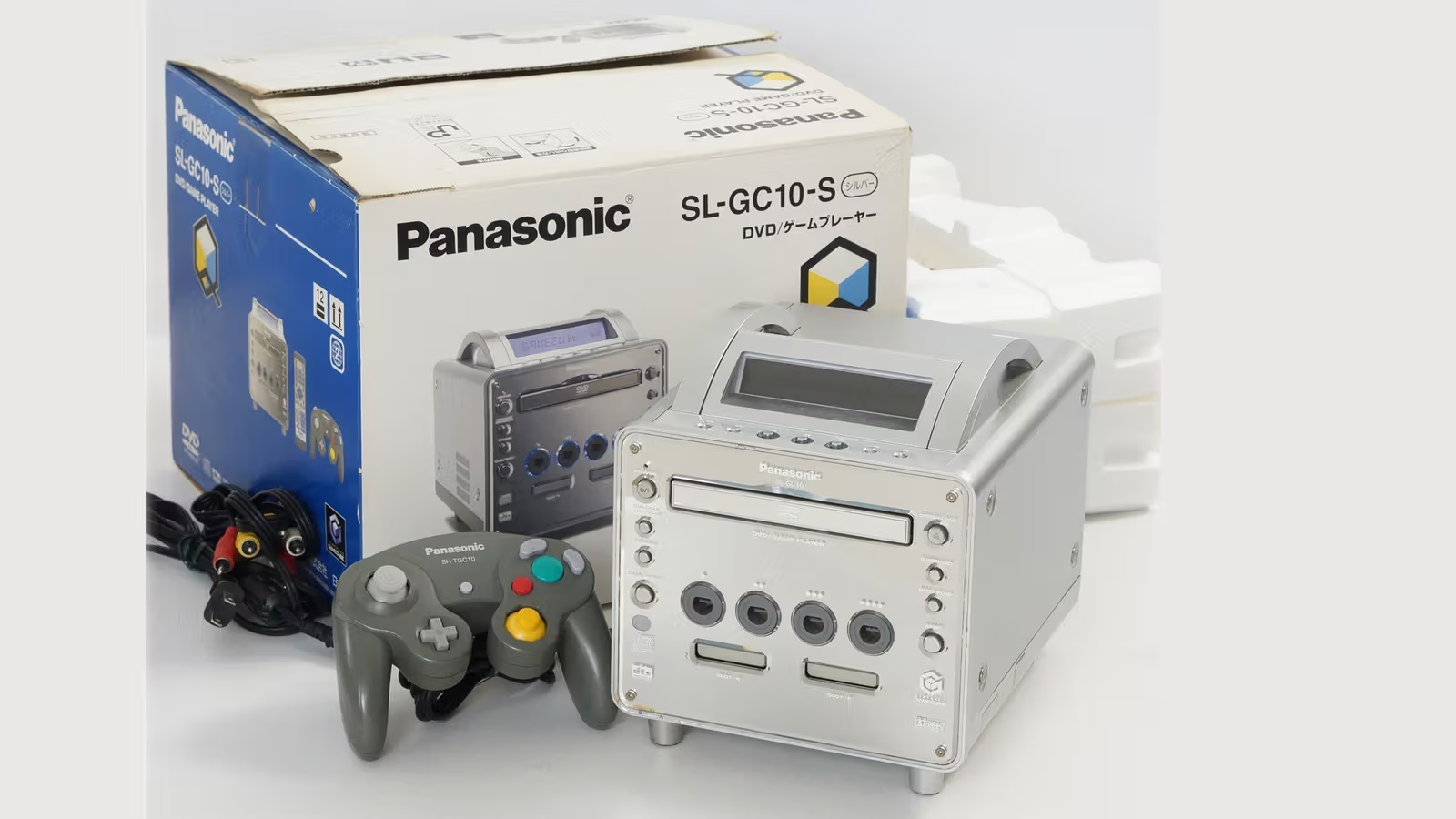
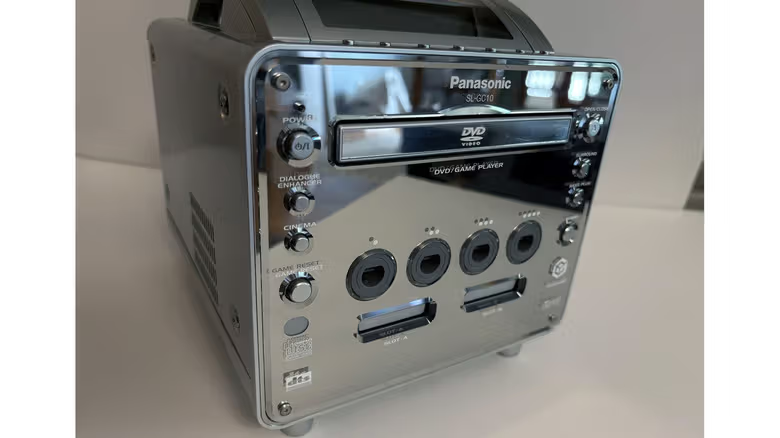
The Panasonic SL-GC 10—better known as the Panasonic Q—launched exclusively in Japan in December 2001, just three months after the GameCube's local debut. Its design looked nothing like a Nintendo console and far more like home theater equipment of the era: a mirrored front panel, a backlit LCD screen, and ports that glowed blue. This wasn't a coincidence—Panasonic's parent company at the time, Matsushita, had actually helped develop the miniDVD disc format used by the GameCube, so the two companies already had a close working relationship.
那台能放DVD的GameCube:Panasonic Q為何如今喊價破千美元

Panasonic took the home theater side seriously: the unit had a built-in Cinema picture mode, and audio support for Dolby Digital, DTS surround sound, dialogue enhancement, and bass boost. None of that mattered for gaming, though, since game audio still ran through the GameCube's original analog output—the two systems' audio paths were completely separate. Playing "Metroid Prime" or "Super Mario Sunshine," you got none of that theater-grade sound processing.
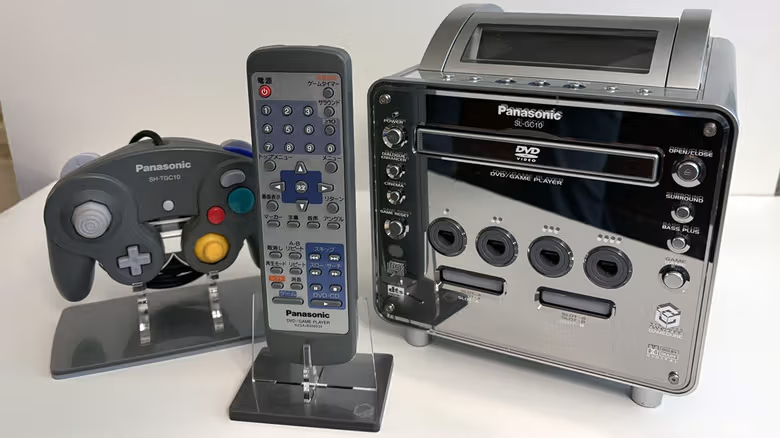
Strip away the clever casing, and the gaming half of the Panasonic Q was identical to a standard GameCube: same controller ports, same memory card slots, full game compatibility—except the unmodified version was region-locked to Japan. The accessories kept up the dual-brand theme too, with a gray Panasonic-branded GameCube controller paired with a matching DVD remote. Even Nintendo's own Game Boy Player accessory couldn't fit due to differences in the console's base shape, forcing Panasonic to release a specially modified version just to make it compatible.

那台能放DVD的GameCube:Panasonic Q為何如今喊價破千美元

When it launched in Japan, the console was priced at 39,800 yen—roughly $313 at the time's exchange rate—matching the PS2's Japanese launch price. The difference was that the PS2 had arrived nearly two years earlier and already built up a massive user base, with DVD playback marketed as a headline feature from day one, and no need to reboot between modes. The Panasonic Q was never officially released outside Japan; units that made it abroad were largely modded by enthusiasts or brought in through gray-market imports.

Because so few were sold at the time, surviving Panasonic Q units are now scarce. According to Engadget, loose units typically sell on eBay for between $1,200 and $1,300, while complete sets with the original box and manual can top $2,000. That button you once had to manually press to switch modes has become, in the eyes of collectors, a mark of rarity.

Related

Upscaling Video to 4K Doesn't Make It Sharper—It's Software Guessing the Extra Pixels
Tech

Upscaling Video to 4K Doesn't Make It Sharper—It's Software Guessing the Extra Pixels

That "convert to 4K" button in your editing software looks like magic, but the extra pixels—three times as many—are almost entirely the product of interpolation or AI guesswork. The Star Trek: The Next Generation restoration, which cost over $10 million, shows exactly where upscaling hits its limits.

Samsung My FanCam Explained: How Galaxy Z Fold8 Lets You Steal the Spotlight After the Fact
Tech

Samsung My FanCam Explained: How Galaxy Z Fold8 Lets You Steal the Spotlight After the Fact

Samsung has added My FanCam to the Galaxy Z Fold8 series — shoot the whole scene first, then let Galaxy AI pick the person to track and recrop the footage afterward. Here's how it works and what its limits are.

The Witcher 4 Aims for 2028 Launch, But Gamescom Spotlight Goes to a New Witcher 3 Expansion
Tech

The Witcher 4 Aims for 2028 Launch, But Gamescom Spotlight Goes to a New Witcher 3 Expansion

CDPR co-CEO Michał Nowakowski has confirmed The Witcher 4 is targeting a 2028 release, but the upcoming Gamescom show won't feature the new game. Instead, the spotlight goes to Songs of the Past, The Witcher 3: Wild Hunt's third expansion, arriving a decade after the last one.

Canceling Your ChatGPT Subscription Only Stops the Billing—Your Account, Chat History, and Training Settings Need Separate Action
Tech

Canceling Your ChatGPT Subscription Only Stops the Billing—Your Account, Chat History, and Training Settings Need Separate Action

Canceling a ChatGPT paid plan takes just a few steps, but stopping payments doesn't mean your account gets deleted or your chat history gets wiped. If you want to fully walk away from ChatGPT, you'll need to handle account deletion and data training settings separately.

The Price of Mini PCs: Cooling, Upgrades, and Repairs All Bow to Size
Tech

The Price of Mini PCs: Cooling, Upgrades, and Repairs All Bow to Size

From Geekom and Beelink to ASUS's ROG NUC 16, mini PCs squeeze a full computer into the palm of your hand—but that comes at the cost of cooling, upgradability, and repairability. Here's what you should know before buying one.

Higher Efficiency in Cold Weather Doesn't Mean More Power: The Temperature Myth About Solar Panels
Tech

Higher Efficiency in Cold Weather Doesn't Mean More Power: The Temperature Myth About Solar Panels

Solar panels hit peak efficiency under standard test conditions of 25°C and 1,000 watts of sunlight per square meter, but actual power output also depends on hours of sunlight, cloud cover, and installation angle. Temperature coefficients published by REC and Qcells reveal just how much real-world output is lost in hot weather.