To launch its own AI features in China, Apple first has to borrow technology from a rival. China's Ministry of Industry and Information Technology has approved the use of Alibaba's Qwen series of large language models, along with its image and video generation tool Wanxiang, to power Apple Intelligence in the Chinese market. South China Morning Post, which is owned by Alibaba Group, broke the news—and pointedly noted that Apple had actually secured regulatory approval to launch Apple Intelligence back in July, yet still hasn't actually rolled it out.
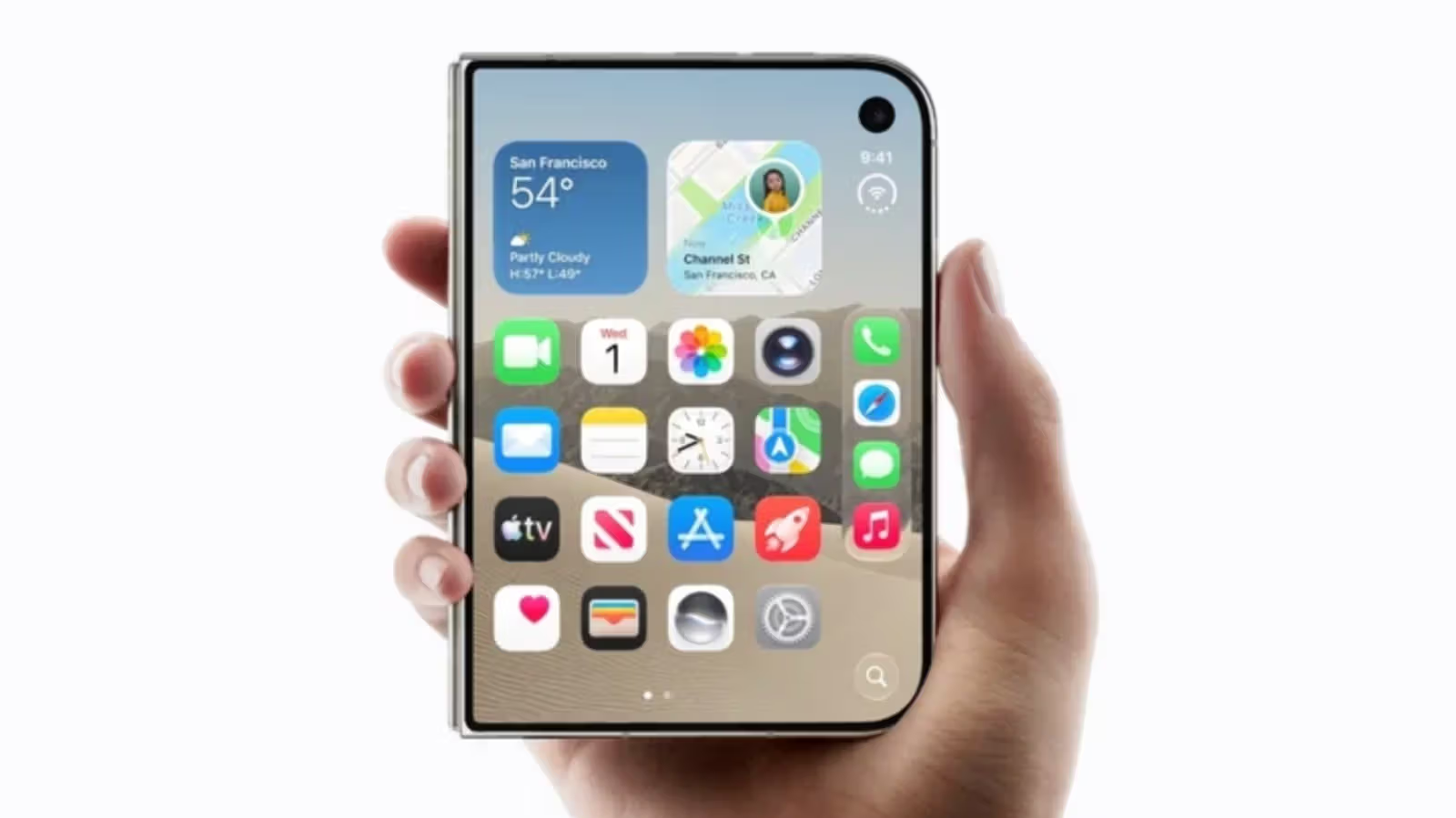
The newly surfaced approval documents also cover network access licenses for the iPhone Duo and iPhone 18 Pro. The iPhone Duo is set to launch in China next week, with an upgraded Siri being one of the new device's headline software features—the catch being that without Apple Intelligence actually up and running, that selling point has nothing to stand on.
Apple Intelligence is already partially available in Hong Kong, but mainland China's complex AI regulations and data privacy laws have made Apple wait nearly two years to bring it to one of its fastest-growing markets. When the system launched in the US almost two years ago, Apple brought in Google and OpenAI to help train its models and handle more complex queries; in China, that role has gone to Alibaba instead.
News of Apple seeking partnerships with Chinese AI companies isn't exactly new. Reports back in early 2025 already pointed to Alibaba as a likely solution, and by this summer it was further confirmed that Qwen models would serve as the core engine behind Apple Intelligence on compatible devices in the Chinese market—including iPhone, iPad, Mac, and Vision Pro. From regulatory approval to actual rollout, Apple's AI system in China is taking a completely different path than its US counterpart: only by teaming up with a local partner can the features actually go live.
As for exactly when Apple Intelligence will officially open to users in mainland China, there's no official announcement yet.