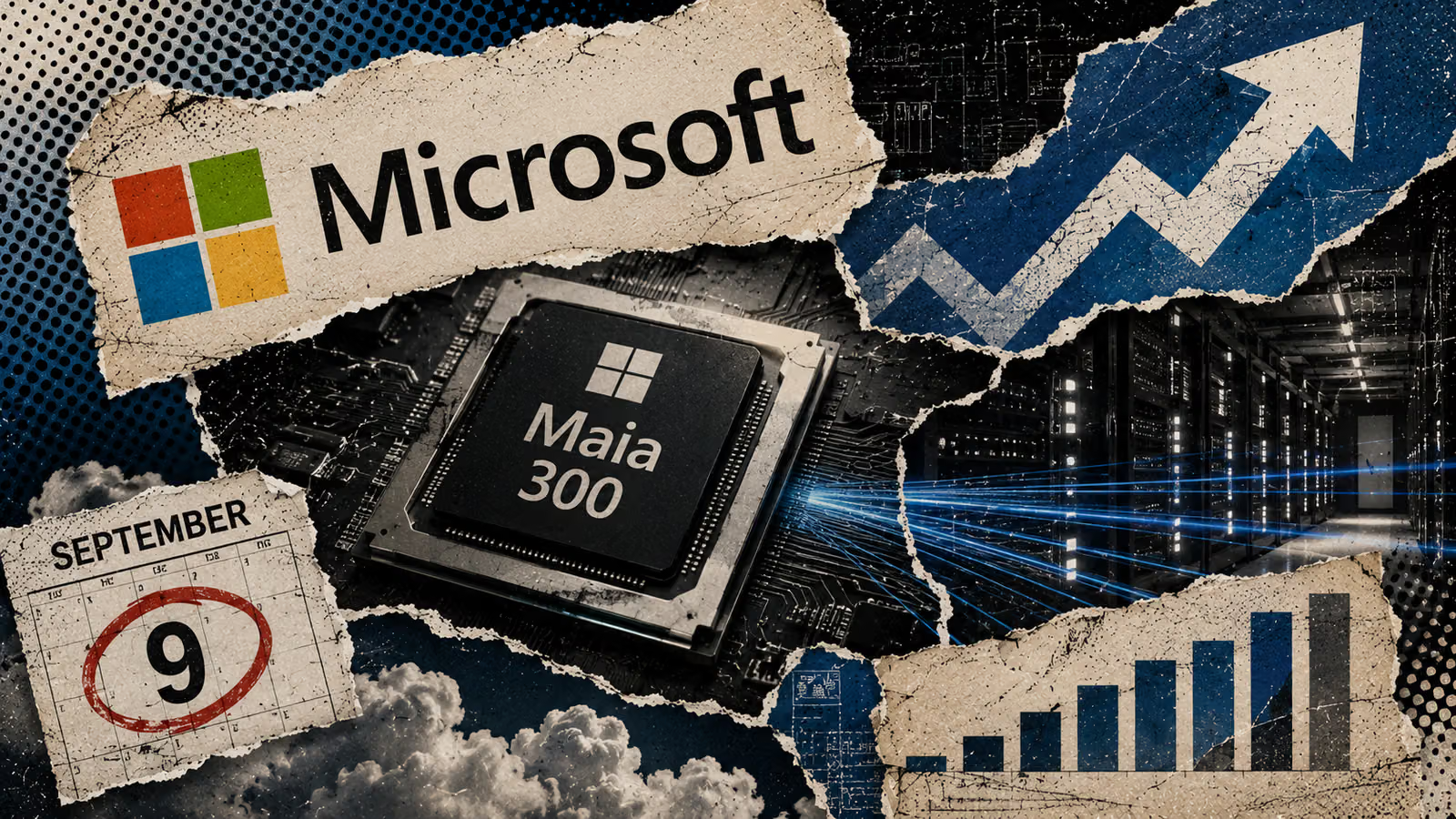
What does 300,000 units mean? If Microsoft's initial order for Maia 300 really hits that number, it would be 2.6 times the scale of its predecessor Maia 200 (roughly 116,000 units)—and if it eventually reaches Microsoft's privately set target of 1 million units, that's more than triple again, coming to 8.6 times the previous generation. This isn't incremental scaling up—it's an entirely different order of magnitude.
According to a report by tech media outlet The Information citing sources familiar with the matter, Microsoft plans to unveil its next-generation self-designed AI chip, Maia 300, as early as September this year. The company has already been in talks with TSMC regarding manufacturing capacity, with an initial target of delivering over 300,000 units by 2027, and a long-term goal of securing production capacity exceeding 1 million units.
The timing here is delicate. When Microsoft launched the first-generation Maia in November 2023, the goal was simple: spend less on Nvidia's AI processors. Two years later, Google's TPUs are being commercially sold externally and generating revenue, Amazon's Trainium adoption keeps climbing, and Amazon has signed a ten-year partnership deal with Anthropic—among the three cloud giants, Microsoft is actually the one lagging furthest behind.
This is exactly why the scale of the Maia 300 order is worth paying attention to. Microsoft has already held early-stage talks with Anthropic, considering supplying chips to support the computing needs of its Claude models, though the two sides have yet to reach a final agreement. In other words, that figure of 300,000 to 1 million units is Microsoft's ticket to the table for Anthropic and other heavyweight clients—securing the production capacity first gives it the leverage to bring major customers on board.
On the supply chain side, the previous-generation Maia 200 used TSMC's 3nm process, paired with SRAM memory exclusively supplied by SK Hynix to boost AI inference throughput. Taiwan's IC design services firm GUC (Global Unichip Corp) has previously participated in Microsoft's Cobalt server CPU and Maia accelerator projects. Whether this collaboration continues with the new chip will determine how large a slice of this order wave Taiwanese suppliers end up capturing.
The variable lies on the capacity side. JPMorgan analysts have cautioned that the project is heavily concentrated on TSMC's N3 process and CoWoS advanced packaging, and that supply constraints could persist through 2027. Progress in negotiations over component supply and packaging capacity could also cause Microsoft's million-unit target to slip on the timeline.
Regarding the report, the General Manager of Microsoft's Azure Maia division responded that the company "continues to invest in custom silicon as part of our long-term AI infrastructure strategy," and emphasized that the production figures cited in external reports "do not reflect the scale of what we're planning." TSMC declined to comment on the matter.