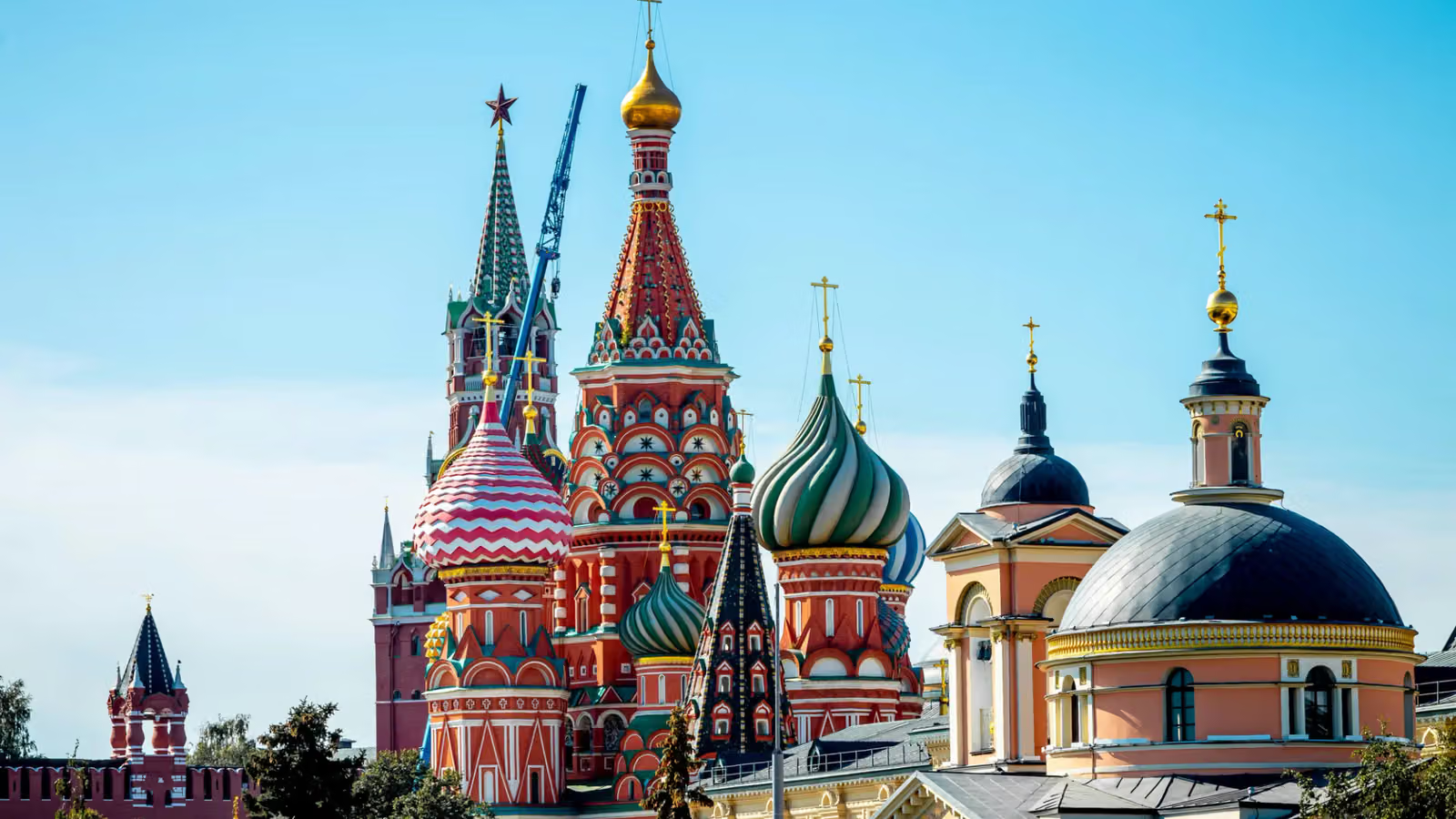
The country holding the world's second-largest Bitcoin hashrate just chose to go dark in its own capital first. Russia's government signed Decree No. 936 on July 25, with details published July 31: crypto mining is now banned in Moscow city, the Moscow region, and parts of Kursk region, and participation in mining pools is off-limits too. The ban runs all the way to December 31, 2032—this isn't a few months' pause to "wait and see," it's a line drawn eight years out.
The Energy Ministry's reasoning is blunt: the grid can't handle it. Mining currently draws roughly 1 gigawatt (GW) from Moscow's power system, but according to statements cited by Interfax following the decree's signing, unchecked data center demand in the region could balloon to 3.6 GW by 2032—equivalent to 17% of peak electricity load. In other words, this isn't a moral judgment, it's a grid-capacity math problem.
This isn't Russia's first move like this. In 2024, the country had just legalized registered mining, only to turn around and impose mining bans in 10 regions through March 2031; the annual restrictions later expanded to cover southern Irkutsk region, along with most of Buryatia and the Trans-Baikal territory. Moscow's new ban is the latest—and heaviest—entry in that same playbook, given that it's the capital.
More noteworthy than the grid issue is the other job mining has been carrying for Russia. Finance Minister Anton Siluanov noted back in December 2024 that Russian companies were already using domestically mined Bitcoin for cross-border payments, sidestepping conventional channels blocked by Western sanctions. Legislation passed by parliament this July kept the domestic ban on crypto payments in place, but specifically carved out exceptions for foreign trade settlements and mining-related crypto transactions—hashrate remains a card Russia is holding onto as a sanctions workaround. When the US Treasury sanctioned BitRiver and its 10 subsidiaries in 2022, the stated reason was exactly this: Russian mining firms were helping the state monetize energy resources to blunt the impact of sanctions.
According to data from Luxor's Hashrate Index, Russia's national hashrate sat at roughly 175 EH/s in Q1 this year, accounting for 16.4% of global Bitcoin hashrate—second only to the US. As for what share of that national hashrate comes from the mining operations now banned in Moscow, no figure was provided in the source material.