A24’s You Can See Everything crosses $100 million worldwide
Nathan Fielder and Lance Oppenheim’s Elizabeth Holmes documentary begins 34 days before prison and develops into a nearly three-hour film, now reaching a wider theatrical audience.
A24’s You Can See Everything has passed $100 million worldwide, bringing its Elizabeth Holmes portrait into the year’s prominent theatrical documentary conversation. Co-directed by Nathan Fielder and Lance Oppenheim, the film opened in the United States on October 16 and runs close to three hours, placing the relationship between camera and subject on a large screen.
A shoot beginning 34 days before prison becomes a three-year journey
A24’s synopsis starts 34 days before Holmes enters prison, when the Theranos founder invites a skeptical crew to document her movements. An intimate portrait develops into a journey lasting three years. The premise contains both a wish to be understood and a crew’s need to question what is being presented.
That setup opens two paths for viewers: the subject’s account of a turning point, and the filming choices that create intimacy, preserve distance or shape the meaning of a statement. These questions arise from the project’s premise and offer an entry point without deciding its conclusions in advance.
North American and international releases pass the milestone
As of November 24, Box Office Mojo’s overview lists approximately $93.47 million in North America and more than $9 million internationally, taking the combined total past $100 million. North America remains the leading market as overseas screenings expand the film’s theatrical reach. Subsequent totals can be followed on the film’s box-office page.
A long, person-centered documentary reaching this level broadens its theatrical conversation. Public interest in a real story and the experience of seeing it together can reinforce each other. Further releases, screenings and box-office updates create additional ways for audiences to encounter the film.
A blurred portrait turns seeing into a visual question
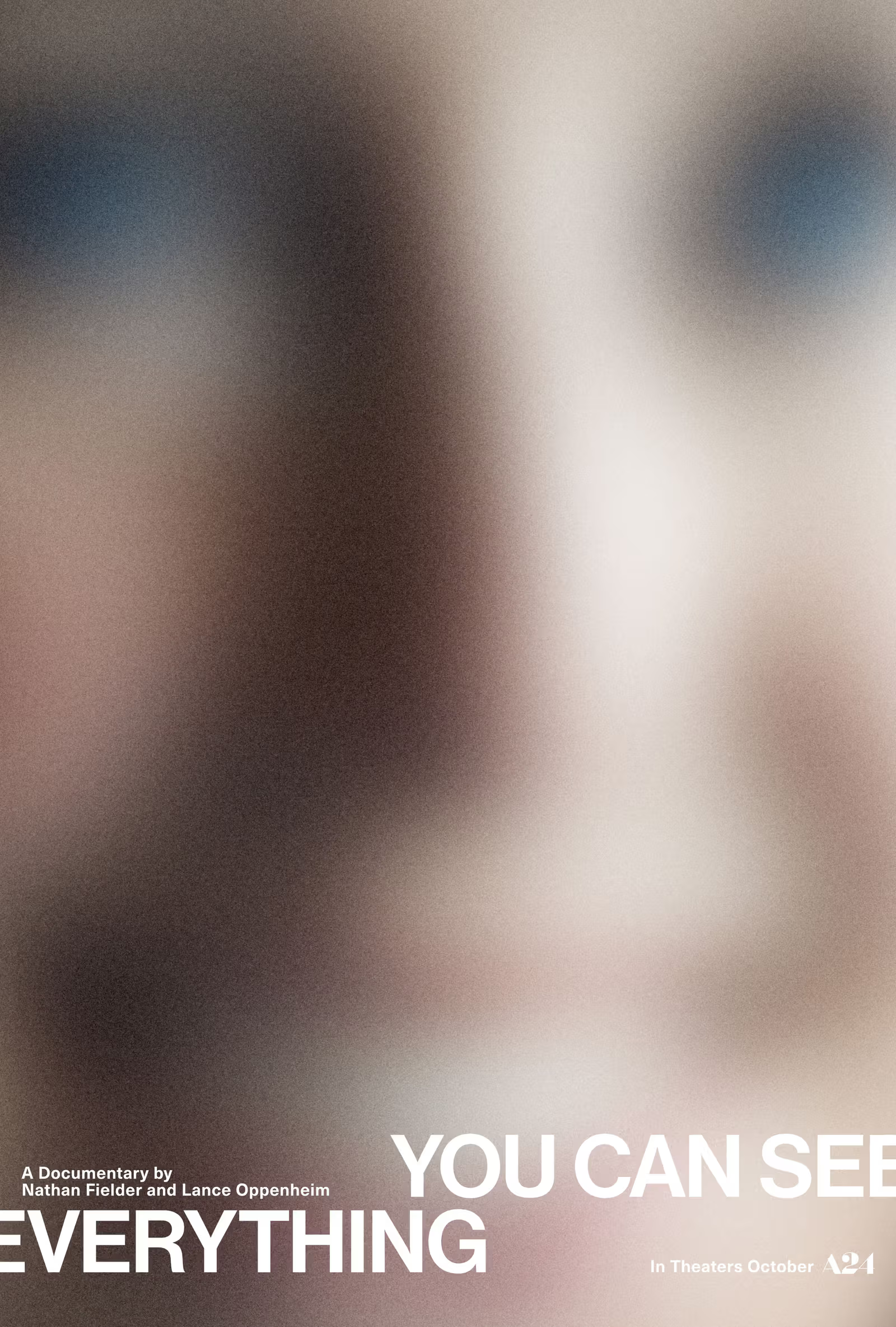
A24’s official poster contrasts a blurred face with large, sharp white title lettering. The treatment adds a visual question to the title: what can a camera’s proximity reveal, and what may remain beyond its frame? It presents a starting point for thinking about the film’s subject and form.
The official poster pairs a blurred portrait with sharp white lettering.
The official film page offers trailers and a showtime search. Local distribution announcements and cinema programs determine screenings in each market; the October 16 U.S. opening does not establish a Taiwan date. The public trailer and poster provide a useful introduction before choosing a theatrical screening.