Air Jordan 3 'Laser' Decoded: How Mark Smith Laser-Etched 40 Years of Jordan's Life
The 1-of-1 custom sneaker made for Jordan's 40th birthday in 2003 is now officially releasing to the public. The upper is laser-etched with details ranging from Ferrari license plates and yacht fishing scenes to the fictional Sandy Bros. store — essentially a wearable biography.
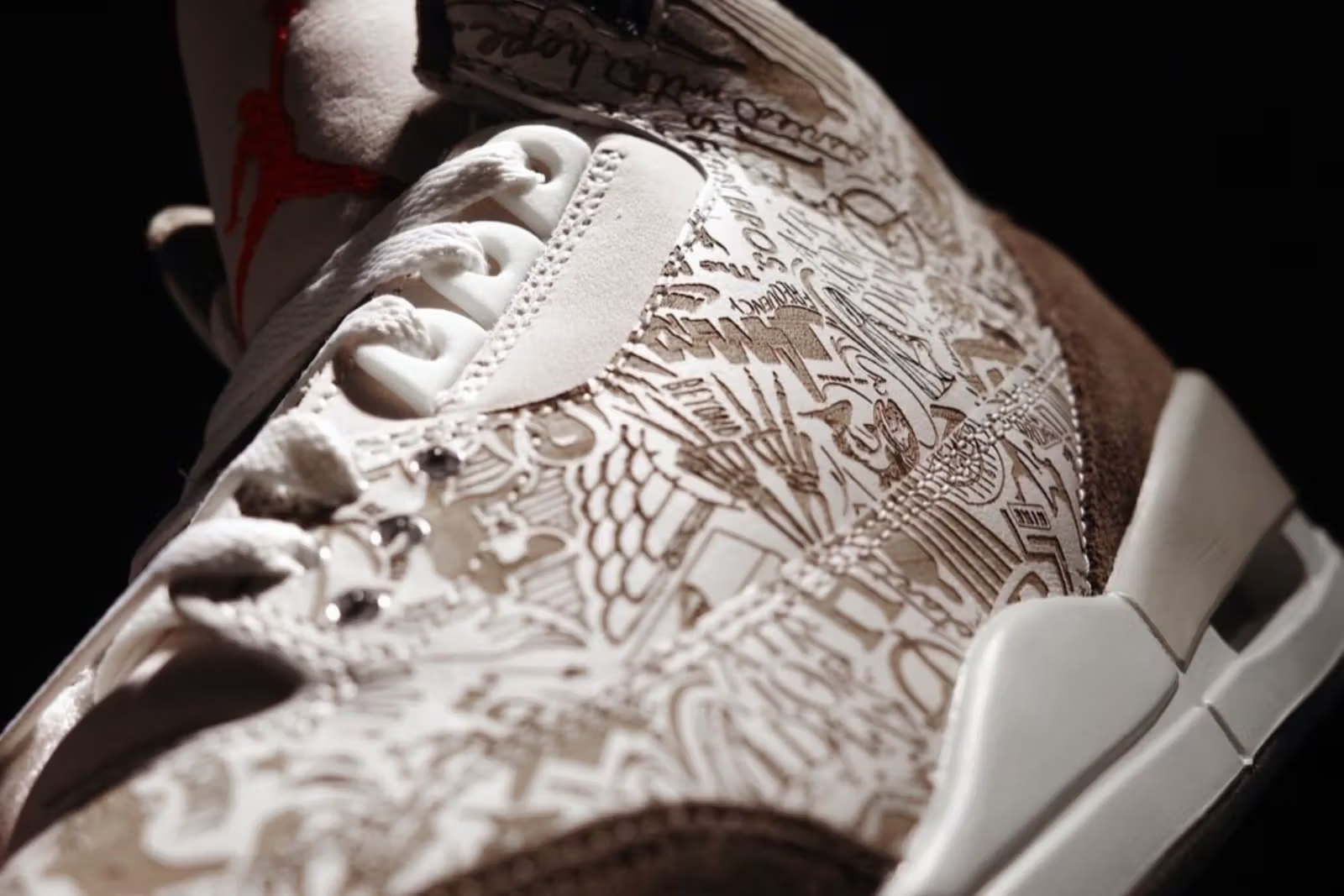
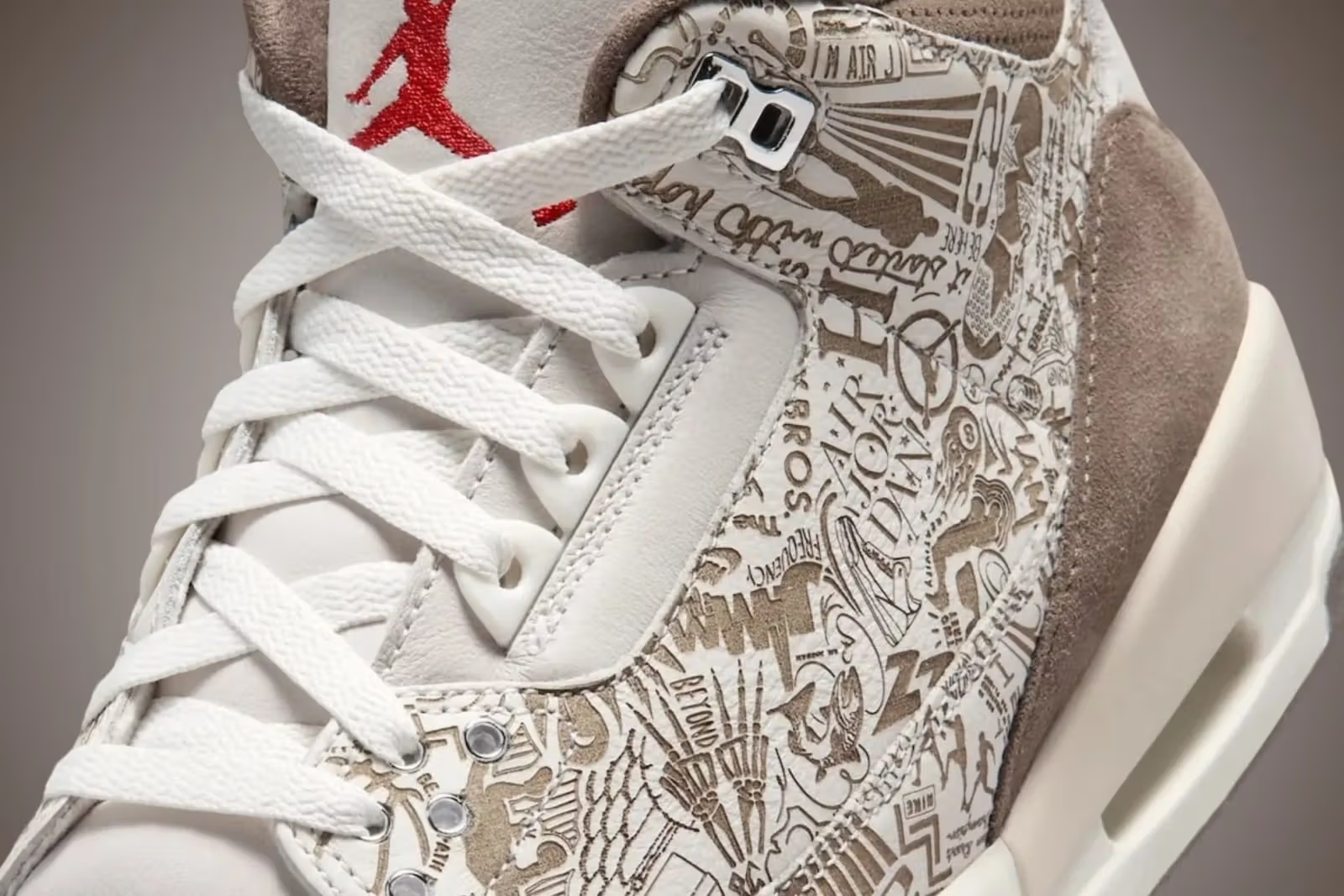
In 2003, when Michael Jordan turned 40, he received a very special birthday gift: Nike designer Mark Smith took Tinker Hatfield's 1988 Air Jordan 3 as the base silhouette and replaced the classic elephant print with laser-etched imagery covering the entire upper, chronicling moments from Jordan's life. This 1-of-1 pair, once locked away in a warehouse at Nike's Beaverton headquarters and only ever seen on the feet of a handful of industry insiders, is now being officially released by Jordan Brand — and sneakerheads are already pulling out the magnifying glasses to study every single etching on the upper.
On the midfoot is an etched rectangular license plate reading "M AIR J," a nod to Jordan showing up at the Berto Center practice facility in the 1990s in a metallic black Ferrari 512 TR (Testarossa) — a scene from the Bulls' first three-peat era. The collar features the outline of the wrought-iron gate at Jordan's 56,000-square-foot mansion in Highland Park, Illinois, flanked by the iconic "23" numerals that became a pilgrimage site for fans during peak Jordan mania in the '90s. The numbers 23, 45, and 93 appear interwoven across the upper alongside ring motifs, referencing his jersey numbers and his first three-peat completed in 1993.
A New Battlefield After Retirement: Yachts, Fishing, and Golf
After hanging up his sneakers, Jordan's competitive fire never went out — it just found a new arena. His 80-foot Viking yacht "Catch 23" is wrapped in Jordan's signature elephant print, and he often sailed it out to compete in world-class fishing tournaments like the Big Rock Blue Marlin Tournament. Scattered across the upper are motifs of yachts, big-game fish, and deep-sea fishing scenes echoing this chapter of his retired life. Golf clubs, golf carts, and dimpled golf-ball textures point to his longtime obsession with the sport — from playing 36 holes at dawn before playoff games to later opening the exclusive Grove XXIII course in Florida.
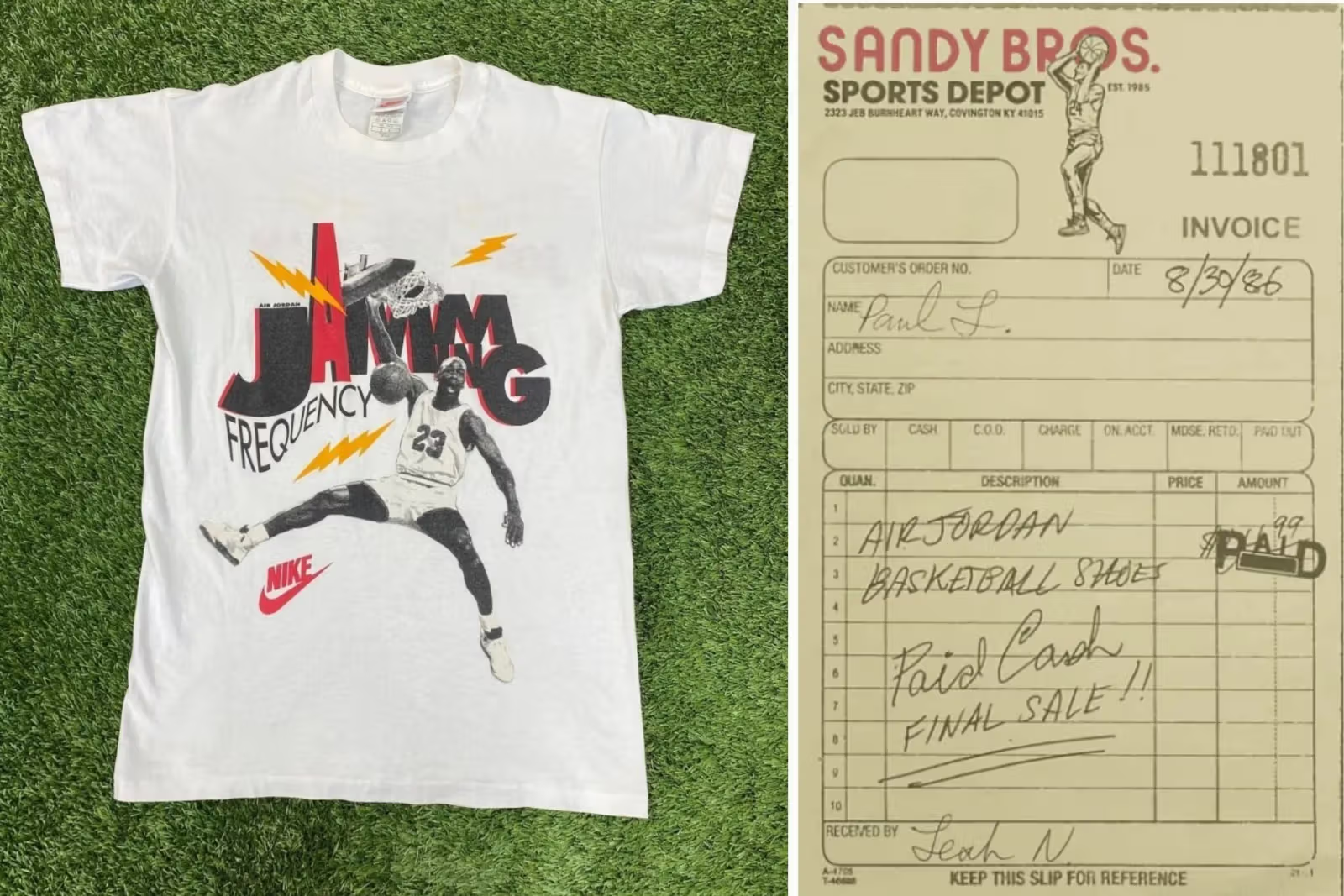
On the lateral side, bold lettering spells out "JAMM FREQUENCY," surrounded by radio dial markings and waveform graphics. Back in the '80s and '90s, following Jordan's games wasn't as simple as opening an app — you had to scan the radio dial for updates. Nike's early advertising leaned heavily on radio and street-culture visual language, and this graphic on the upper is a tribute to that era's marketing style.
From Sandy Bros. to the FLIGHT Wordmark: The Brand's Own Easter Eggs
The upper also hides a logo for a fictional store called "Sandy Bros. Sports Depot" — a backstory Jordan Brand created for its 2022 Air Jordan 1 "Lost & Found" (Reimagined Chicago) project, in which a pair of 1985 Air Jordan 1s was forgotten in the basement storeroom of a small-town sporting goods shop owned by the fictional Sandy brothers. Every "Lost & Found" shoebox back then came with a yellowed, handwritten-style 1986 clearance receipt. Here, etching the Sandy Bros. name alongside Jordan's real trophy imagery on the same shoe effectively weaves the brand's own fictional universe into this "biography."
The upper also features the outline of a heavy-duty race car, referencing Michael Jordan Motorsports, the team he founded in 2004 after retirement, whose riders competed in the AMA Superbike series on custom-liveried Suzukis — with the racing suits and paddock gear personally designed by Mark Smith. Toward the toe, a handwritten-style "AIR JORDAN!" lettering paired with star graphics recreates Nike's 1985 print ads and T-shirt designs; the collar and mudguard area feature Peter Moore's 1985 Wings logo along with an illustration of a vintage two-tone shoebox, tying the sneaker back to the 1985 box that started it all for the Air Jordan line. A cursive "FLIGHT" script on the front of the toe box pays tribute to Tinker Hatfield's 1989 Air Jordan 4, referencing Nike's "Flight" series and its aerial technology lineage at the time.
A bone-in steak graphic on the upper might seem out of place at first glance, but it actually references Jordan's pre-game meal ritual during his Bulls years: a 16-ounce prime steak, a baked potato, and a ginger ale, always finished exactly four hours before tip-off. That habit eventually turned into a business — Jordan opened Michael Jordan's Steak House in New York's Grand Central Terminal in 1998, later expanding to Chicago, Connecticut, and Washington, D.C.
The heel and toe hide the design team's own history: outsole tread diagrams alongside anatomical hand and foot bone illustrations echo the early biomechanical sketches Hatfield and Smith drew while building support systems for Jordan's explosiveness. Nearby, a shield graphic pays homage to Jordan's personal security team, including Gus Lett and John Michael Wozniak — both of whom fans came to know through the 2020 documentary "The Last Dance." Scattered across the upper are phrases like "Creativity," "Precision," "Finish Strong," "Be Here," and "It Started With Hope," reflecting both Nike's internal design philosophy and Jordan's own mindset on and off the court.
The Air Jordan 3 "Laser" has yet to receive an official release date or retail price.