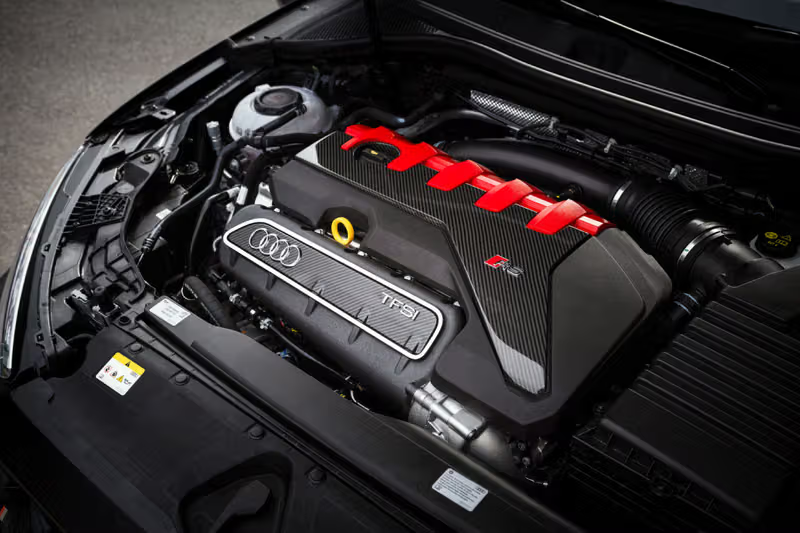
That distinctive off-beat exhaust note that sets the Audi RS3 apart may not be disappearing anytime soon after all. This half-century-old 2.5-liter turbocharged five-cylinder engine has long been one of Audi's cultural signatures. The previously launched limited-edition RS3 Competition had many believing it was the engine's swan song, but Audi Sport CEO Rolf Michl recently revealed that the brand is still figuring out how to carry this engine through to the next generation. Michl specifically noted that this compact RS model serves as a crucial emotional gateway for the entire high-performance lineup.
The real threat comes from the incoming Euro 7 emissions regulations, set to take effect by the end of 2026. These new European rules demand a major hardware overhaul, including redesigned particulate filters, dedicated sensors, and more advanced catalytic converters. Audi CEO Gernot Döllner has already questioned whether such a massive investment even makes financial sense—and for good reason: this engine currently powers just two low-volume models, the Audi RS3 and Cupra Formentor VZ5, with production numbers too small to justify spreading out the development costs.
Hybridization is one option on the table to keep the five-cylinder engine alive. This approach previously extended the life of the V6-powered RS5, but applying it to the more compact RS3 would inevitably add weight and structural complexity. Another path forward involves scaling up production: the MQB platform architecture that underpins the RS3 is already widely used across the Volkswagen Group's lineup, so getting more models to adopt this engine could help offset the costs of Euro 7 compliance. Industry rumors suggest a heavily modified VW Golf R could eventually feature this five-cylinder engine, serving as a tribute to the original R32's anniversary. Audi Sport sold roughly 36,000 vehicles globally last year, with the RS3 accounting for only a small slice of that total—whether this engine survives the next round of regulations may hinge not on preserving it as a rare heirloom, but on whether it can be pushed across a broader swath of the Group's product lineup.