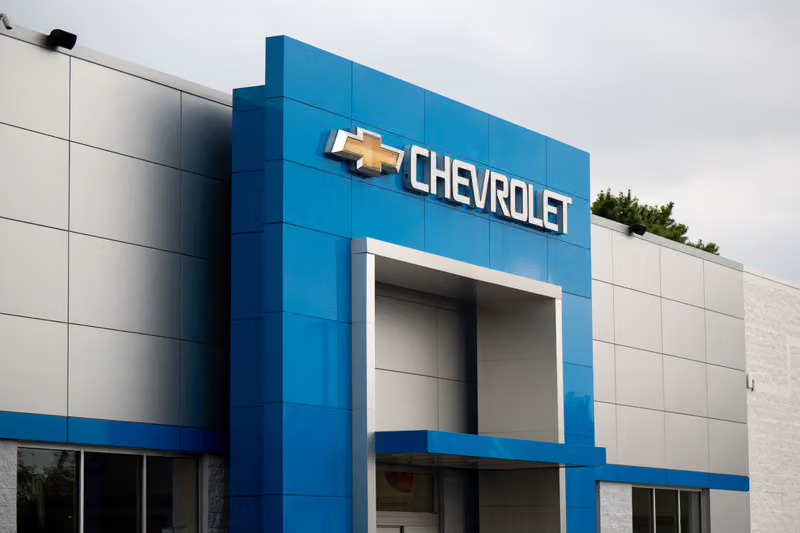
The showrooms are closing, but the assembly line isn't stopping. That's the parting image Chevrolet leaves behind in China: General Motors has decided to shut down Chevrolet's retail operations there, closing the book on 21 years of local dealership presence. But the SAIC-GM joint venture plant isn't going dark — it's simply switching roles, now tasked purely with building cars for shipment to other markets.
The numbers tell the whole story. Chevrolet's annual sales in China peaked at over 760,000 units back in 2014, but last year that figure fell to under 9,000 — a 98.8% collapse over the decade. The lineup had been leaning on models like the Blazer, Equinox, and Malibu XL, all gas-powered, while local buyers had long since shifted en masse toward new energy vehicles. Chevrolet simply couldn't make that turn in time.
Rather than pulling out entirely, GM is converting its China plant into a pure export base, using existing SAIC-GM production capacity to build Chevrolet models bound for emerging markets, ditching the costly domestic retail network altogether. The showrooms disappear, but the production lines stay — the role flips from "selling to Chinese consumers" to "building cars in China to sell elsewhere."
So where do the freed-up resources go? Straight to Buick and Cadillac. Both brands still hold ground in China's new energy and premium segments, and GM is capitalizing on the moment by extending its partnership with SAIC Motor through 2047 — another 20-year commitment. The new agreement sets a target of at least 30 new energy vehicle models by 2030, along with region-specific technology plans tailored to Chinese consumers.
In a sense, Chevrolet's exit is the sacrificed piece on this particular chessboard — unable to hold its ground in the market, it's simply been repositioned to keep working for the parent company elsewhere. The exact effective date of this restructuring and further details on dealership closures were not provided in the source material.