From a Single Guitar to a Double-Reed Aulos: How Diablo's Score Carries Thirty Years of Baggage Forward
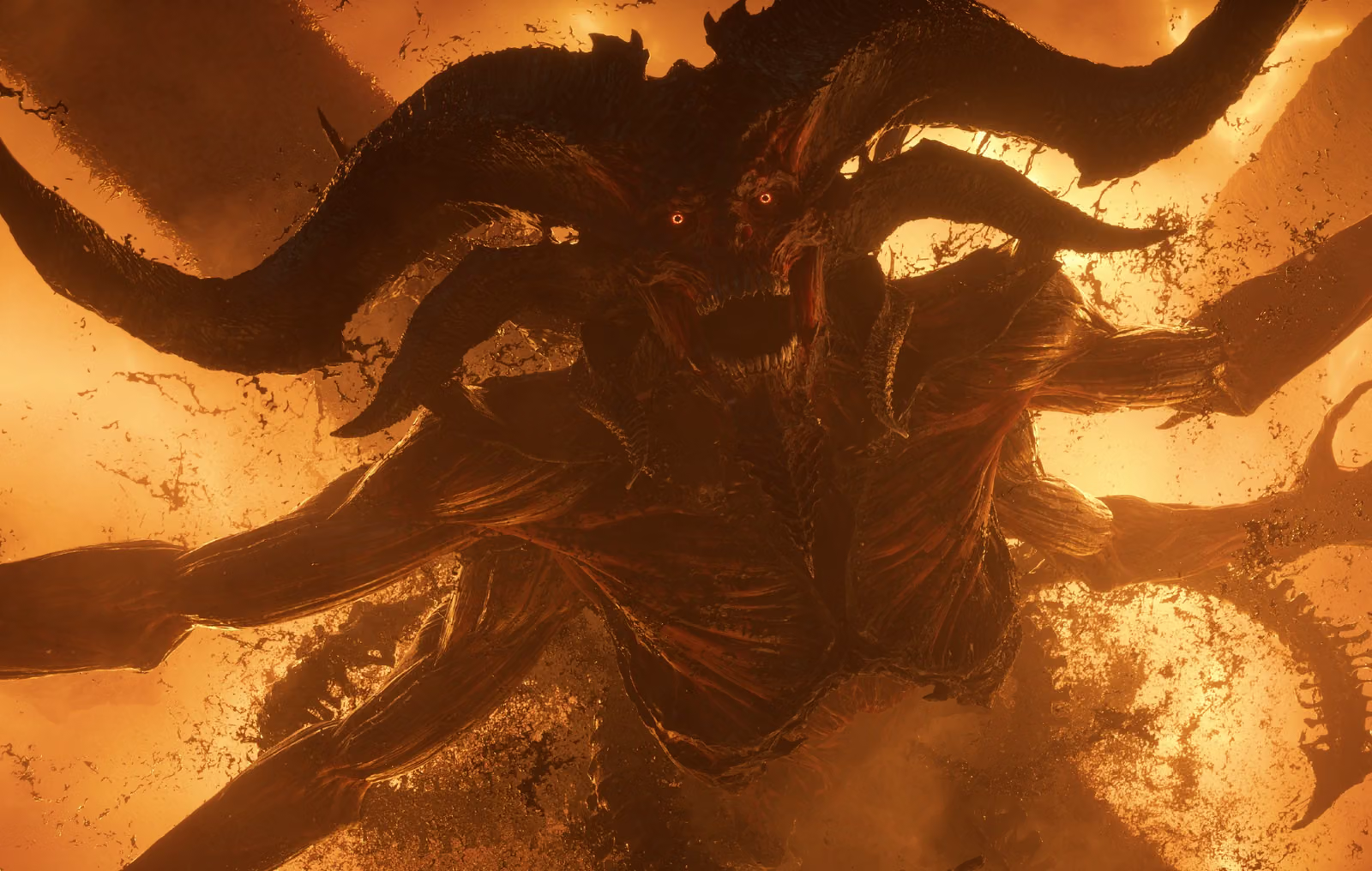
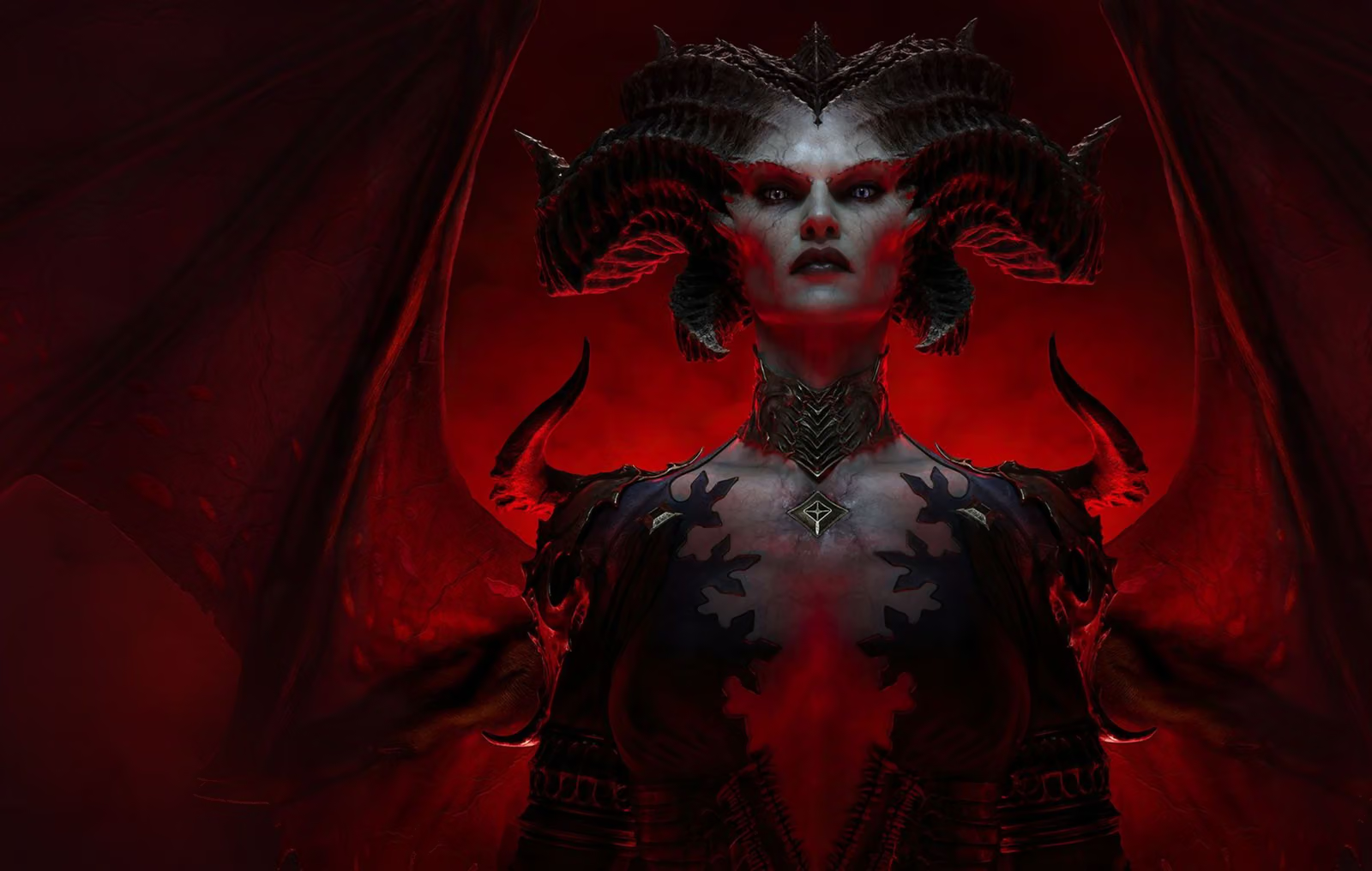
Diablo 4: Lord Of Hatred's audio director Ted Reedy talks about charting a new path for the series under the long shadow of Matt Uelmen's legendary work, using lyres, aulos flutes, and an invented language of its own.
In 1996, Matt Uelmen pieced together Diablo's "Tristram Theme" out of a real electric guitar, eerie percussion, and the sound of a crying baby. That original six-track, guitar-driven soundtrack became a ghost that every successor would have to face. Thirty years later, Ted Reedy, audio director on Diablo 4, puts it plainly: "It's something I think about every single day. The music from the first game is so iconic—that's a really high bar to chase."
But he chose not to chase it. "We're not the original composers, and trying to force a recreation of the past isn't going to make good music." Reedy's solution was to treat Uelmen's spirit as a "powerful through-line," then strike out on his own—much like Diablo itself was something entirely new back in 1996.
The reference points for this new direction are all over the map: Reedy cites the immersive atmospheric scoring Hans Zimmer and James Newton Howard did for 2005's Batman Begins, as well as childhood memories of playing Super Metroid. Leo Kaliski, who scored World of Warcraft and came aboard to help out here, took a more hands-on approach—he literally searched Spotify for Nordic folk music to shape the sound of the wild frontier of Scosglen; the frozen wasteland of the Fractured Peaks draws on minimalist Estonian composer Arvo Pärt; and the swamps of Hawezar use a drone choir from experimental vocal group NXY.
To make sure the music truly tracked the story, the two of them once spent an entire Friday afternoon midway through Diablo 4's development watching all 56 cutscenes back to back—the monster battles, the deaths of loved ones, the betrayals, the visions of hell. "We wanted to create an emotional soundscape that blends seamlessly into the game and pulls you in even deeper," Reedy said.
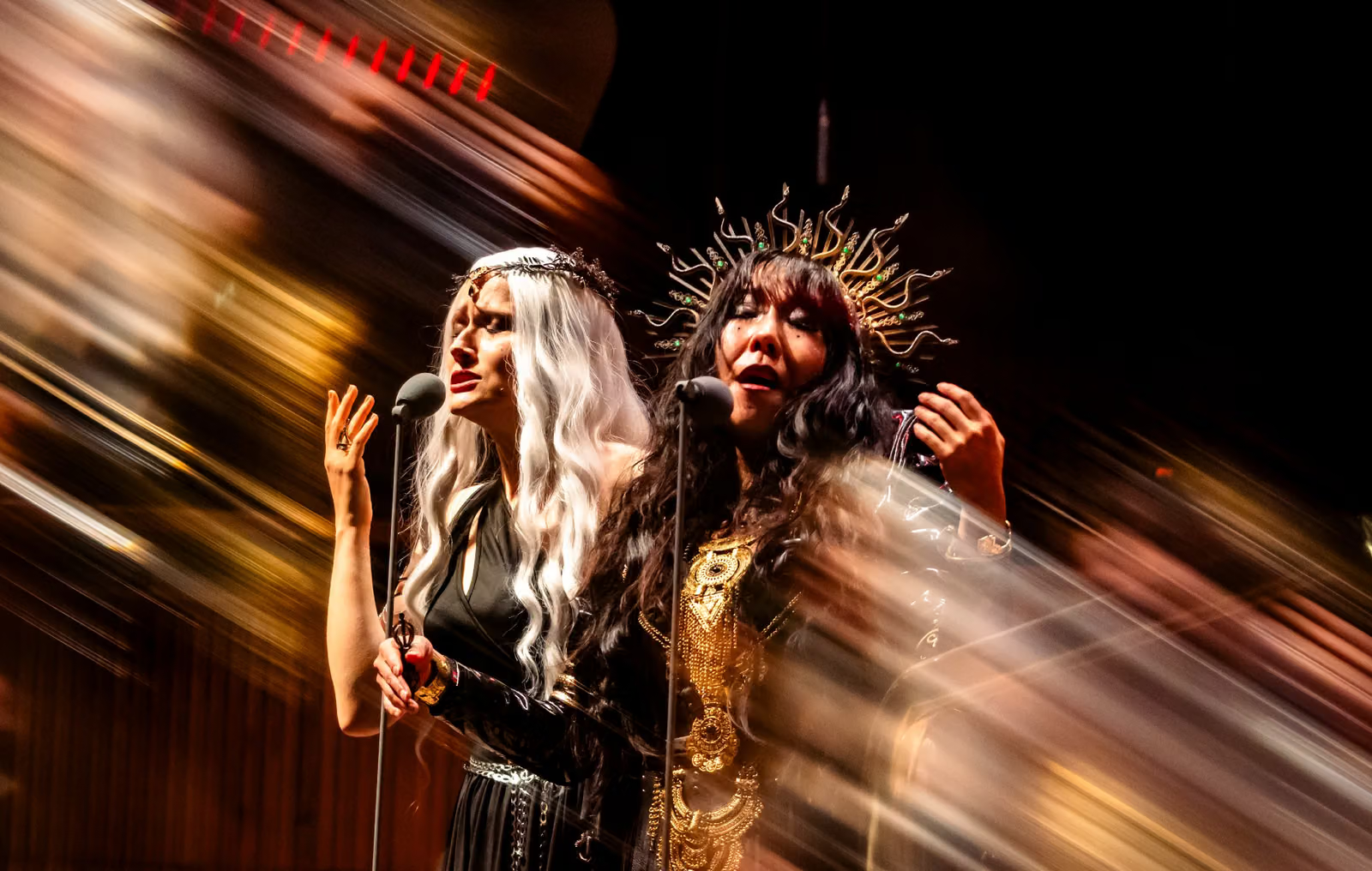
This year's expansion, Lord Of Hatred, shifts the setting to Skovos, a land styled after ancient Greece and Rome, so the team brought in a lyre and went hunting on YouTube for someone who could play the double-reed aulos, all in pursuit of period authenticity. This new continent's story is driven by two rulers, the Oracle Queen and the Amazon Queen, and rather than fall back on generic choral "oohs and aahs," Reedy and the team asked the narrative team to invent an entire language and set it to song—inspired by the haunting vocals Lisa Gerrard delivered on the Gladiator soundtrack.
From six guitar tracks to Diablo 4's three-hour blend of folk, metal, and eerie orchestral music in the base game, plus 65 new tracks layered on across two expansions (2024's Vessel Of Hatred and the newly released Lord Of Hatred), the sheer scale of the series' sound is nothing like it once was. The musicians brought in are just as varied—guitarists, woodwind players, even bagpipers. "What those instruments can do is completely different from what I can simulate on a keyboard," Kaliski said. "Those creative constraints actually push us toward more inspired music than we could ever come up with on our own."
The series' roster of vocal supporters in the metal world is no short list: Halsey, Architects, Bury Tomorrow, Lacuna Coil, and Cradle Of Filth have all spoken up publicly. This past April, nu-metal veterans KoRn teamed up with Blizzard to release the new track "Reward The Scars" celebrating the launch of Lord Of Hatred. Frontman Jonathan Davis said: "I've played Diablo for many years, so jumping into this world to create something felt natural... confronting what's lurking beneath the surface is something KoRn has been exploring in our music from the very beginning."