TIDEZINE.

The Flying Vehicles Are Ready—The Real Battle Is Who Builds the Landing Pads First

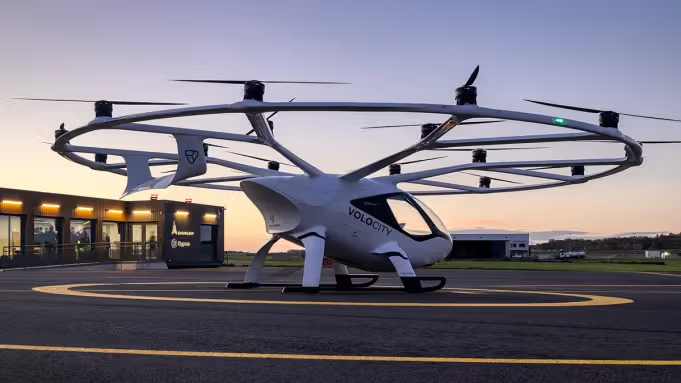
Dubai launched the world's first vertiport built specifically for eVTOLs this July, capable of handling 170,000 passengers a year. But Blade Air Mobility CEO Rob Wiesenthal thinks what will actually get air taxis off the ground first is something much simpler: existing helipads.

Jordan Lin, Deputy Editor
The Flying Vehicles Are Ready—The Real Battle Is Who Builds the Landing Pads First

A terminal built to handle 170,000 passengers and 42,000 takeoffs and landings a year sounds like something designed for commercial airliners—except it's meant for electric vertical takeoff and landing aircraft (eVTOLs) that aren't even carrying passengers yet. The 33,400-square-foot facility opened in Dubai this July, developed jointly by Skyports Infrastructure and Dubai's Roads and Transport Authority. It includes a passenger terminal, flight operations area, two landing pads, and Joby Aviation's global electric aviation charging system. The first electric air taxi flights are expected to launch soon, and Dubai is already planning three more vertiports across the city.

Dubai is making a bold bet, but most industry leaders are eyeing a cheaper route: retrofitting existing helipads with charging systems and turning them straight into eVTOL landing sites. Rob Wiesenthal, founder and CEO of Blade Air Mobility, argues that the places worth upgrading first are ones with enough travel "friction" to justify the cost of short-hop air travel—congested urban centers like Manhattan and Los Angeles, or vacation destinations with difficult roads and rugged terrain, like the south of France. His bet: the first customers will be wealthy travelers willing to pay to save time.

What Wiesenthal envisions next is dedicated vertiports with private security, baggage handling, and VIP lounges—eventually extending all the way up to luxury rooftops. Park Elm Residences at Century Plaza in Los Angeles is already an early example: an existing helipad is being converted into a Joby-dedicated vertiport with an attached Blade lounge. As Jordana Yechiel, director of residential design at Reuben Brothers, puts it bluntly: "People don't just want an apartment—they want a lifestyle."

The infrastructure race is already underway. Florida has built two vertiports at its SunTrax testing facility and plans to develop a statewide network. The F.A.A. and D.O.T. recently broke ground on an A.A.M. research facility in Oklahoma City to study how electric air taxis can be integrated into the national airspace system. If this industry really does take off, the next fight may no longer be about who builds the best aircraft—but where those aircraft get to land.

Follow what interests you

Start with a brand tag or a section to build your own reading list.

Related