How to look at Max Lamb’s chairs: polystyrene facets, rough stone and a London workshop
Starting with the Poly Scrap chair’s collection record, follow materials, surfaces and traces of fabrication to see how Max Lamb’s furniture retains the expression of its making.
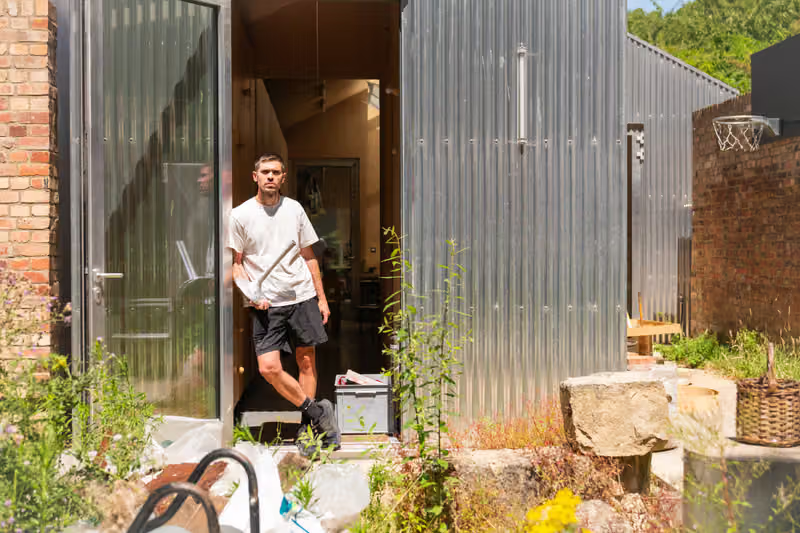
British designer Max Lamb's chairs reward a look that begins with materials and the traces of making. A profile published November 19 returns to his London home and workshop, where works in polystyrene, metal and stone retain clues to cutting, shaping and surface treatment. To understand how a chair can be both furniture and a collectible, begin with three questions: what is it made from, how did its shape emerge, and what textures do the eye and hand encounter before anyone sits down?
Lamb was born in Cornwall, England, in 1980. Collection records offer a clear route through his work. The San Francisco Museum of Modern Art, SFMOMA, holds the 2010 Poly Scrap chair, a 2014 Pewter Stool, a Bronze Poly chair designed in 2006 and fabricated in 2015, and a 2022 Woodware lounge chair. The different names, dates and materials reveal a designer who keeps changing his methods rather than repeating one signature outline.
Polystyrene facets become a surface that can be read
The Poly works bring a familiar lightweight material into chair design. SFMOMA's record for the Poly Scrap chair lists expanded polystyrene and polyurethane rubber. Made in 2010 and acquired in 2015, it measures 82cm high, 38.9cm wide and 47cm deep. These particulars connect an abstract sculptural impression to an object that occupies real space, while distinguishing the date of creation from the date it entered the collection.
With chairs of this kind, smoothness and roughness need not be treated as opposing signs of completion and incompletion. Retained facets can reveal the direction of making, while a coating changes the tactile associations of the material. The Bronze Poly chair takes the question further: a form can continue the language of a lightweight model while metal introduces a different expectation of weight. Identifying each work's material before comparing its appearance offers more to explore than guessing its seating comfort from a photograph.
Rough edges and rounded stone give one material different voices
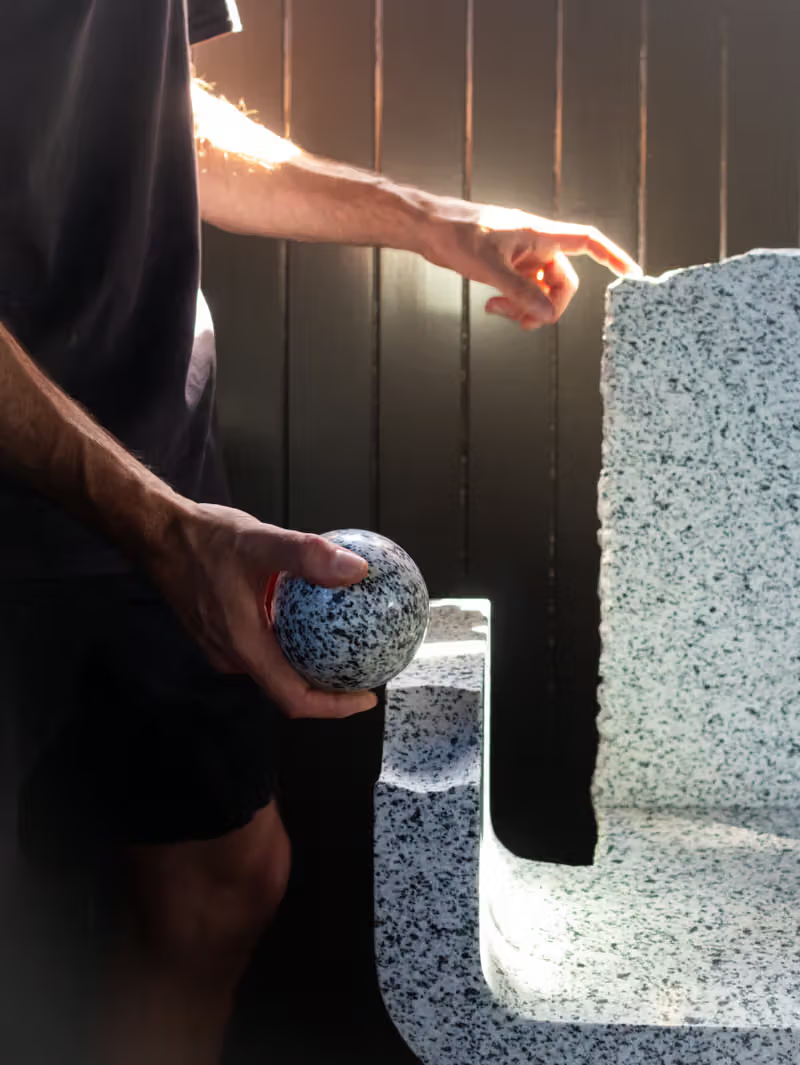
The Campione Chair in the recent profile concentrates several expressions of stoneworking in one seat. The original photograph shows speckled stone with an irregular edge alongside a distinctly smooth spherical component. Light responds differently to the two surfaces. The rough edge directs attention to the raw material and cutting process, while the rounded surface brings the eye towards a place a hand might hold or touch. The same material, treated differently, changes the pace of looking.
Rough edges and a spherical component of a stone chair respond differently to the light.
This suggests an approachable way to study collectible furniture: examine the back, seat, arms and supports, then ask how they connect. A chair occupies a room through its shape, but its edges, openings and surfaces also respond to the body. Stone's sense of weight, foam's associations with lightness and wood's directionality can provide starting points for comparison. Actual contact remains the place to discover the experience of use; photographs are particularly good at revealing details worth approaching more closely.
Return to the workshop and the tools beside finished pieces
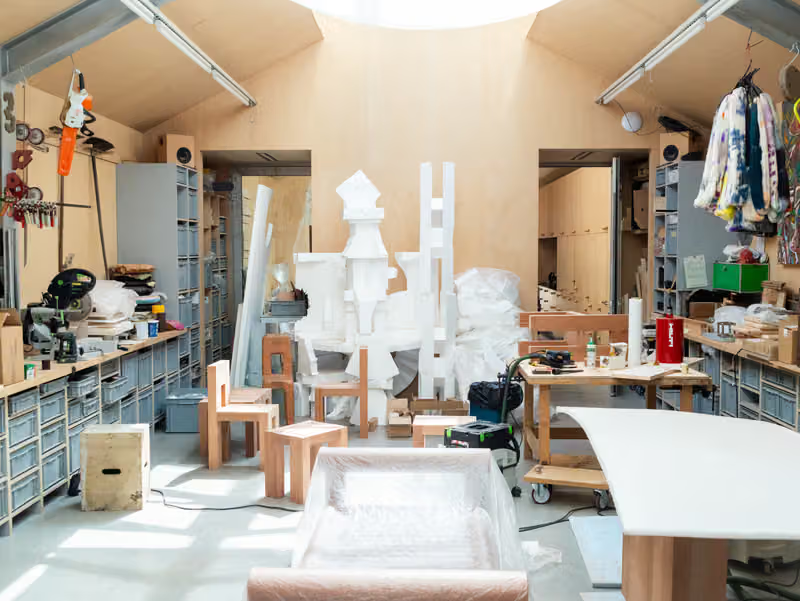
In the London workshop photograph, drawer cabinets, tools, wooden seating and white forms share a space lit from above by a skylight. Viewed beside the chair detail, the work becomes more than an isolated object on a plinth: it is the result of a sequence of material and fabrication decisions. To explore Lamb further, compare individual works through collection records. SFMOMA currently marks its Poly Scrap chair as not on view, making the page a useful place to begin online research; plans for seeing it in person should follow the museum's latest exhibition information.
Drawer cabinets, tools, wooden seating and white forms share the working space.