Yasutoshi Ezumi Designs FAS Uniforms With Pleats, Slits and an Adjustable Silhouette
The new uniforms are in use at Japanese FAS stores. A transformable blouse pairs with trousers or a pleated skirt; a general retail release has not been announced.
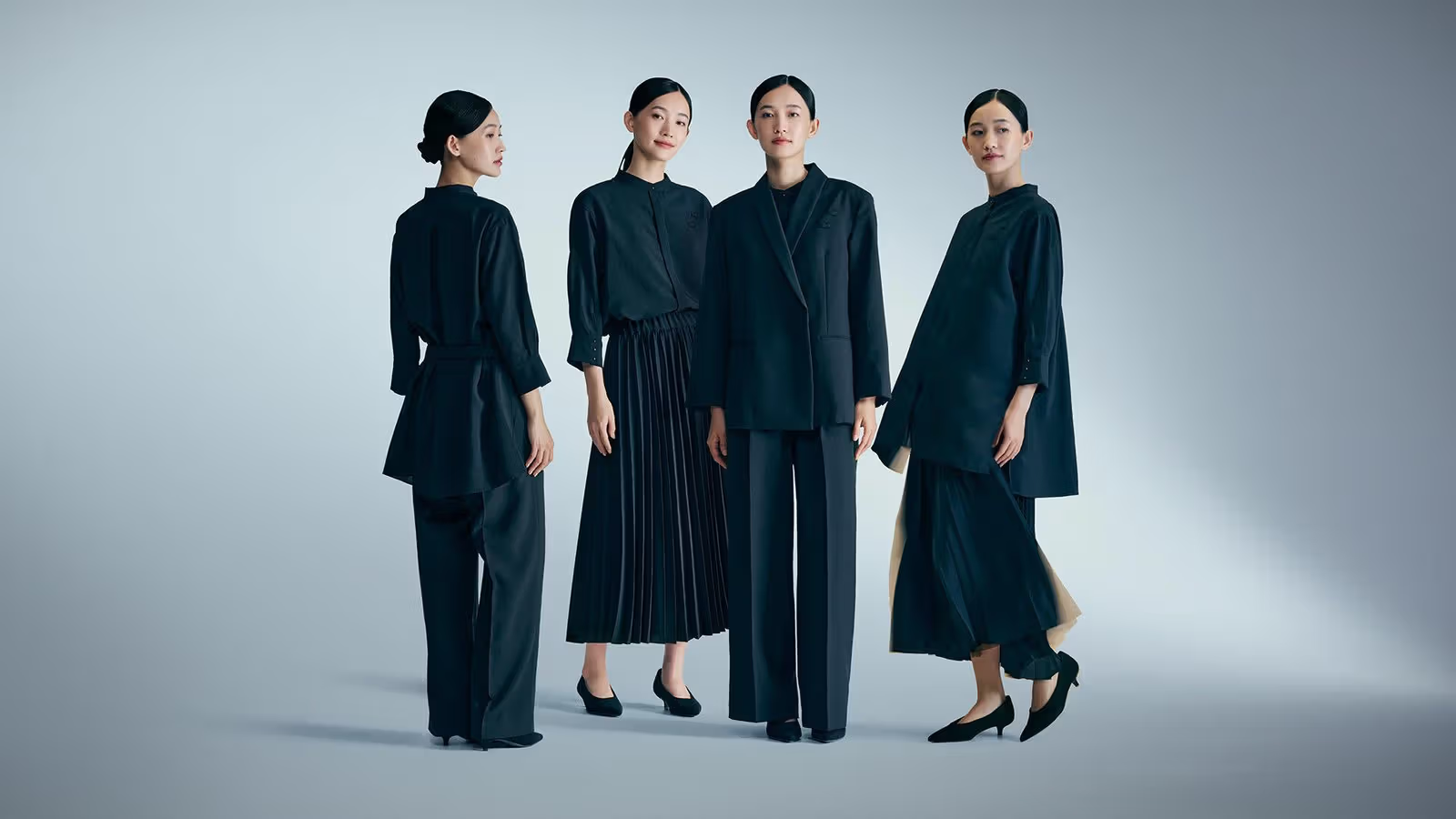
EZUMi designer Yasutoshi Ezumi has designed new uniforms for Japanese skin care brand FAS, which have been used in brand stores across Japan. The series uses the concept of "kiln transformation (yohen)", allowing a top to take on different silhouettes through belt and structural adjustment, and can be paired with trousers, pleated skirts or jackets. This is a store uniform update, not a general ready-to-wear series with announced prices and release dates.
The theme of kiln transformation (yohen) is transformed into the structural changes of a piece of clothing
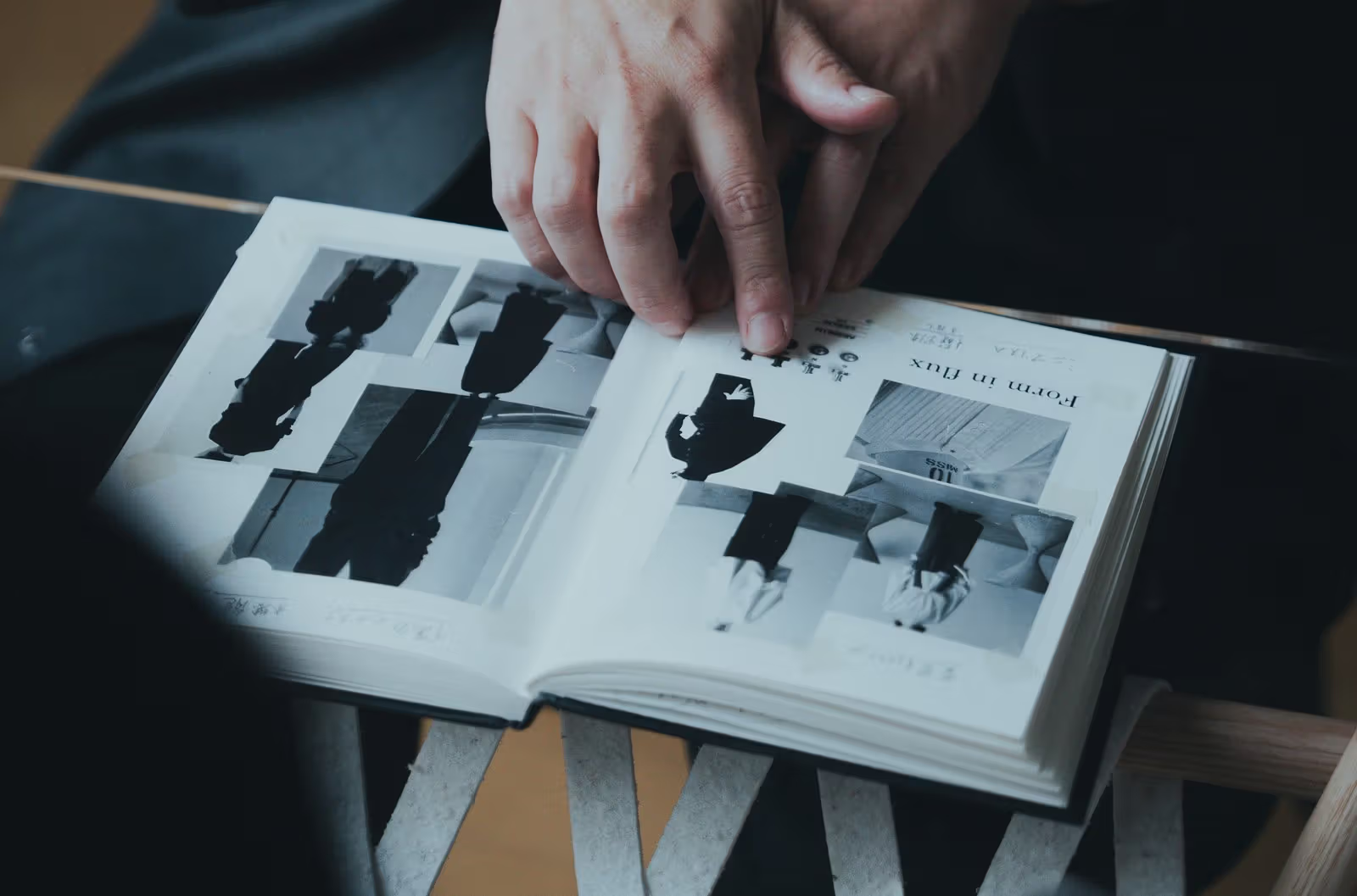
Ceramic kiln changes make people think of changes in fire, materials and production processes. This time, the concept is focused on how the outline of clothes moves. The design does not require changing the uniform every day. It can adjust the relationship between the plane and the three-dimensional shape in the same top, allowing the wearing method itself to participate in the formation of the shape.
FAS uniform design information and discussion. Image: エズミ
FAS puts change and unfinished state into the brand narrative, and the uniform becomes an expression that the clerk can wear when working. This is a transformation of the design concept and cannot be extended from the theme of uniforms to proof of the effectiveness of skin care products; clothing and products are still different objects of use.
Back box pleats and deep side slits form an A-line silhouette
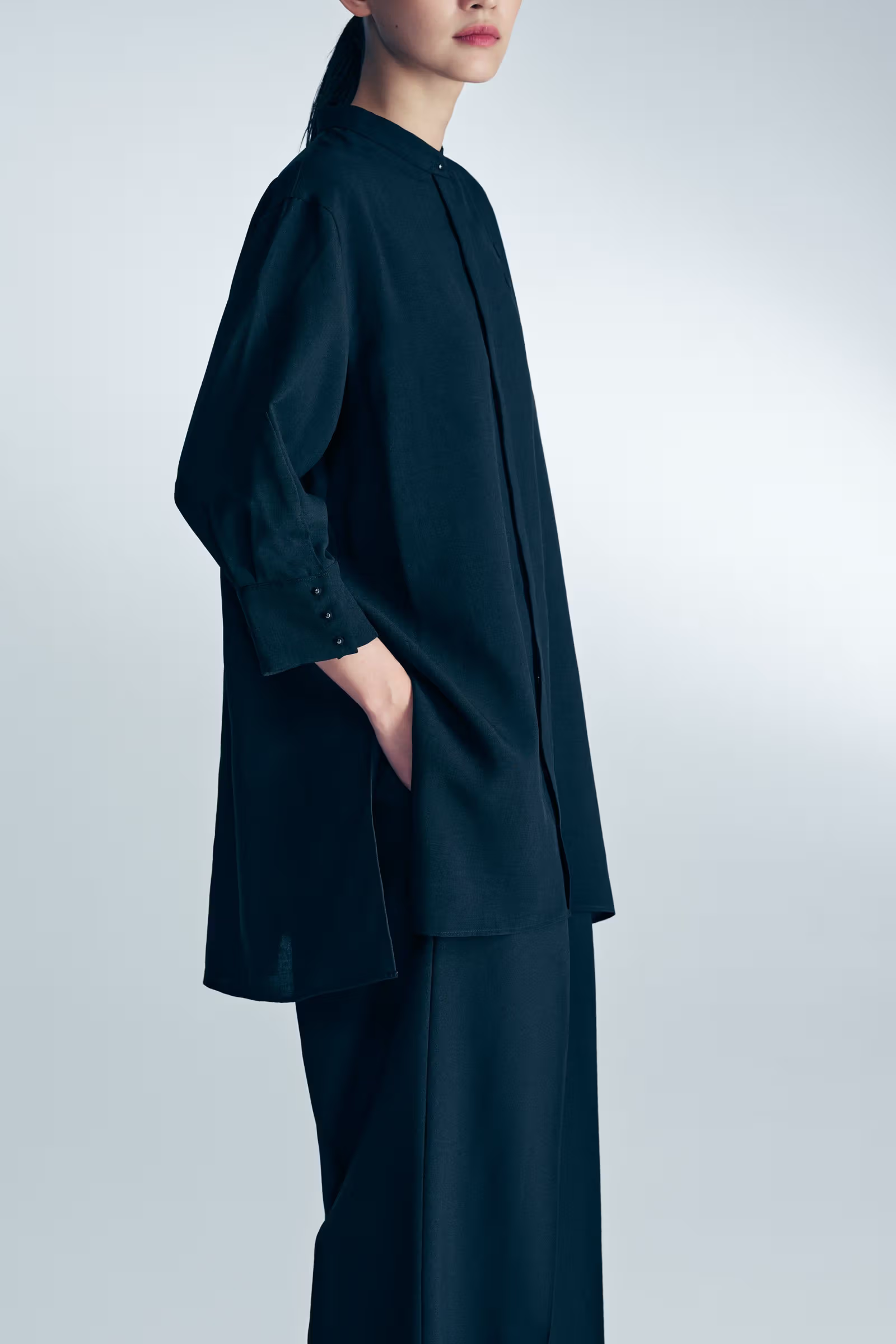
The main top has box pleats on the back and deep slits on both sides to allow the fabric to unfold from around the body. The A-line silhouette is not only formed by frontal cutting, but also related to side movements, the amount of fabric on the back, and how the hem falls. In addition to looking at the frontal photos, the images of turning and walking can better illustrate the structure.
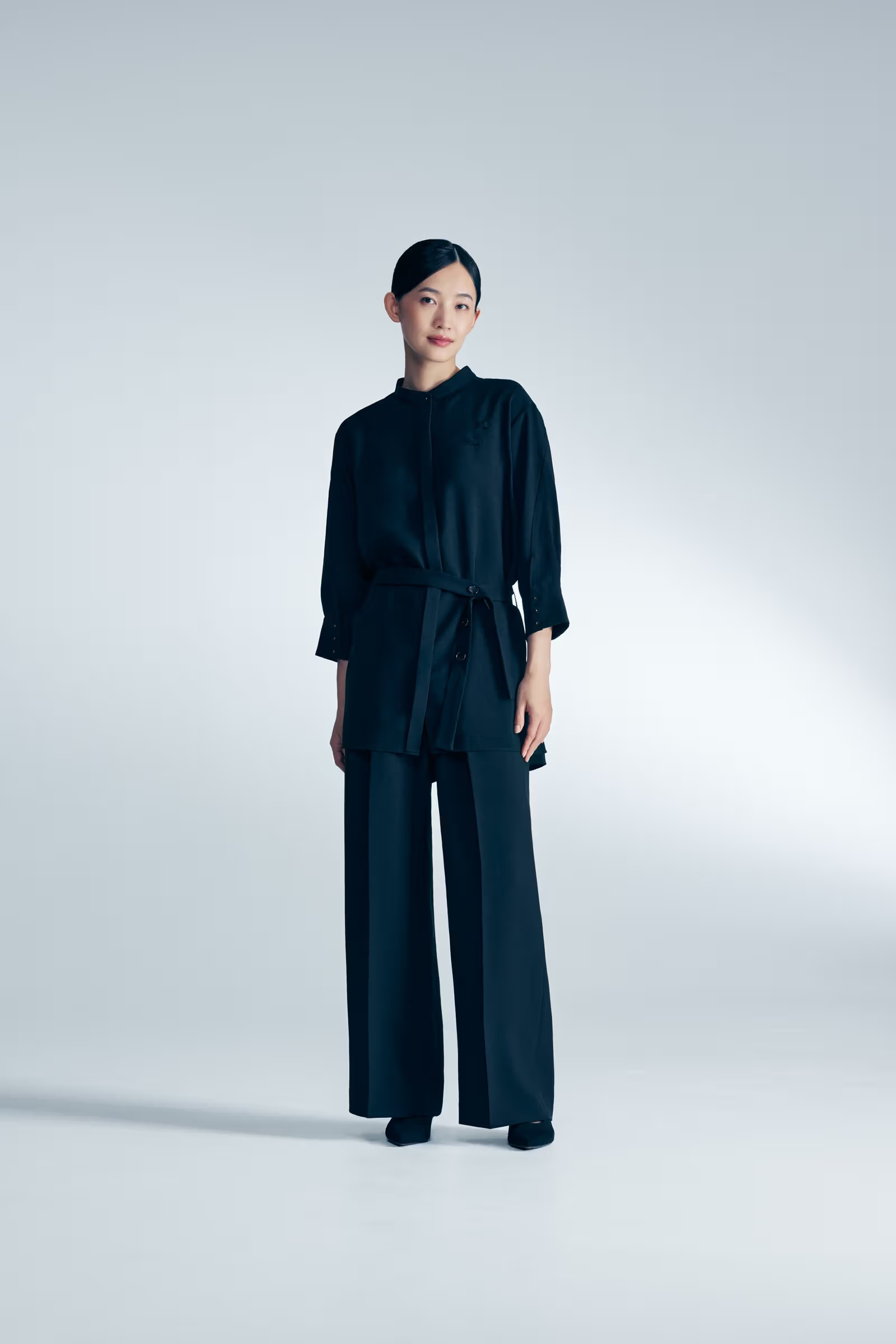
Front and side silhouette of FAS uniform. Image: エズミ
For uniform design, the space on the shoulders and sides will also be linked to the working posture. Reception, picking up goods, and sitting down will cause the same piece of clothing to have different fold lines; the significance of the variable silhouette lies in how the clothing changes with daily work movements, rather than just staying in the same shape during display.
The belt buckle method allows the same top to have different volumes
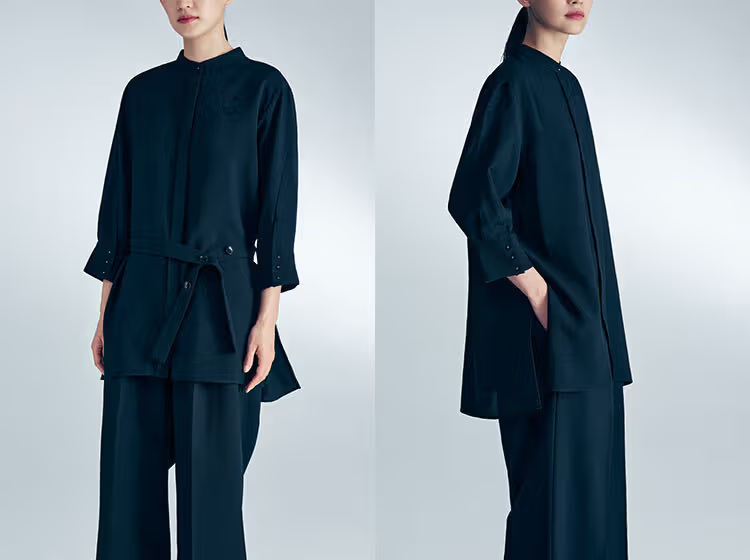
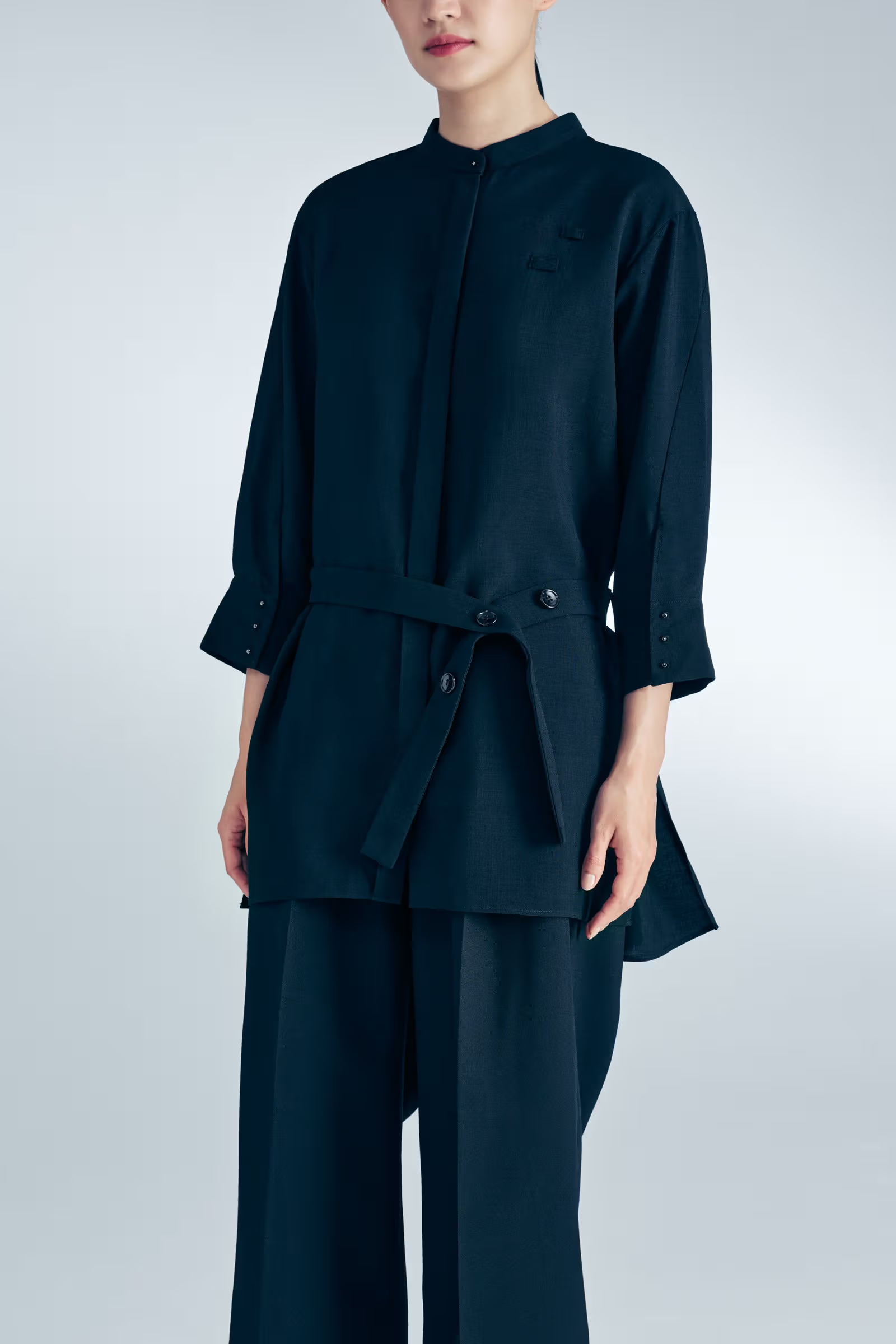
The adjustable belt can change the degree of waist tightening, and the buckle method can also be adjusted, from a relatively straight A-line line to a more obvious three-dimensional contour. Clothes do not only have two fixed options: wide or narrow. How to close the waist and place the hem will change the visual center of gravity.
FAS uniform top and waist configuration. Image: エズミ
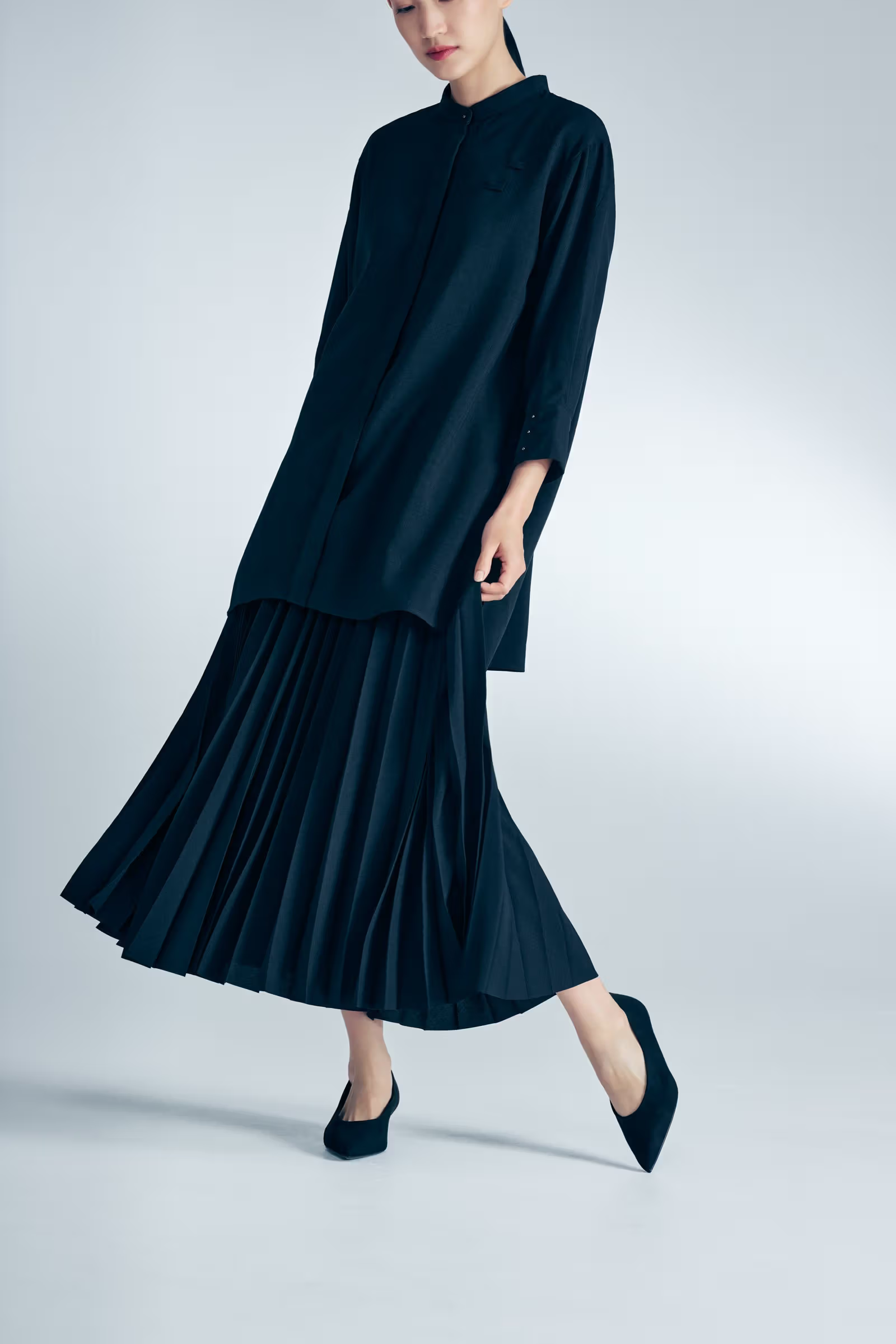
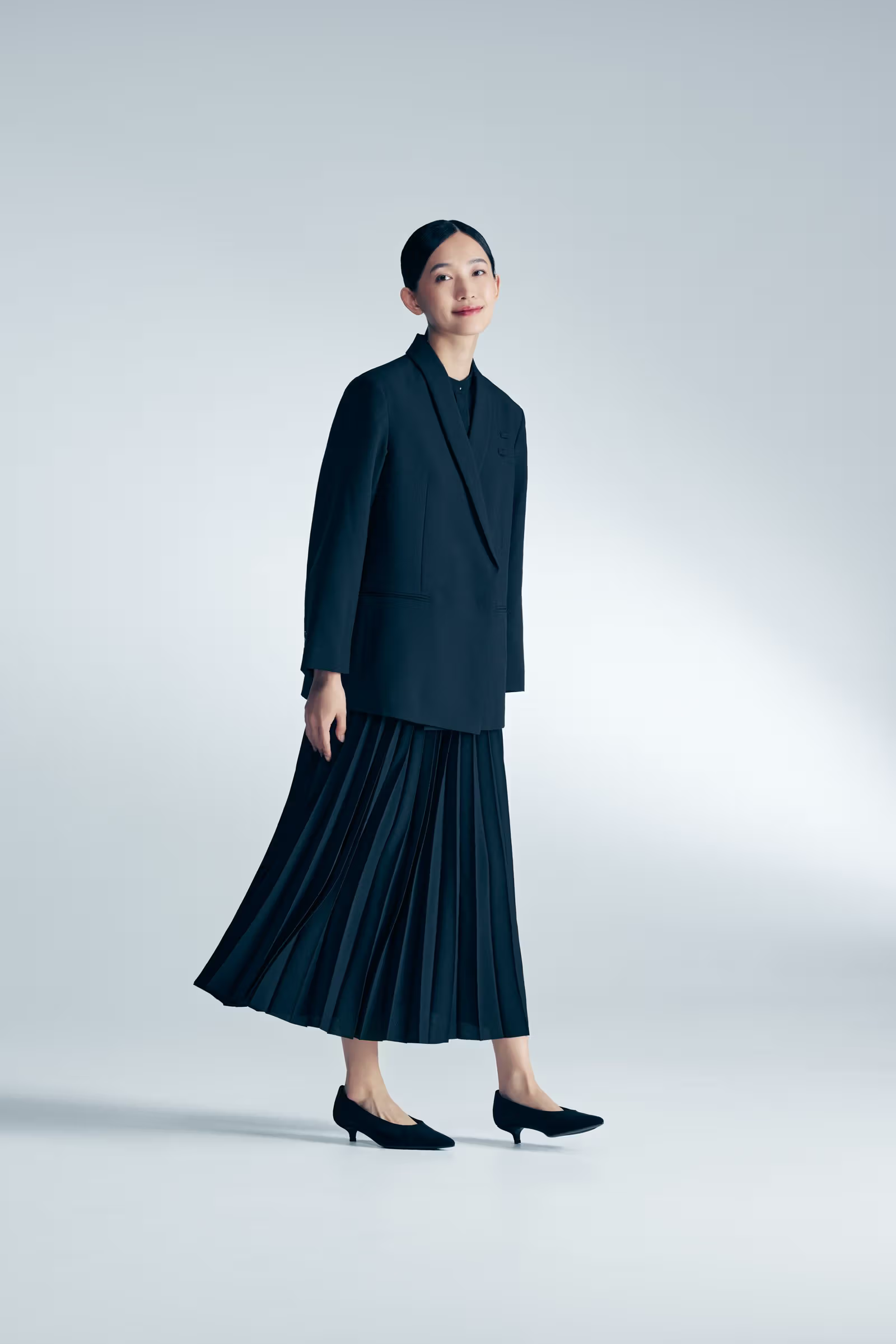
When paired with trousers and a pleated long skirt, the lines provided by the lower body are also different; after adding a jacket, only part of the original outline of the top is exposed. This allows uniforms to handle different combinations within the same design vocabulary while maintaining the overall identity required by the store.
FAS uniform pleated long skirt style. Image: エズミOverall silhouette of FAS uniform long skirt. Image: エズミ
Designer background and special clothing requirements such as uniforms
Yasutoshi Ezumi graduated from Central Saint Martins and worked for Alexander McQueen and other brands before setting up his own brand and also participating in uniform design for aviation and automobile-related companies. Compared with ordinary runway clothing, uniforms must find a balance between image and repeated work use, and the viewing standards are therefore different.
FAS uniform top and trousers. Image: エズミ
This time, the design can be understood from the three positions of back pleats, slits and waistband, instead of just thinking of it as new clothes in the store. When clothes are faced by people who receive customers every day, how the silhouette is adjusted and how different items share vocabulary will become details that continue to appear in the brand experience.