Four Years Later, Joyce Wrice Delivers a More Honest Answer in R&B with 'Machiko'
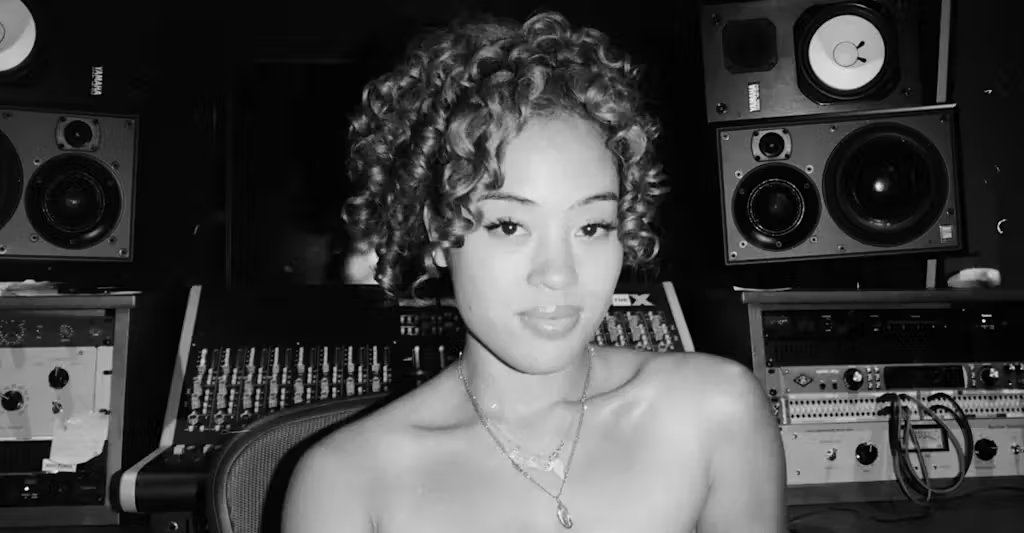
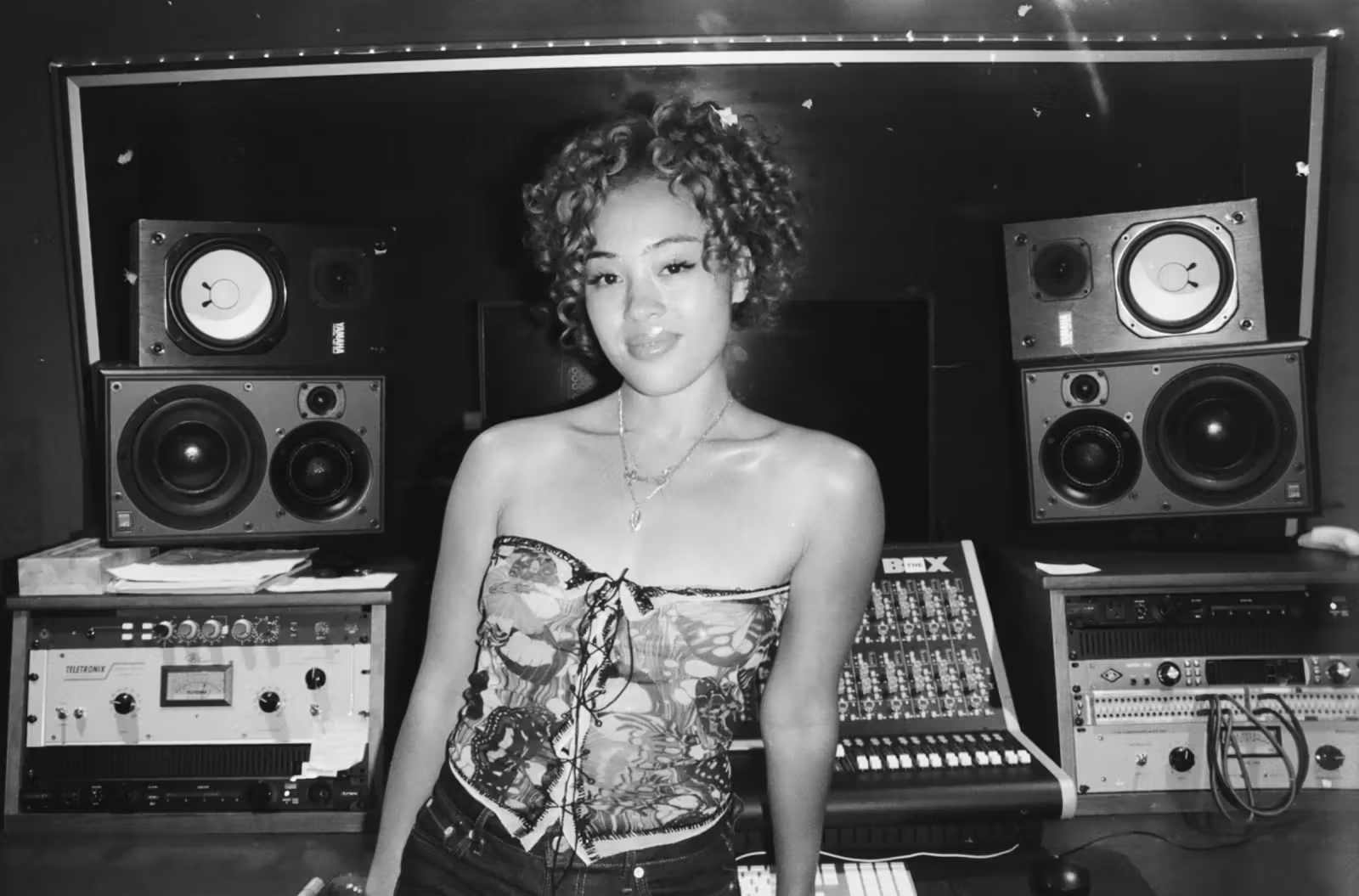
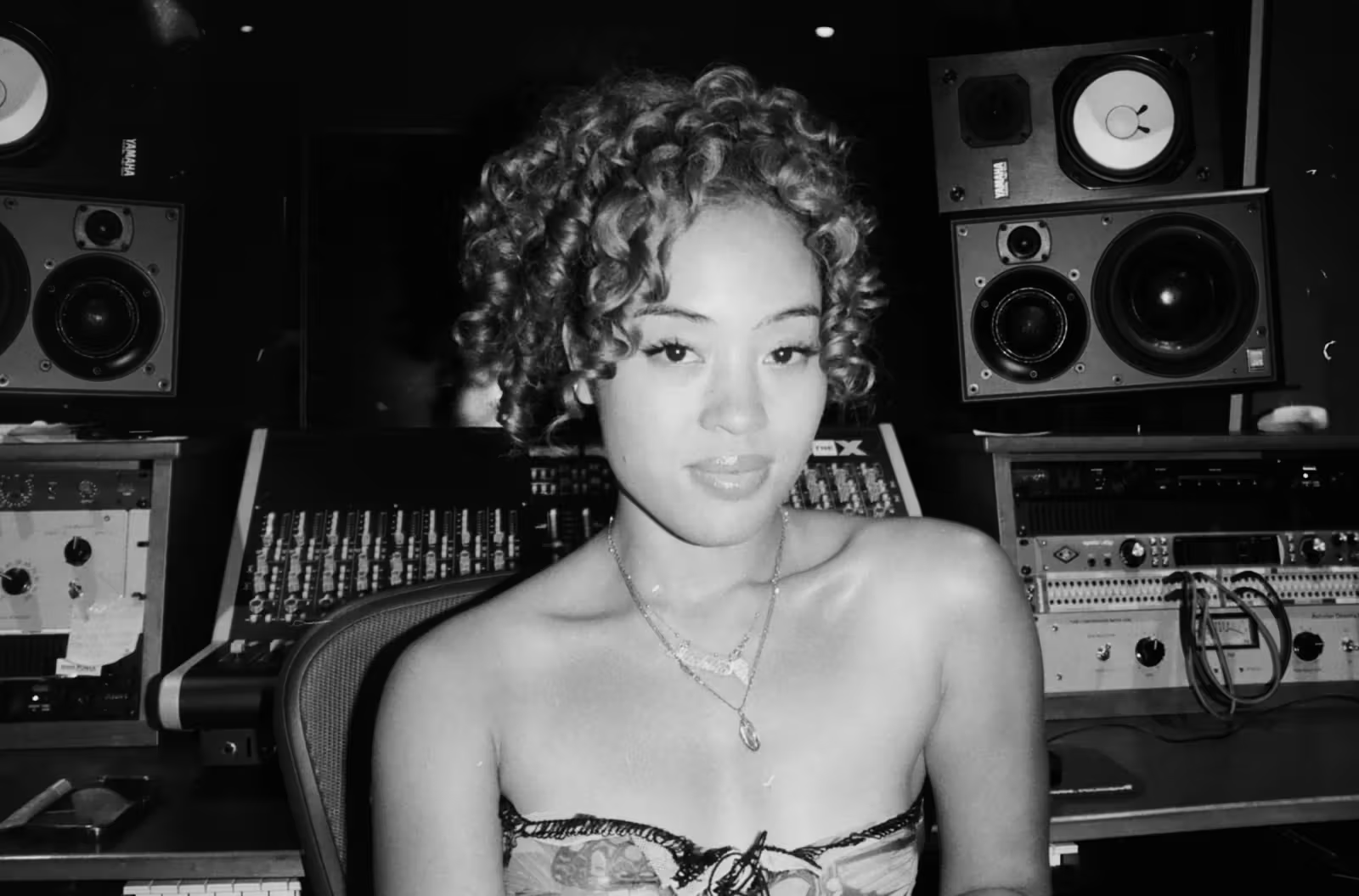
Los Angeles singer Joyce Wrice returns after four years with her sophomore album "Machiko," spending three and a half years writing over a hundred songs, and recruiting recently-released Flint rapper Rio Da Yung OG for a freestyled interlude.
A two-minute interlude that took just twenty minutes to record. Sitting in EMPIRE's San Francisco studio, Joyce Wrice watched rapper Rio Da Yung OG freestyle into the mic, at one point wondering whether he was "even all there." What he delivered, though, was a batch of ruthless lyrics she calls "quintessential Rio Da Yung OG": "This a 10 millimeter, it'll fuck your stomach up like some bad food." That interlude made it onto her sophomore album, "Machiko," becoming the piece of the puzzle that's the most jarring—and also the most honest.
Wrice's debut album "Overgrown" dropped in 2021, cementing the San Diego-born singer's place in contemporary R&B after years of playing supporting roles on projects by Alchemist and Free Nationals. Her résumé since then reads impressively: an NPR Tiny Desk appearance, a dancefloor hit with Kaytranada on "Iced Tea," and a feature on Lucky Daye's Grammy-winning duet album "Table For Two." But she describes the past four years as a period of "dodging the spotlight," until she felt it was "time to see what's next."
"Machiko" took three and a half years to make, with more than a hundred songs written along the way. During that time, she took a solo trip to Brazil, which she calls "transformative," and went through an "intense" period of vocal recovery—acid reflux combined with improper technique had caused small polyps on her vocal cords, forcing her to stop singing and relearn a "healthier" way to use her voice. At the same time, her romantic life was also shifting: for the first time in three years, she was neither healing from heartbreak nor in a committed relationship, and instead turned her focus back onto herself.
That clarity doesn't mean the album's sensuality has cooled off. Continuing the sultry tone of "Overgrown," "Machiko" remains slick and sexy, whether on "Crack the Code," which lets a lover's guard down completely, or the taut tension of lead single "Break Me In." What really shows her growth, though, is her willingness to expose her own flaws in the lyrics—on "Catch Me If You Can" with J.I.D., the chorus goes, "I guess I like the chase / better than the man." Wrice admits it was the process of writing that song that made her realize, "this is your bad habit."
One Freestyle Set the Tone for the Album's Honesty
The album's sonic direction began taking shape during a writing camp in the Hollywood Hills in the summer of 2025. She describes herself as an "album artist," but wasn't initially sure which direction this new project should take—only that she wanted it to be "as real as possible." After Brooklyn rapper SALIMATA sent back her verse for "Fly (Someone to Love)," Wrice immediately knew that was the sound the album needed, and went on to write "Break Me In," "Crack The Code," and the harmony-stacked "Dangerous" in quick succession.
The collaboration with Rio Da Yung OG came about because of her father's background growing up in Flint, Michigan—a friend suggested she work with a Flint rapper. At the time, Rio had just finished a stint in federal prison and was in the middle of an almost nonstop run of touring and mixtape releases. Wrice DM'd him on Instagram, and he agreed right away, but with him under home confinement in Atlanta, their planned session kept getting pushed back—until this past February, when both happened to be in San Francisco for the Super Bowl, finally making the interlude happen at EMPIRE's studio.
The name "Machiko" comes from her middle name—"Machi" meaning city, and "Ko" meaning girl or child. Wrice's mother grew up in rural Japan with a love of fashion and music, which led her to move to Tokyo, where she met Wrice's father, who was serving in the Navy. Wrice says both her parents were creative people, but came up in an era when "chasing your dreams wasn't practical"—and her mother gave her this middle name hoping her daughter could live out the "city girl" life she once longed for but never got to have. As recording progressed, Wrice found the name increasingly fitting for the themes she wanted to explore—not just musically, but in terms of lifestyle shifts, including bigger-budget music videos and more elaborate choreography. "It's not an alter ego," she says. "But it's helped me step into the pop star world I've always been drawn to."