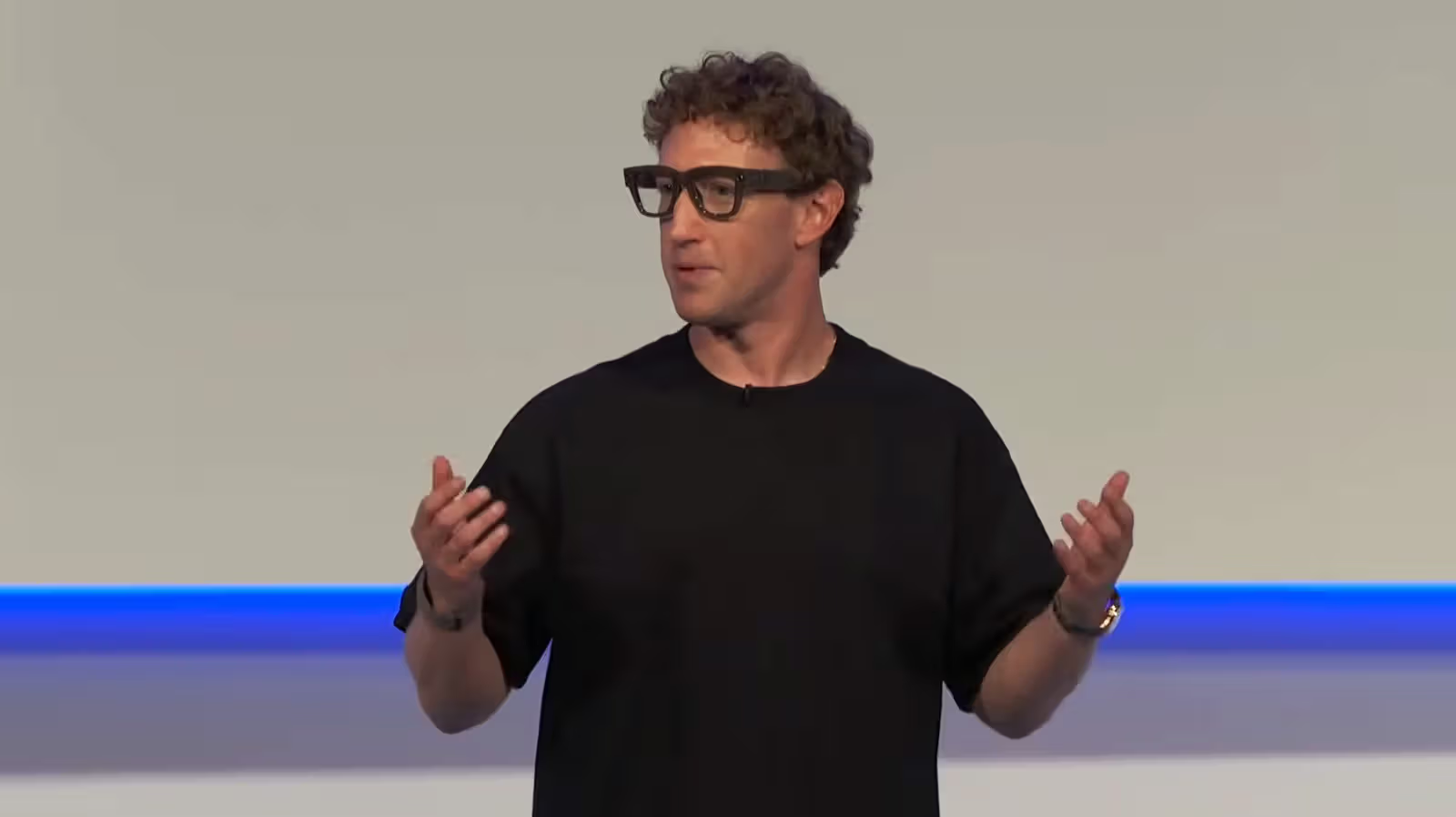
In January of this year, Mark Zuckerberg drew a very futuristic-sounding organizational chart at his annual executive retreat in Hawaii: AI agents took over daily work, human employees were reduced to small "pods" for supervision, engineers, designers, and product managers were gradually transformed into "builders" regardless of job type. Middle management was thinned, and daily priorities were changed to assist in decision-making by "agent-assisted analysis." Reuters reported that this plan, code-named Project OT (Organization Transformation), was partly inspired by some of the startups Meta executives observed that were re-architecting their teams with AI as the core, including several cases in Asia.
The original plan was quite destructive. Internal consideration has been given to reducing the manpower of some teams to only 40%, including direct layoffs, freezing open vacancies, and eliminating low-performing employees identified by the company. An HR executive estimated at the time that this wave of downsizing would at least equal the scale of 2023 - that time Meta laid off 25% of the company's workforce. Project OT originally planned a second wave of layoffs, scheduled to start in November this year.
But this second wave of layoffs, Zuckerberg later called a halt, or at least postponed it. Reuters did not find a clear reason, and Meta only admitted that such a "second phase" concept did exist, but it set the scale of layoffs that was considered radical by the outside world as one of the "scenario options" that were still being evaluated at the time, rather than finalized.
The number of program codes has increased, but the available functions have not kept up.
The problem is likely that AI itself is not qualified to take over these tasks. Meta's internal data shows that the amount of code changes in the company's AI software platform and infrastructure has increased by 220% year-on-year; however, new features or functional improvements that have been implemented and experienced by users have only grown by 36%. What’s even more troublesome is that the number of technology and information security incidents has increased by 40% simultaneously, and the time employees spend dealing with these problems has skyrocketed by 70%.
At an internal company town hall in July this year, Zuckerberg admitted to employees that he had overestimated the speed of technological progress. He said that "the trend of agent development in the past four months at least has not accelerated as we expected" and the company's investment in AI agents "has not really blossomed yet."
At the same time, another line of work is also holding back: the tracking software Meta installed on the computers of American employees will record mouse movements and keyboard input, with the purpose of using this data to train AI agents that will replace these employees in the future. As soon as this incident came to light, a large number of complaints flooded into the internal communication platform, employee satisfaction scores dropped by 19 points, and labor organizing activities also intensified. The technical progress is not as good as expected, and employee morale has plummeted. The two things combined may be the reason why Zuckerberg decided to press the pause button on the second wave of layoffs.
Reuters pointed out that Meta has not completely given up on this larger organizational transformation idea. Zuckerberg's external statement actually only promised that there would be no "company-wide" layoffs "this year." This sentence made internal employees start to worry that there would be smaller downsizing this year, or a larger-scale adjustment in 2027. There are still some smaller AI auxiliary teams operating within the company, and Meta itself continues to invest large sums of money in AI infrastructure. When investors ask when these investments will pay off, Zuckerberg will have to come up with more specific results to explain.