OODA's DUAS Towers: One Round, One Square, Same Stone Logic
OODA has designed a pair of 98-meter towers for Vlorë, the coastal city in southern Albania, drawing on local Tomorri white marble and traditional carpet patterns — one round, one square, both built from the same structural grammar.
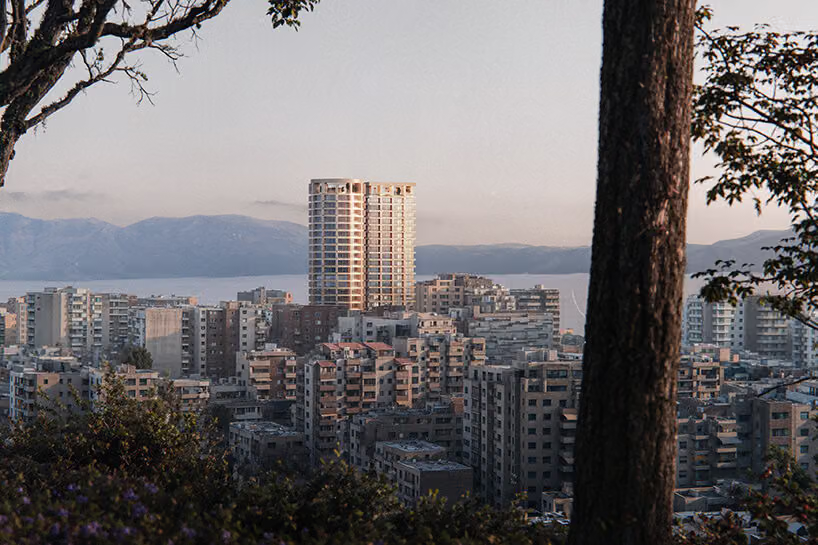
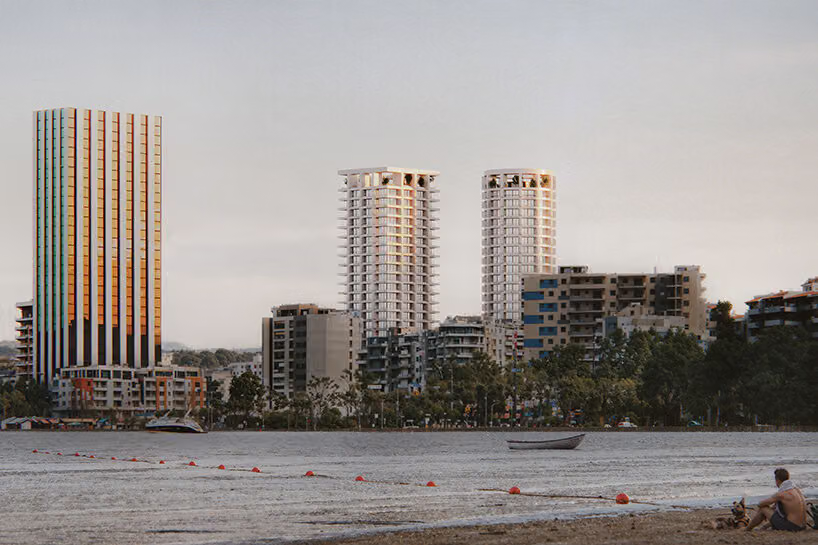
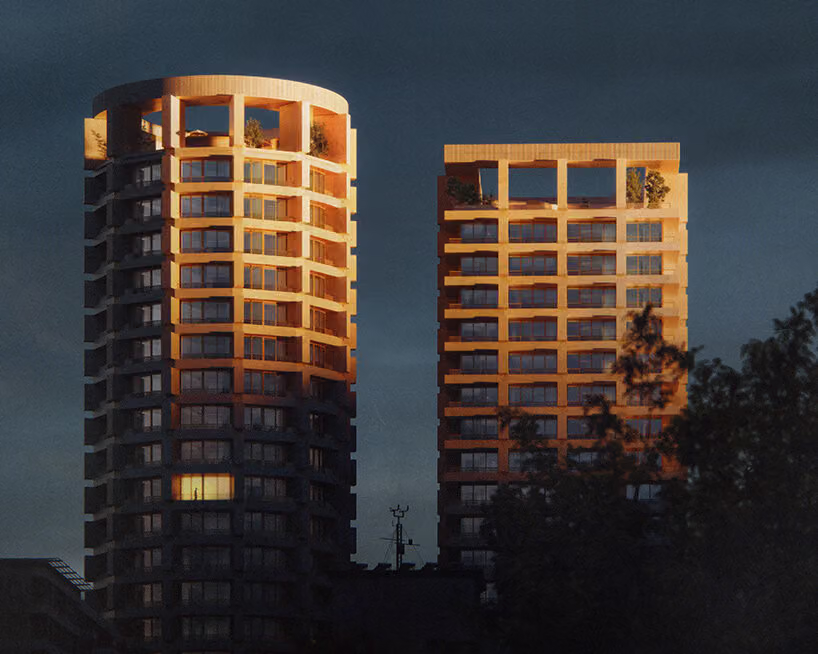
Seen from across the bay, two stone volumes rise between the mountains and the Adriatic — one round, one square, yet unmistakably cut from the same logic. This is DUAS Towers, a pair of 98-meter mixed-use towers designed by architecture studio OODA for Vlorë, a coastal city in southern Albania. The name comes from the Portuguese word "Duas," meaning "two."
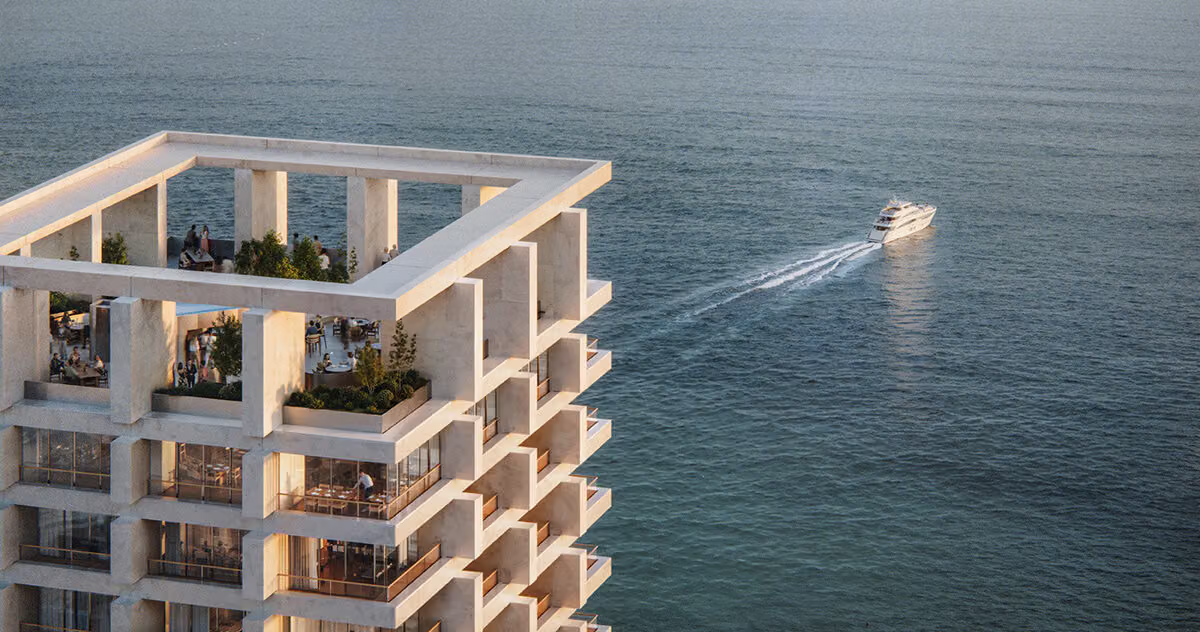
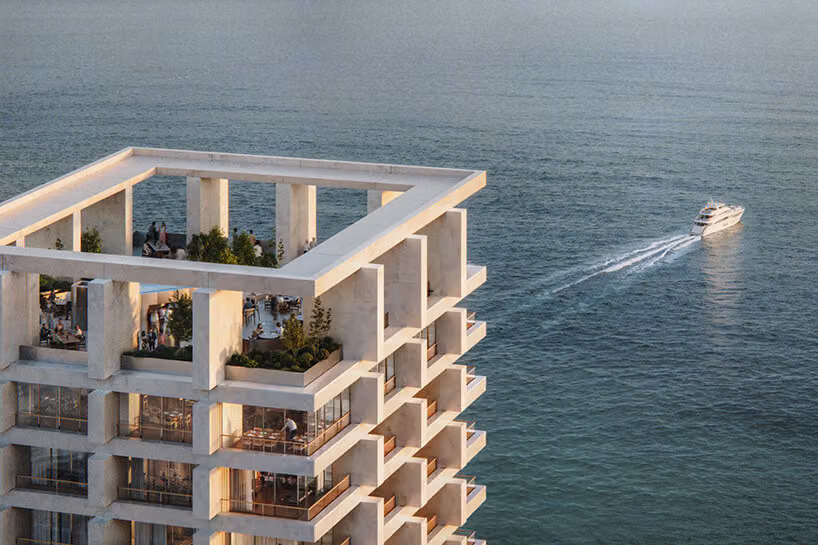
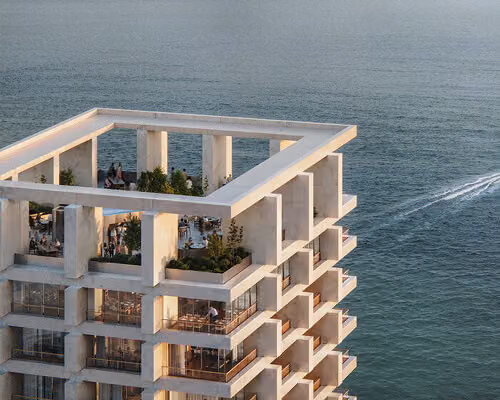
Both towers follow the exact same composition: a horizontal volume at the base, a vertical slab-like structure rising through the middle, and another horizontal volume closing the top. The only difference lies in the footprint — one is a 30-by-25-meter rectangle, the other a 26-meter-diameter circle. The same structural language, poured into two different outlines, produces two entirely distinct silhouettes from a distance.
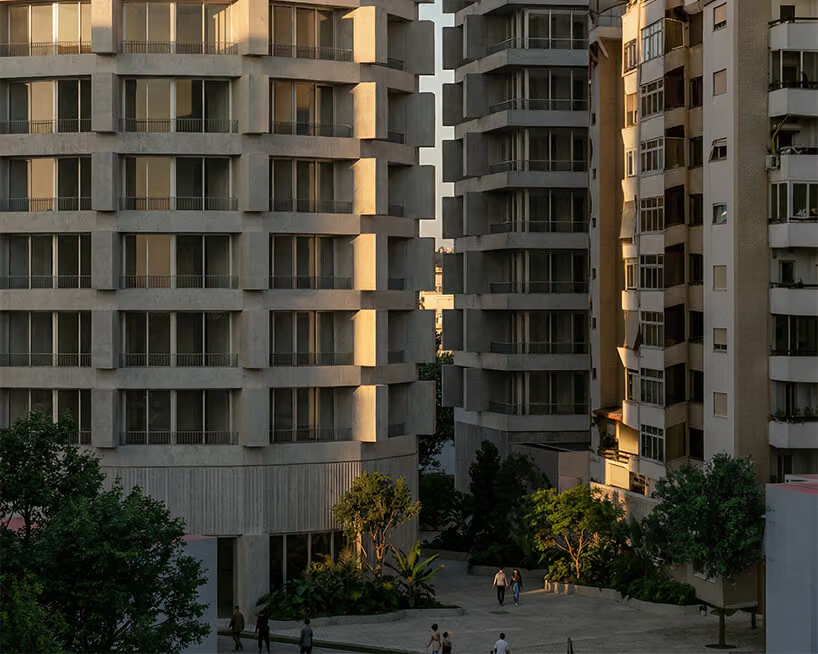
On the façade, both towers step inward, floor by floor, as they rise toward the roof. This tiered treatment is borrowed from "rrodhe," a motif commonly found on traditional carpets from southern Albania. The pattern isn't purely decorative — it directly organizes the towers' silhouette and dictates the rhythm of the stone cladding.
The exterior material is Tomorri white marble. OODA compared eight quarries across Albania before settling on this one, located roughly 60 kilometers inland. The stone has minimal veining and an almost texture-free surface, which makes the façade especially sensitive to light — in the renderings, the cool white tone of early morning shifts to warm hues by sunset, with the marble beginning to reflect the colors of the hills across the water.
This choice of material also fed back into the logic of the structural form. OODA started from the proportions of a rectangular block of stone as it emerges from the quarry, and from the different states a slab of stone takes on when laid flat versus stood on end — that shift between horizontal and vertical underpins the organization of the entire tower's mass. On the façade, marble fins project beyond the floor slabs, shading the glazing from direct sun while framing views out to the sea; as the sunlight moves, they cast shifting shadows across the pale stone surface.
The two towers sit on separate irregular plots facing the sea, both rising 24 stories with additional rooftop space above. The team used solar path studies to determine the towers' relative positioning, ensuring each gets sufficient daylight. The square tower responds to the street grid with its corners, while the round tower presents a continuous curved edge; at ground level, both pull back to open up more public space. Inside, the program includes hotel rooms and residences on the upper floors, street-facing retail, and hospitality space on the roof, with each function assigned its own dedicated core. The surrounding landscaping features drought-tolerant planting, including wild olive and rosemary, suited to Vlorë's dry summer climate.
Beyond the stone façade, material research continues on other fronts. OODA is testing low-carbon concrete mixes that replace part of the cement content with substitutes such as metakaolin and ground granulated blast-furnace slag, and is exploring using recycled aggregate from nearby demolition and road works within the concrete mix — linking the site to building materials already circulating through the city. For wall insulation, the team is proposing hemp-clay and wood-fiber materials in place of conventional insulation systems, alongside a rainwater harvesting and reuse system. These strategies remain at the research stage, and DUAS Towers itself is still going through the permitting process.
Seen from across the bay, what still catches the eye first are those two stone volumes — a rectangular block pulled from a quarry, a geometric motif lifted from a carpet, taken apart and reassembled into two coastal towers that stand independently while speaking the exact same language.