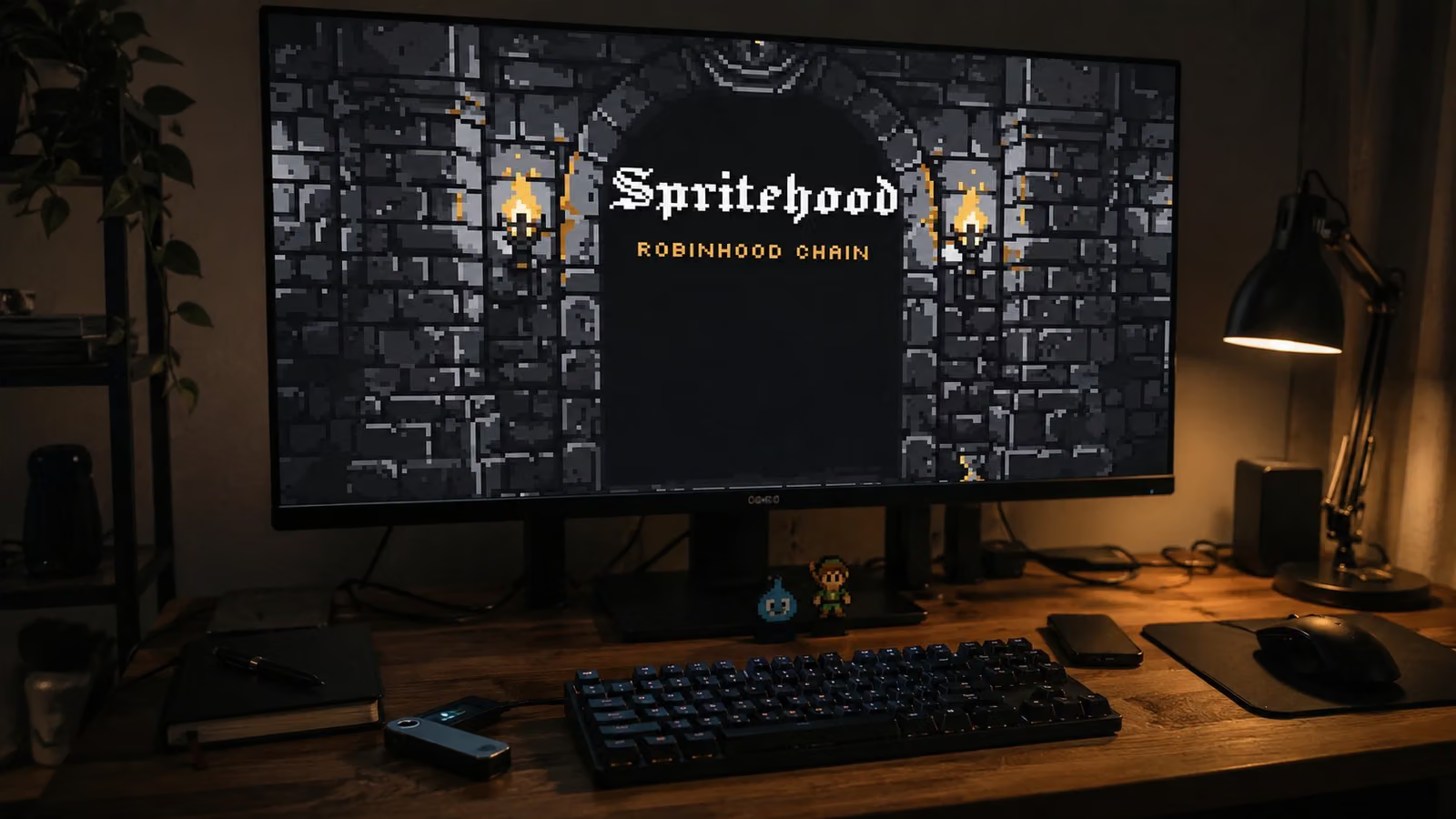
He showed his hand himself. Cole Villemain's bio states that all his tweets are satire or performance and not investment advice, and when teasing the drop he flat-out said he was pulling "the oldest trick in the 2021 NFT playbook." He couldn't have been more upfront about it. On August 11, Spritehood opened for public mint, and all 44,444 pieces sold out in 53 minutes, bringing in roughly $1.28 million, about 684 ETH.
Villemain is a co-founder of Pudgy Penguins, going by ColeThereum online. On January 5, 2022, an investor posted a Twitter thread accusing the founding team of draining the project's ETH treasury. NFT influencer 9x9x9eth then revealed he had once offered to sell 20% of the project for 4,000 ETH, worth about $12.9 million at the time. The very next day, the community voted on Discord to remove the entire founding team. Digging further back, on-chain sleuth ZachXBT exposed his history running the dropshipping site eBoy Outlet in August 2021, where the comment section was flooded with complaints about undelivered orders and unrefunded payments. Villemain denied any wrongdoing at the time, saying refunds had been issued to customers who never received their products. He was never formally charged or sued over any of these accusations, but he was never fully cleared of them either.
This time, his teaser post on X racked up over 500,000 views, and the comments were clearly split into two camps. One developer wrote, "The guy who cashed out on meme NFTs back in the day is now launching a new project on Robinhood Chain." Others said he'd been gone long enough that plenty of people don't even know who he is, and now he's back doing the exact same thing. Regardless of the debate, the mint sold out just as fast.
Of the 44,444 pieces, 1,488 were free giveaways
Breaking down the numbers makes it clearer. A total of 42,956 pieces were actually sold for payment—37,430 at $17 each, and another 5,526 at $117 each, with the extra $100 covering an upgrade option. The remaining 1,488 pieces were free pre-mint giveaways that generated no revenue. Midway through the mint, the community estimated revenue would land between $755,000 and $775,000—the final result came in about 60% higher than that estimate.
Spritehood leans into an RPG theme, with the token code WISP, spanning ten classes: Warrior, Knight, Priest, Hunter, Mage, Monk, Rogue, Paladin, Jester, and Death Knight. Holders will eventually need to burn their Wisp to summon a sprite, customizing its name, appearance, gear, and weapons, with the team also planning factions, dungeons, and tavern gameplay. Turning the burn-to-customize mechanic into an ongoing process effectively suppresses the circulating supply available on the secondary market. The current floor price sits around $22.61, still above the $17 mint price, though it dipped 9.2% over the past 24 hours.
A Chain Built for Tokenized Stocks, Heated Up First by NFTs
What's even more intriguing is the bigger picture around Robinhood Chain itself. This is Robinhood's self-built Ethereum Layer 2, using Arbitrum's Orbit technology, with 100-millisecond block times and gas paid in ETH. Its public mainnet is set to launch on July 1, 2026, originally positioned to handle tokenized stock trading. Yet data from August 13 showed Robinhood Chain's 24-hour NFT trading volume hit $1.05 million, compared to less than $525,000 on Ethereum mainnet during the same period—more than double. Following Spritehood's lead, StonkBrokers and Robinhood Punks kept the momentum going, and OpenSea has already added support for the chain. Infrastructure built for tokenized stocks, just over a month after launch, had its trading volume first ignited not by stocks, but by a crowd of seasoned NFT traders—and that fact alone is worth a second look, more so than who's actually selling the NFTs.