SR_A Atelier for GRIND: 72-Hour Hand Indigo Dyeing Reworks Parkas and Retro Hoodies
Samuel Ross layers technical fabrics, raw silk and cotton sportswear in SR_A Atelier. GRIND’s imagery reveals hand-dyed variations, roomy coats and cropped hoodies; specific retail information remains to be announced.
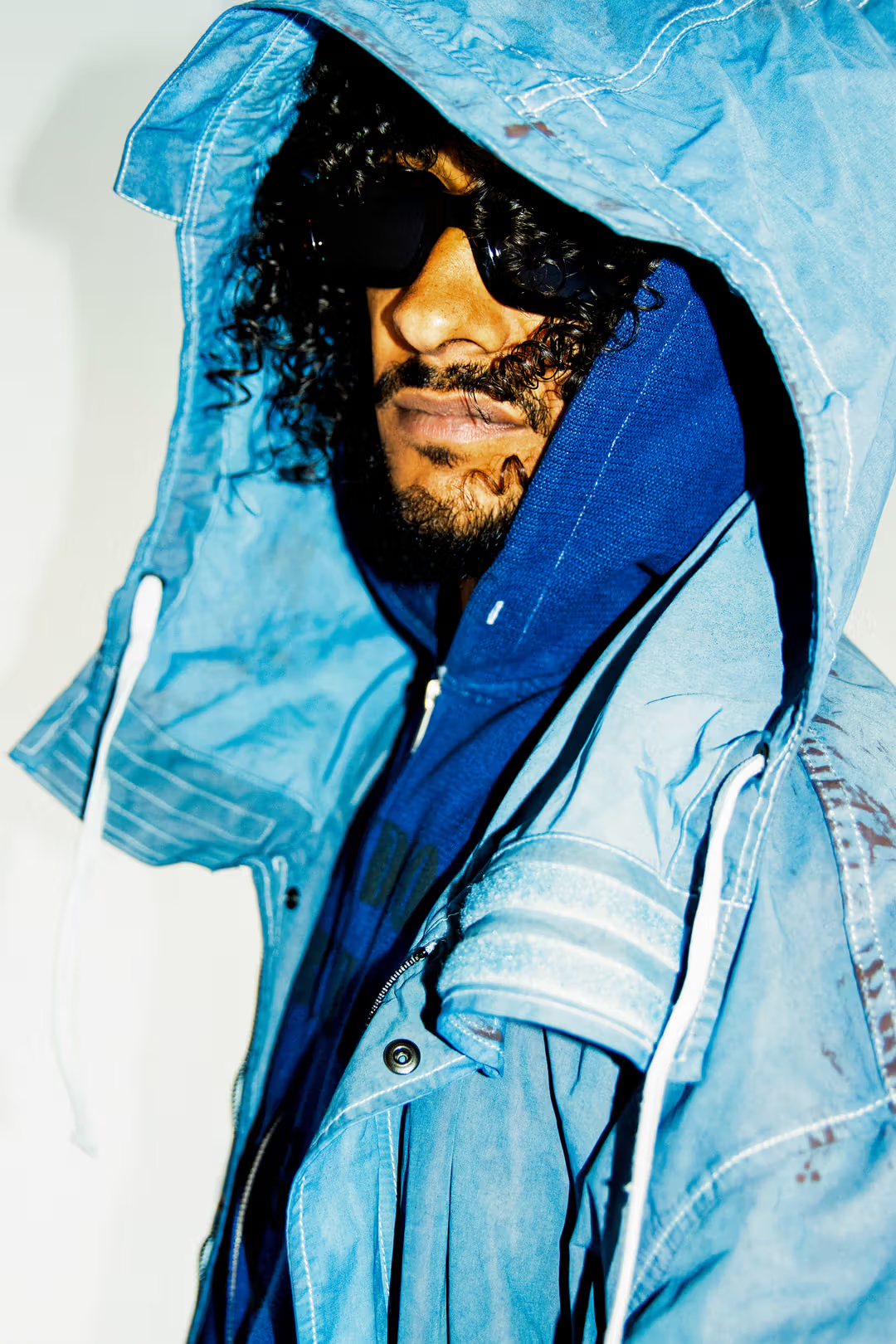
Samuel Ross’s SR_A Atelier brings parkas, hoodies and hand-applied indigo colour into one design language in imagery created for GRIND. The clothes combine technical fabrics, raw silk and retro sporting proportions, using garment dyeing and distressed finishes to leave colour across surfaces and folds. GRIND published the full project on November 21. The collection has been revealed, while specific retail dates and prices await announcement; its shapes, dye treatments and contrasts between inner and outer layers offer a starting point.
Parkas connect technical fabrics with handworked details
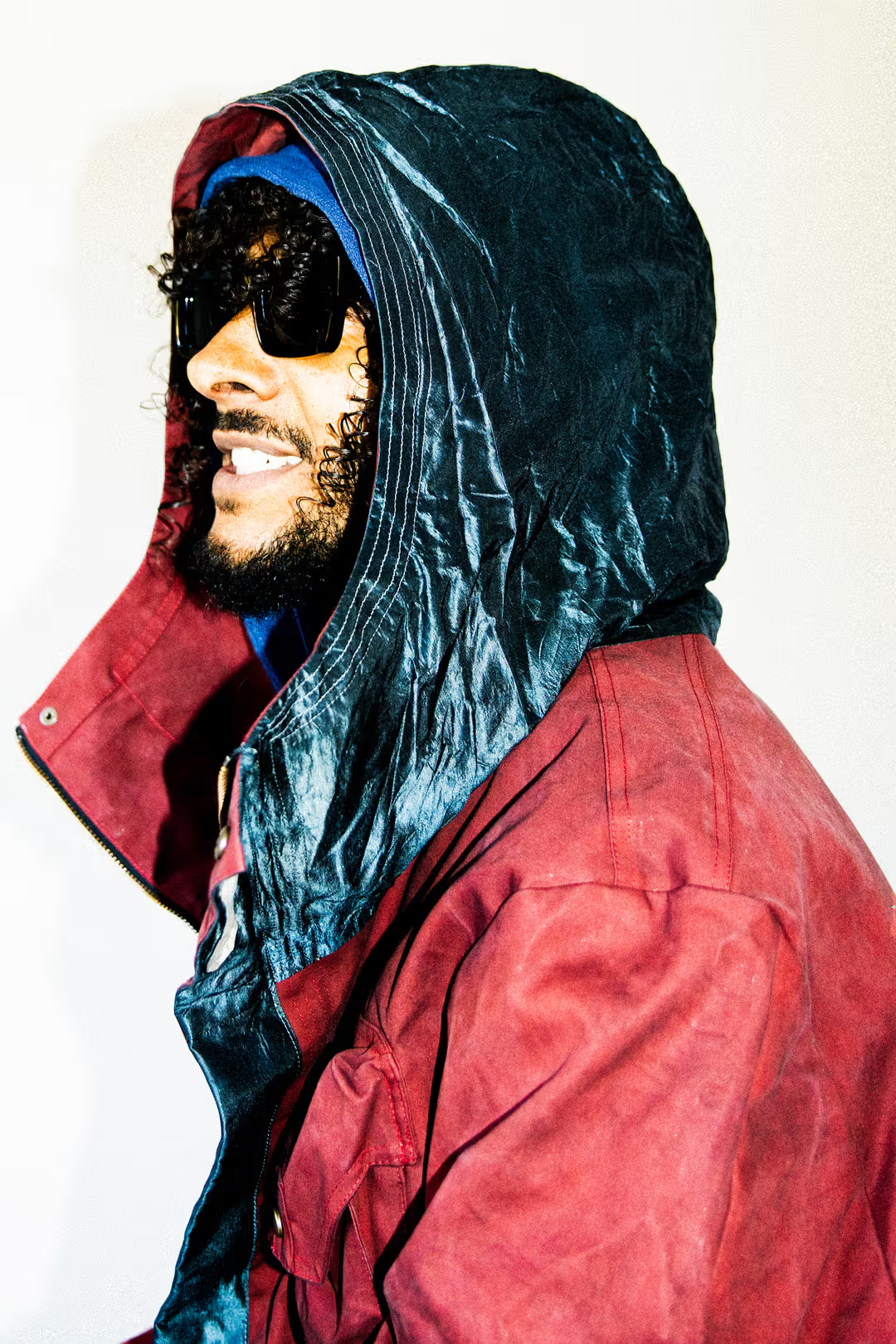
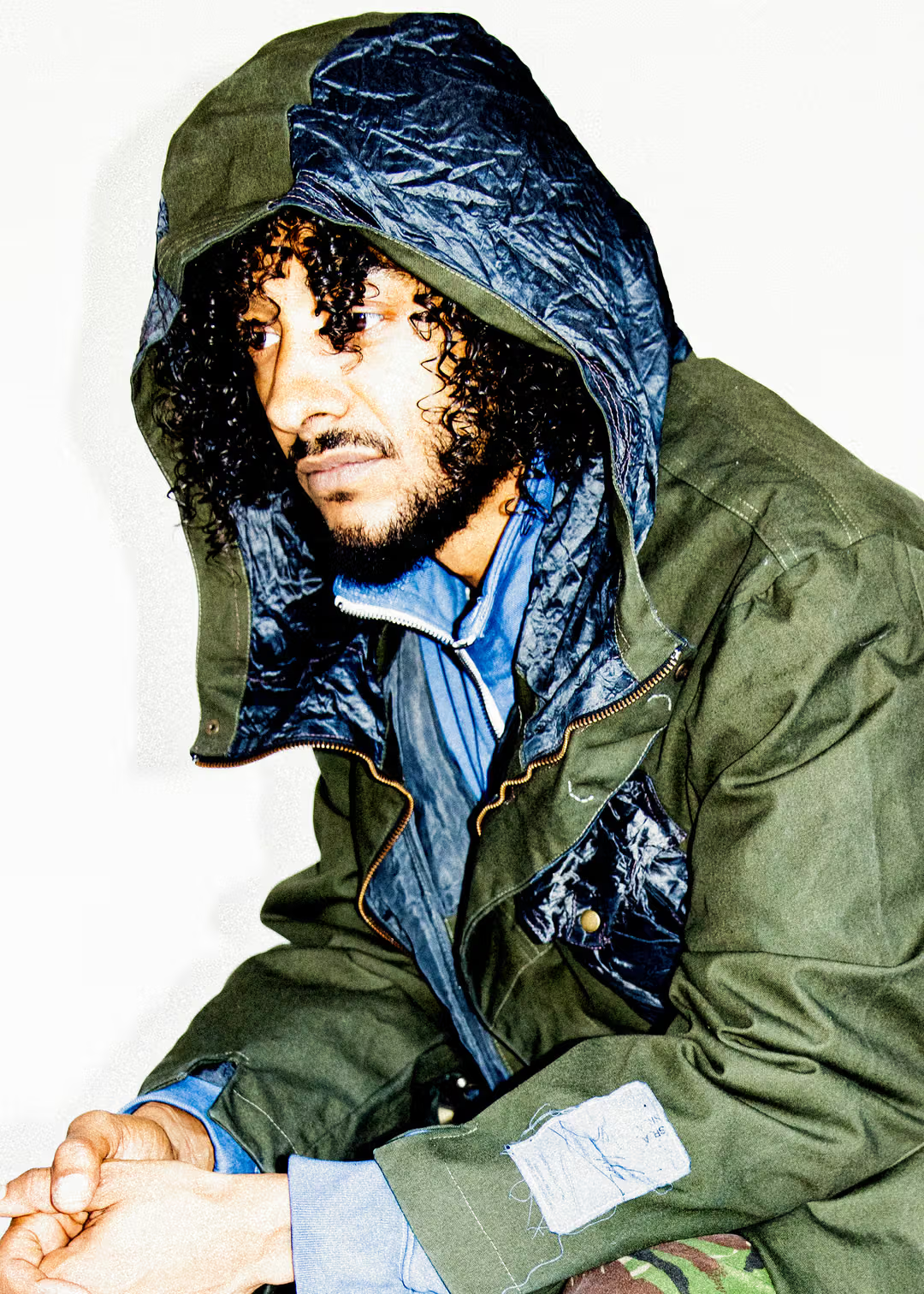
Parkas in the project use Limonta fabrics, with raw-silk details from Jaipur, India, at the hood, front pockets and lining. Brass components and vegetable-tanned leather add different surface qualities, while leather at the hood receives sashiko hand stitching and embossing. These materials do more than act as isolated decorations: the smoother outer surface, textured hood and small metal accents create a clear contrast in close-up.
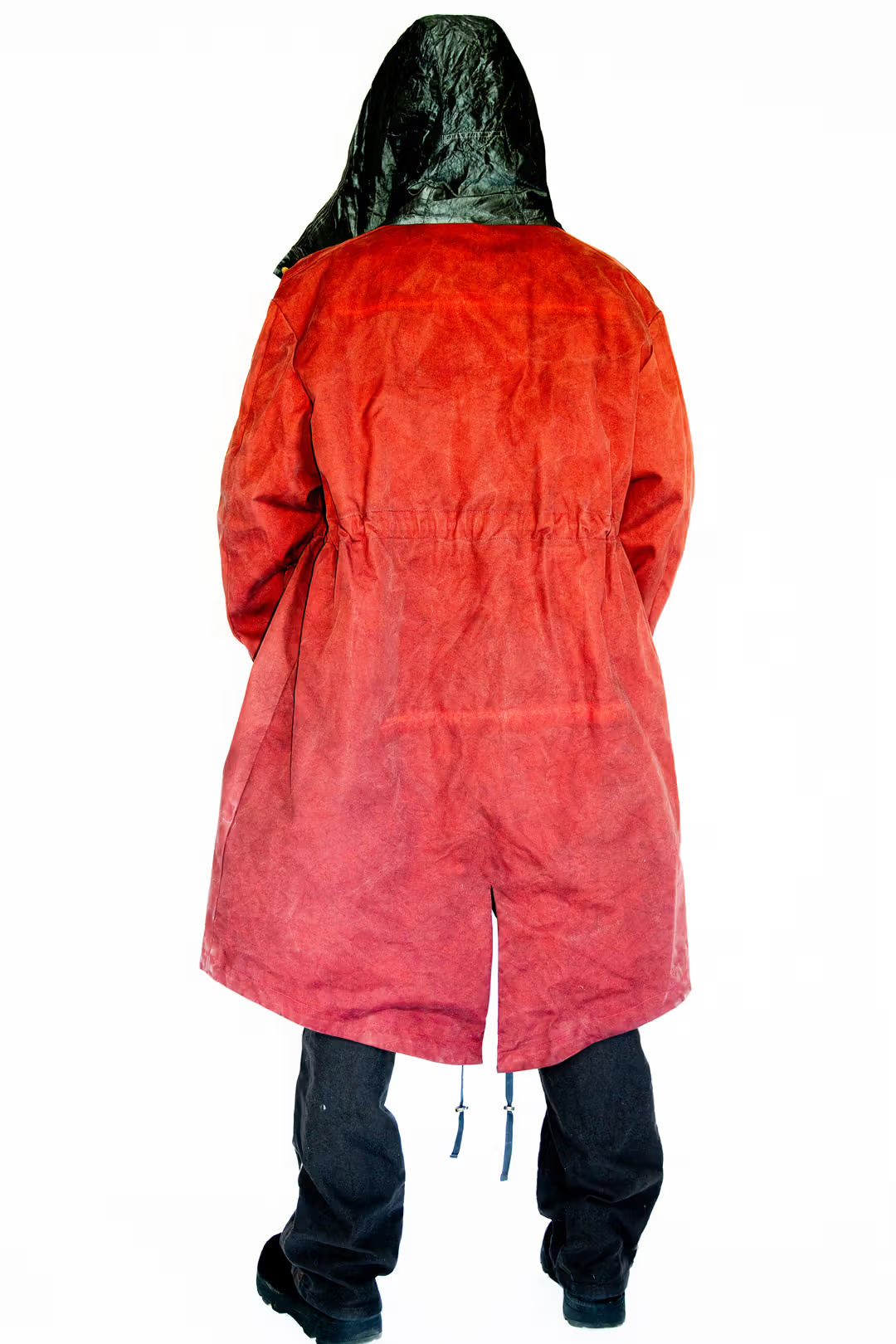
The rear angle shows the long body and back opening.
The coats retain roomy bodies, paired with shapes that narrow downwards and slightly shorter sleeves. Particular styles receive 72 hours of hand indigo dyeing after sewing. In the photographs, a red outer layer, dark-blue hood and blue inner garment create strong layers, while the rear view clarifies the long body and back opening. Front and back angles treat the clothing as a three-dimensional structure, with details changing as the hood is opened or gathered.
Cropped lengths and dropped shoulders rearrange sportswear
The WOODLAND INDIGO ZIP HOODIE starts from a classic full-zip hoodie in 100% cotton, combining a cropped length, relaxed shape and dropped shoulders. The original project lists vintage-style plastisol printing, garment overdyeing and 72 hours of hand indigo dyeing, with distressed treatments at selected areas and ribbing. A familiar sporting garment gains different proportions and surface layers, revealing contrasts at the hood, zip and hem when worn under a coat.
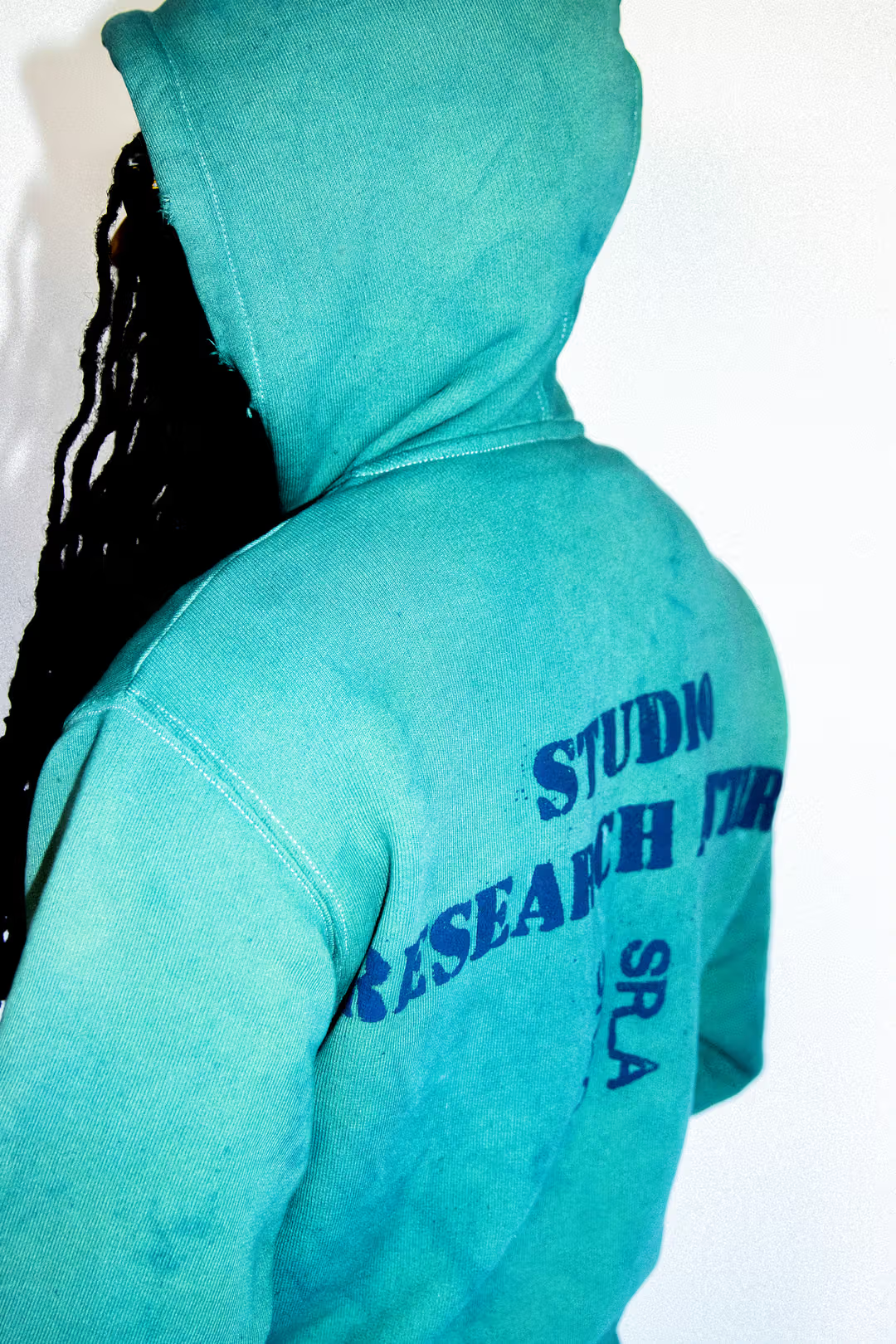
A blue-green hoodie with a brown outer layer offers a more everyday colour relationship. The hood emerges above the coat collar, concentrating brightness around the head and shoulders, while lettering across the back becomes visible on turning. Black-and-white photographs remove colour to emphasise zip positions, pockets and folds, helping compare the visual weight of similar tops in different combinations.
The blue-green hoodie carries lettering across the back.
From raw-silk folds to indigo variation, looking at surfaces
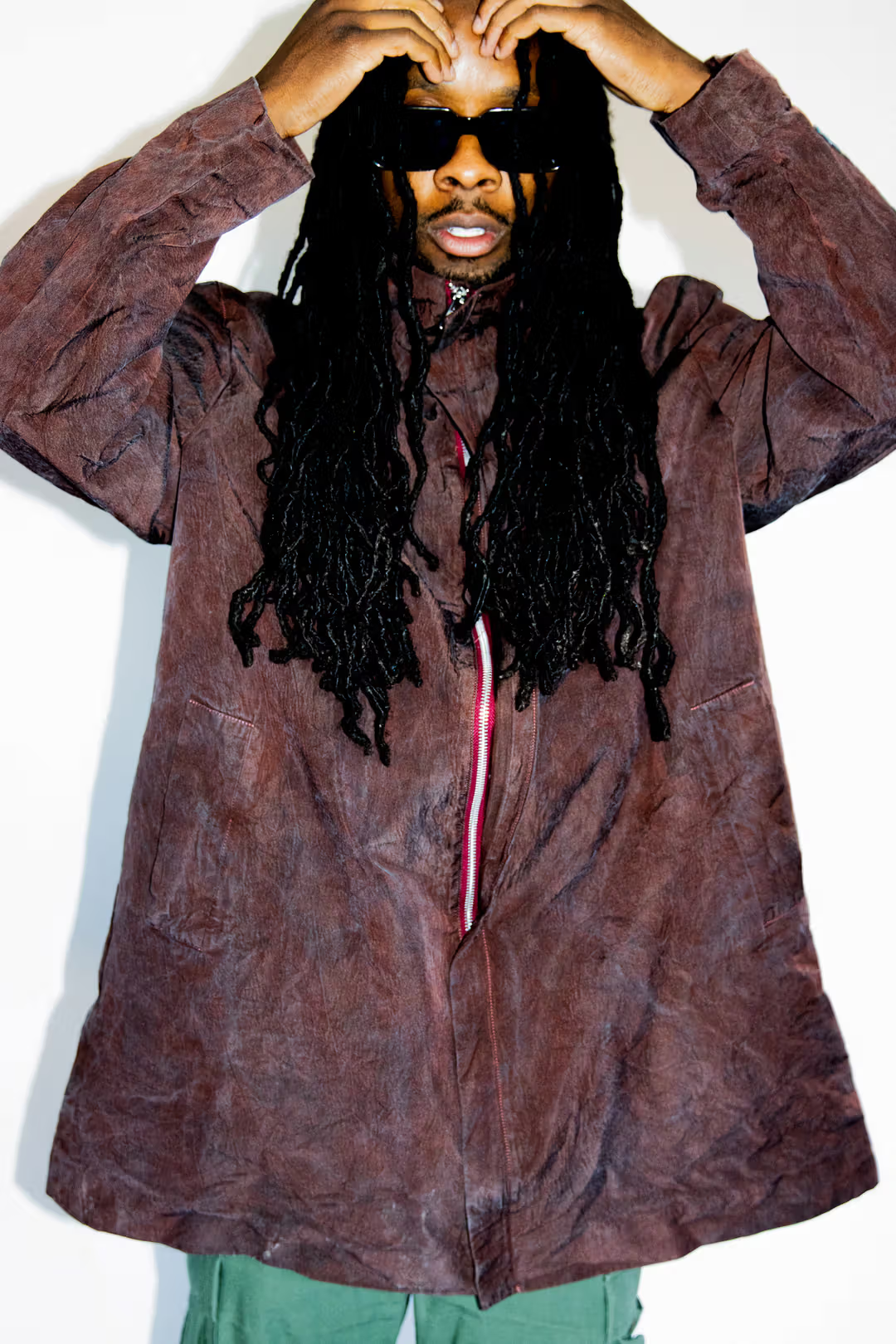
Beyond parkas, a raw-silk jacket uses a crinkled surface, high collar and satin lining to suggest another texture. A lightweight cotton outer layer adds adjustable webbing and the structural vocabulary of outdoor clothing. In the photographs, pale blue, olive and brown each meet dark-blue details. Colour changes along seams, hood edges and hems, giving close-up and full-length views different focal points.
A brown jacket combines a roomy body with a high collar.Pale-blue outer and dark-blue inner layers meet at the hood edge.
To bring this layering into a wardrobe, start with an outer layer that has surface variation and pair it with plainer tops and trousers, or use a bright hoodie as the focal point around the head and shoulders. The project also rewards looking from several angles: front openings and pockets from ahead, shoulder lines from the side, and length and taper from behind. When shopping, confirm sizing, materials, care and availability through formal product information to connect the visual appeal of hand dyeing with individual needs.
Olive outerwear and a dark-blue hood continue the layered palette.