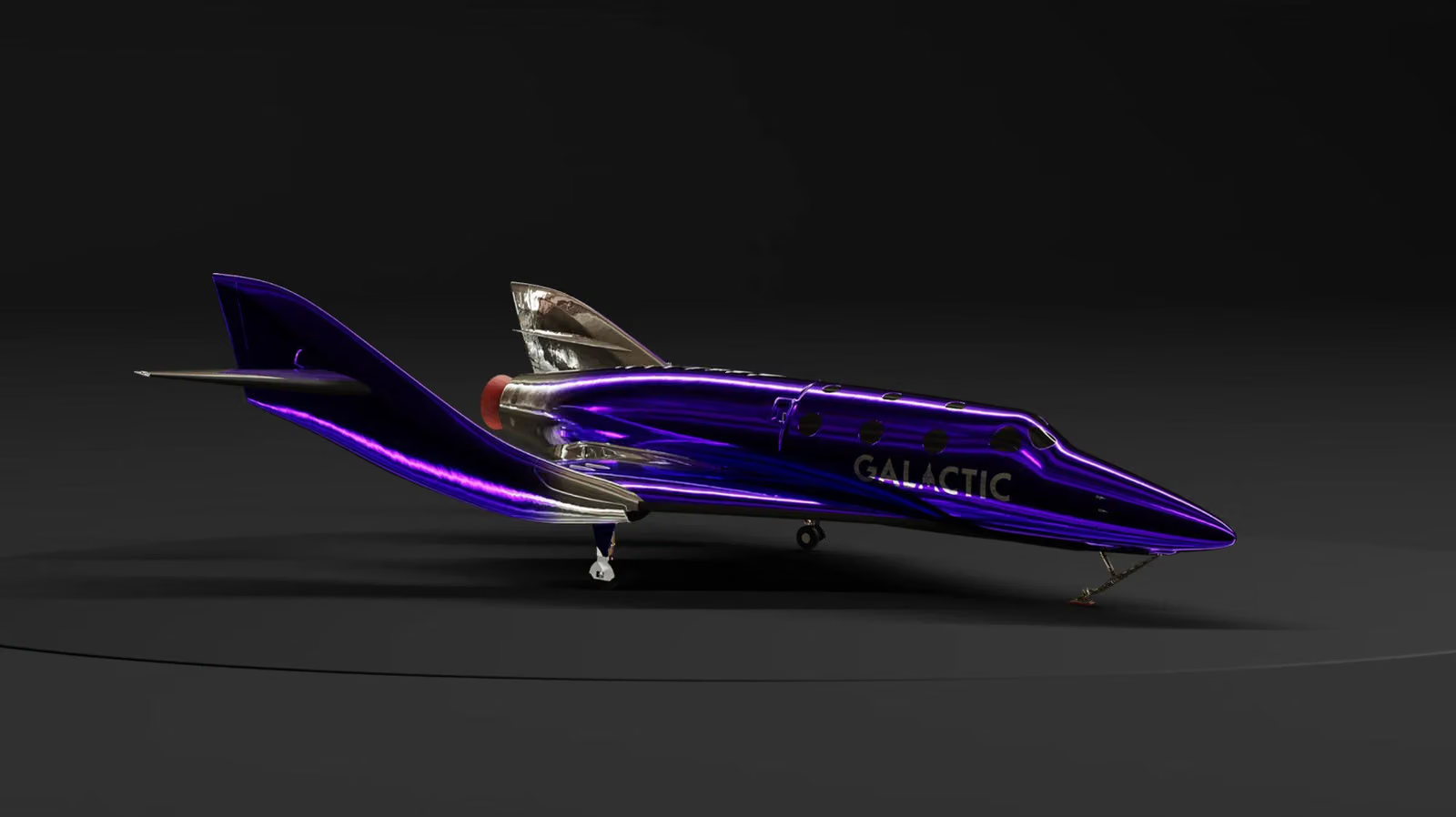
The problem comes down to a few thousandths of an inch. When Virgin Galactic CEO Michael Colglazier explained the delay on the earnings call, he wasn't pointing to one catastrophic failure — it was "hundreds of relatively small but critical installation tasks," where some component was a hair too big or too small compared to spec, and just wouldn't fit right. Any single tolerance issue like that barely registers on its own, but stack up enough of them and they're enough to push the entire ship's maiden flight from this year's fourth quarter to sometime after February 2027.
This as-yet-unnamed Delta class spaceship is the next-generation vehicle Virgin Galactic is betting everything on, following the wrap-up of seven successful commercial flights in 2024. The original plan called for intensive testing over the following months, with the first commercial flight completed by year's end. Now the plan is to begin ground testing this month, with actual passenger flights pushed to next year. A second ship of the same model is already on the production line, expected to join commercial service in Q2 2027, with Colglazier aiming to hit ten flights a month by the end of that quarter. The money, though, is already in the bank. Colglazier revealed that the new batch of tickets the company started selling this March — priced at $750,000 each — has already moved more than 50 units, bringing in over $50 million total. The ship isn't even fully assembled yet, doesn't even have a name, and tickets are already flying off the shelf. That's arguably the most striking irony buried in this delay announcement.
As for the name, Virgin Galactic has opened up an online poll with just four options: Horizon, Explorer, Ascend, and Apeiron. Nobody's expecting a repeat of Boaty McBoatface here, but it does say something about where this ship currently stands — the performance specs and business plans are all laid out in detail, and yet what to actually call the thing is still up in the air.