The timing is the most glaring detail in this lawsuit. The FCC ordered eight ABC-owned TV stations to submit license renewal applications within 30 days — and that order landed the very day after President Trump and First Lady Melania publicly called for Jimmy Kimmel to be fired. In its court filing, ABC didn't mince words, calling it "an act of retaliation against ABC for one reason alone: the government's displeasure with ABC's programming."
The renewal timeline itself is highly unusual. According to ABC, these eight stations weren't due for renewal for at least another 2.5 years, with one station having more than five years left on its license. The filing states that before this order, the FCC hadn't required an early license renewal in over half a century — and had never before demanded that an entire group of stations under common ownership by a single broadcast network apply early all at once. ABC says preparing a renewal application normally takes months, but this time it was submitted "under protest" right before the deadline.
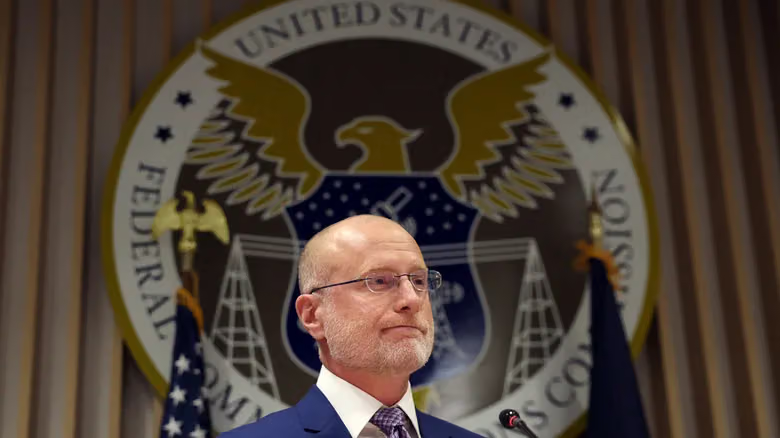
FCC Chairman Brendan Carr's own words became the most direct piece of evidence in ABC's filing. The lawsuit quotes him from an interview: "If you all haven't been taking us seriously, now's the time to start." ABC cites this remark to argue that the renewal order was never a routine administrative matter, but targeted pressure.
The whole saga traces back to Disney's "Jimmy Kimmel Live!" After the assassination of Charlie Kirk, Kimmel's on-air comments about the incident drew fierce criticism from Trump, and Disney subsequently pulled the show off air for several days. The filing also lays out another timeline: on July 16 this year, Trump delivered a primetime live address that neither ABC nor NBC aired on their broadcast channels, opting instead to stream it — ABC chose to air it on ABC News Live. Trump later threatened to revoke both ABC's and NBC's licenses over this. ABC admits in the filing that before making that broadcast decision, it "had already factored in the risk that the government might retaliate" — and Carr later confirmed that the FCC would consider ABC's decision not to air the July 16 address live as a factor in its license renewal review.
The filing points out that the pressure isn't an isolated incident. Disney itself was investigated last year by Carr's FCC over allegations that its diversity, equity, and inclusion (DEI) policies violated equal employment opportunity rules. Meanwhile, ABC's "The View" is also under FCC investigation, stemming from the show's interview with Texas Democratic Senate candidate James Talarico.
ABC frames the stakes in broader terms in its filing: "If the government gets what it wants, the message sent to every media company in America will be crystal clear — cover only what the government approves of, or face federal coercion." The filing also cites Carr's public claims that the FCC has already "dealt with fake news media" and is "winning," listing critical voices he believes have been forced off the air as a result. The lawsuit is currently asking the court to halt the early license renewal review process, with further developments pending the court's ruling.