Tai Kwun's House of Swans runs into January: barriers, grey clouds and two ballet sessions on 31 October
Regular admission is HK$50, with opening Tuesday–Sunday, 11:00–19:00. Six official installation and performance photographs offer ways to read the space, while exhibition hours, opening-week shows and adapted performances remain distinct.
Anne Imhof: House of Swans runs at Hong Kong's Tai Kwun until 3 January 2027. Exhibition hours are Tuesday–Sunday, 11:00–19:00, with regular tickets at HK$50 and concessions at HK$40. For visitors hoping to see Hong Kong Ballet perform, the next announced October date is the 31st; performances do not take place every opening day. The exhibition brings painting, installation and bodies together, so planning a visit starts by distinguishing time to see the exhibition from time to catch a performance.
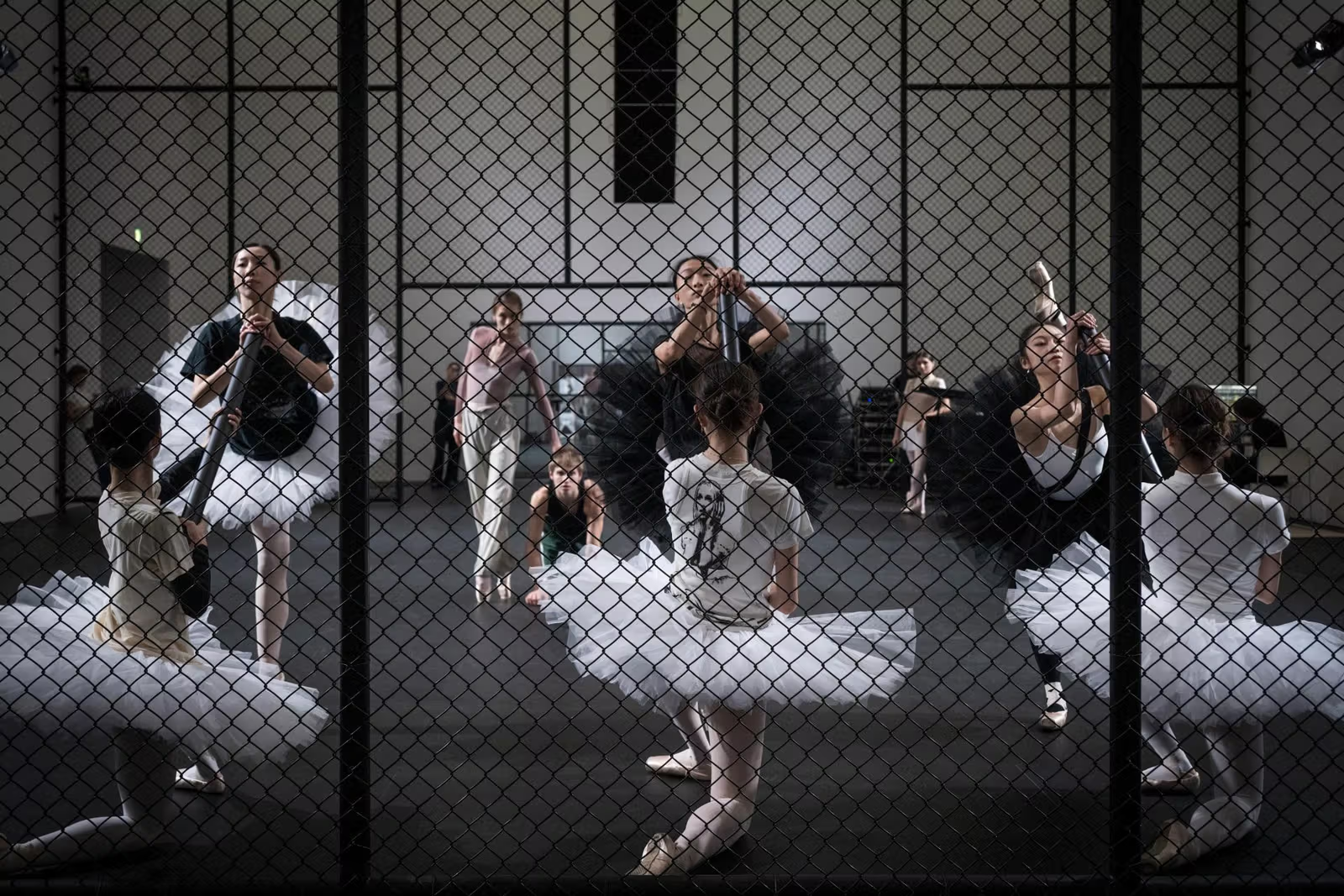
House of Swans performance with Hong Kong Ballet dancers, a recorded moment rather than a scene repeated daily.
Barriers and grids first change the viewer's position
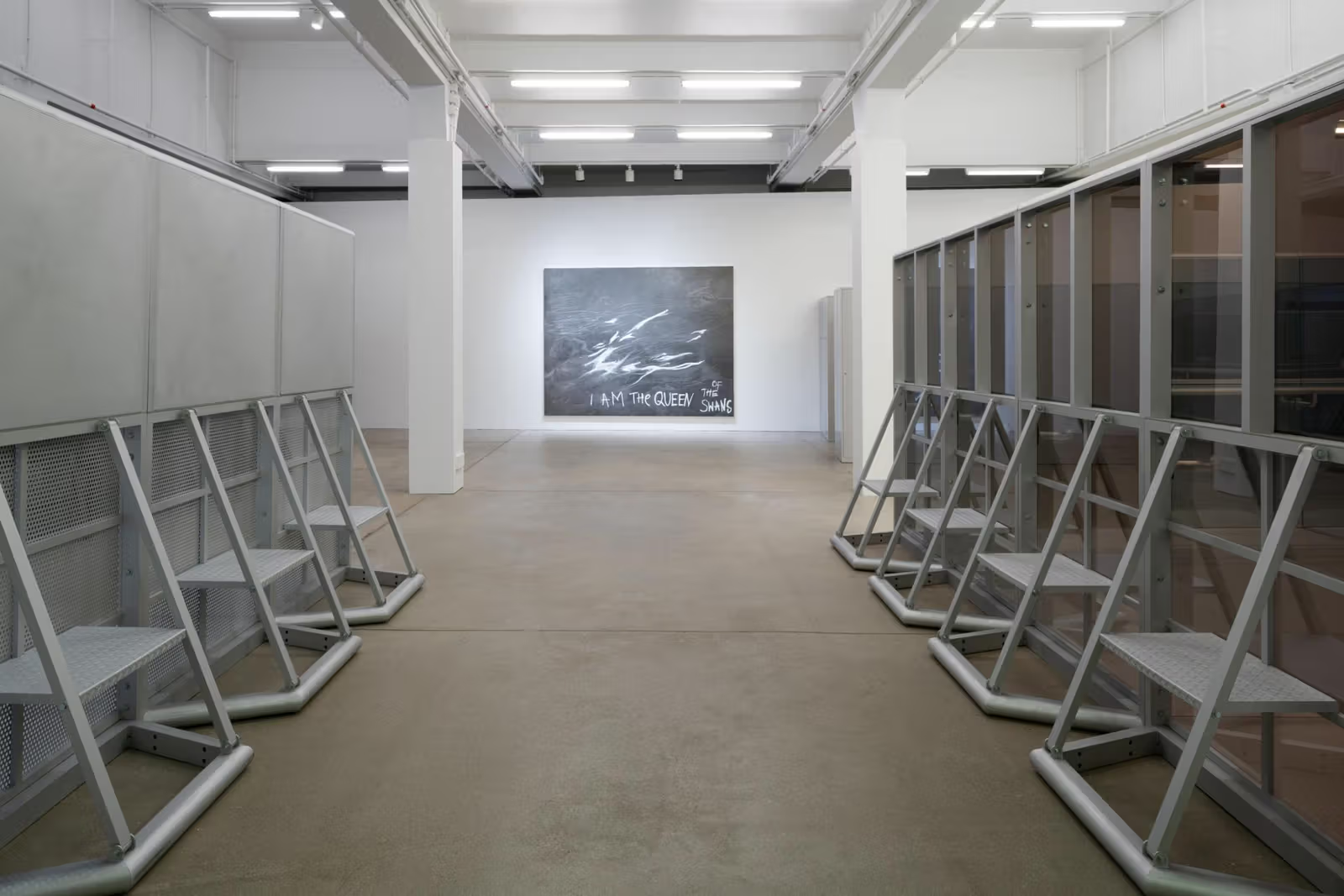
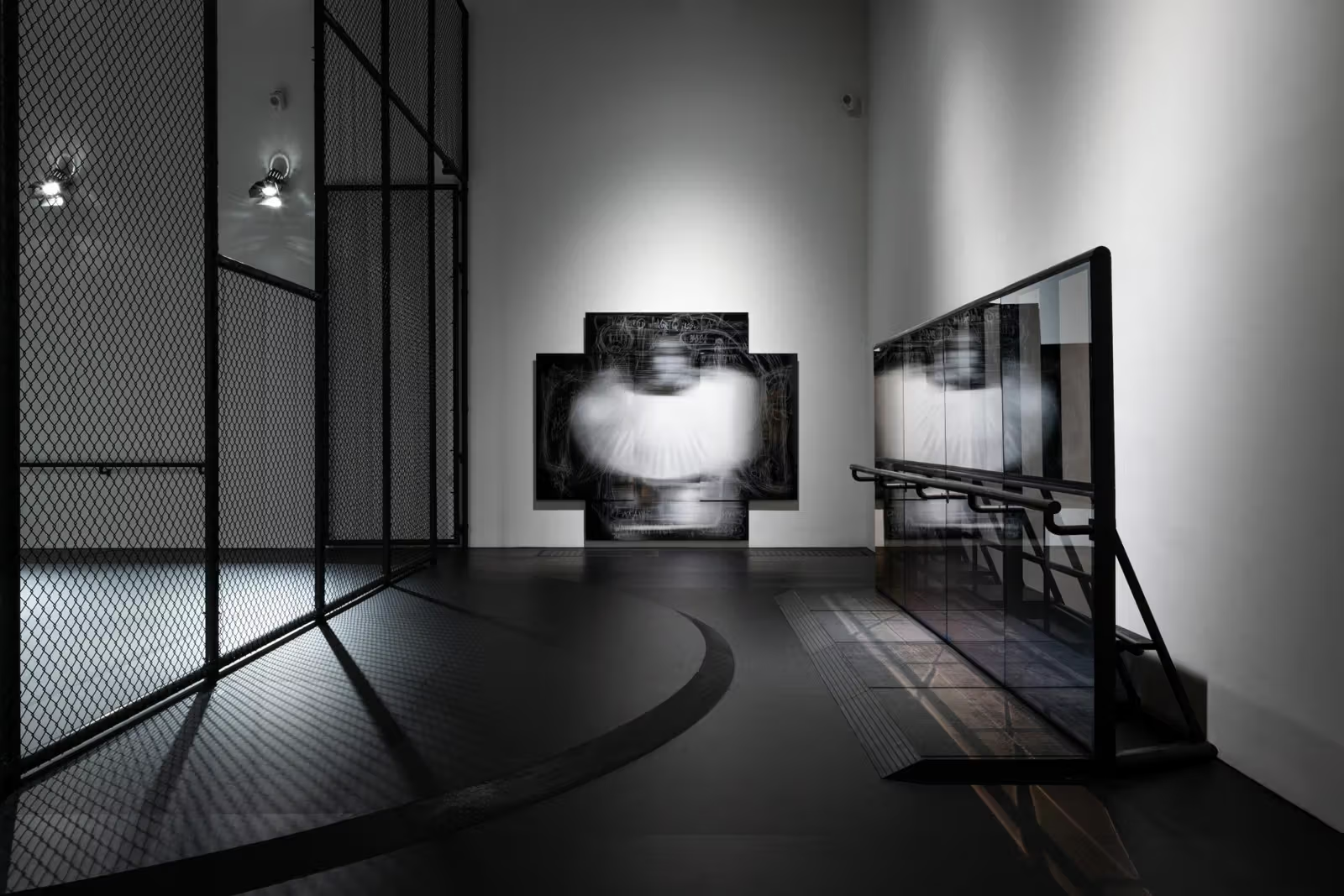
In the official F Hall Gallery photograph, metal structures on both sides direct attention towards a grey image at the far end, while white columns, beams and flooring preserve a clear sense of scale. A third-floor main-gallery photograph establishes two other boundaries: tall black mesh and a transparent partition on the right. The mesh allows a view beyond it, while transparency does not make the two sides physically continuous. Reading the photographs can begin with where you might stand and what would remain visible, without assigning every boundary a single political meaning.
House of Swans, F Hall Gallery: metal structures frame the view towards an image at the far end.House of Swans, third-floor main gallery: black mesh and a transparent partition shape the viewing boundaries.
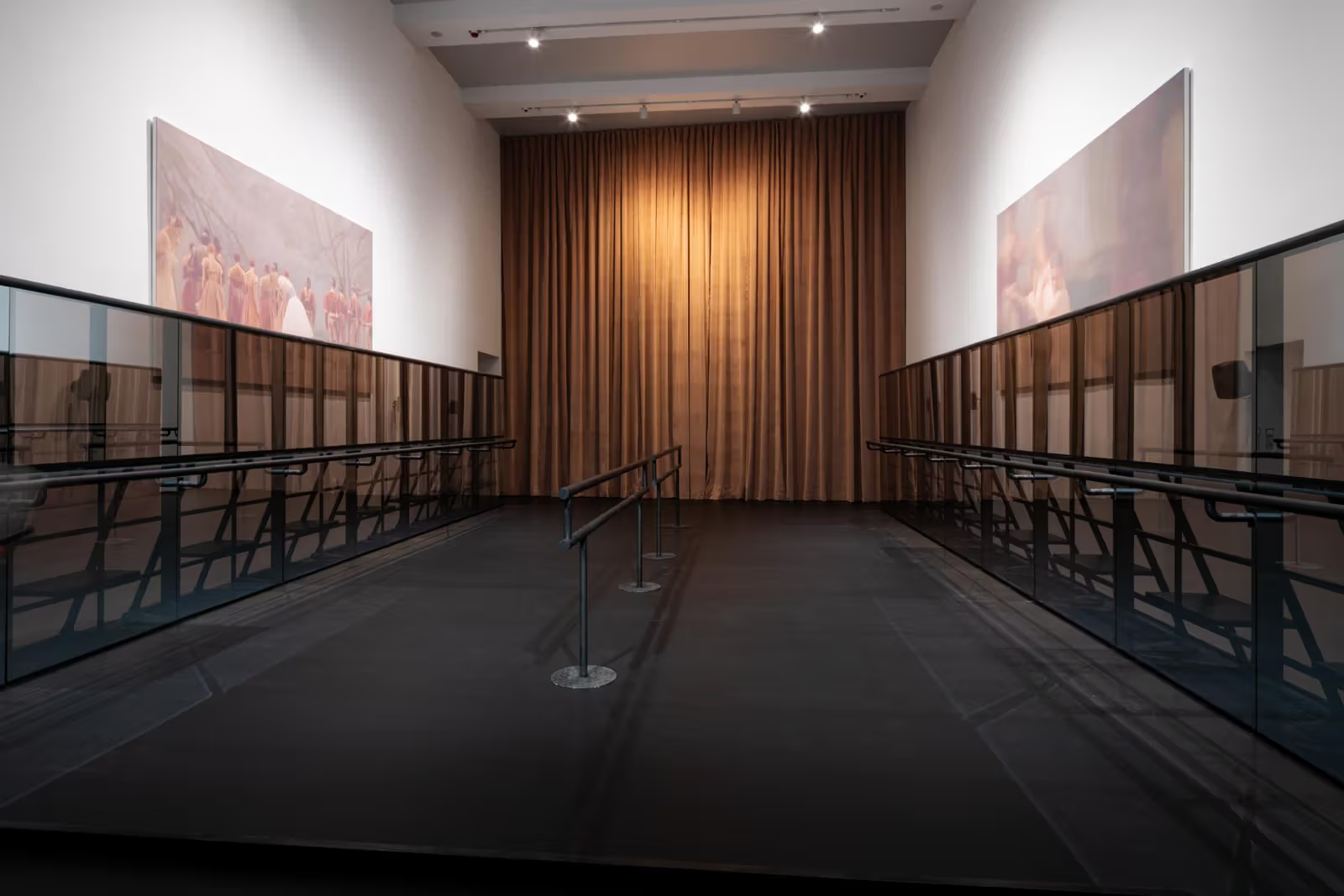
The smaller third-floor gallery changes the atmosphere again. A gold-coloured curtain hangs at the back, and images and rails on both sides draw the eye towards the centre. Rather than isolating an object against a white wall, walls, passageways and reflections become conditions for viewing. These are organiser-supplied installation photographs, not evidence that TIDEZINE visited. Nor can photographs convey the sound level, the sensation of walking or the distances created when other visitors enter the space.
House of Swans, smaller third-floor gallery: a gold-coloured curtain, images and rails form a passage.
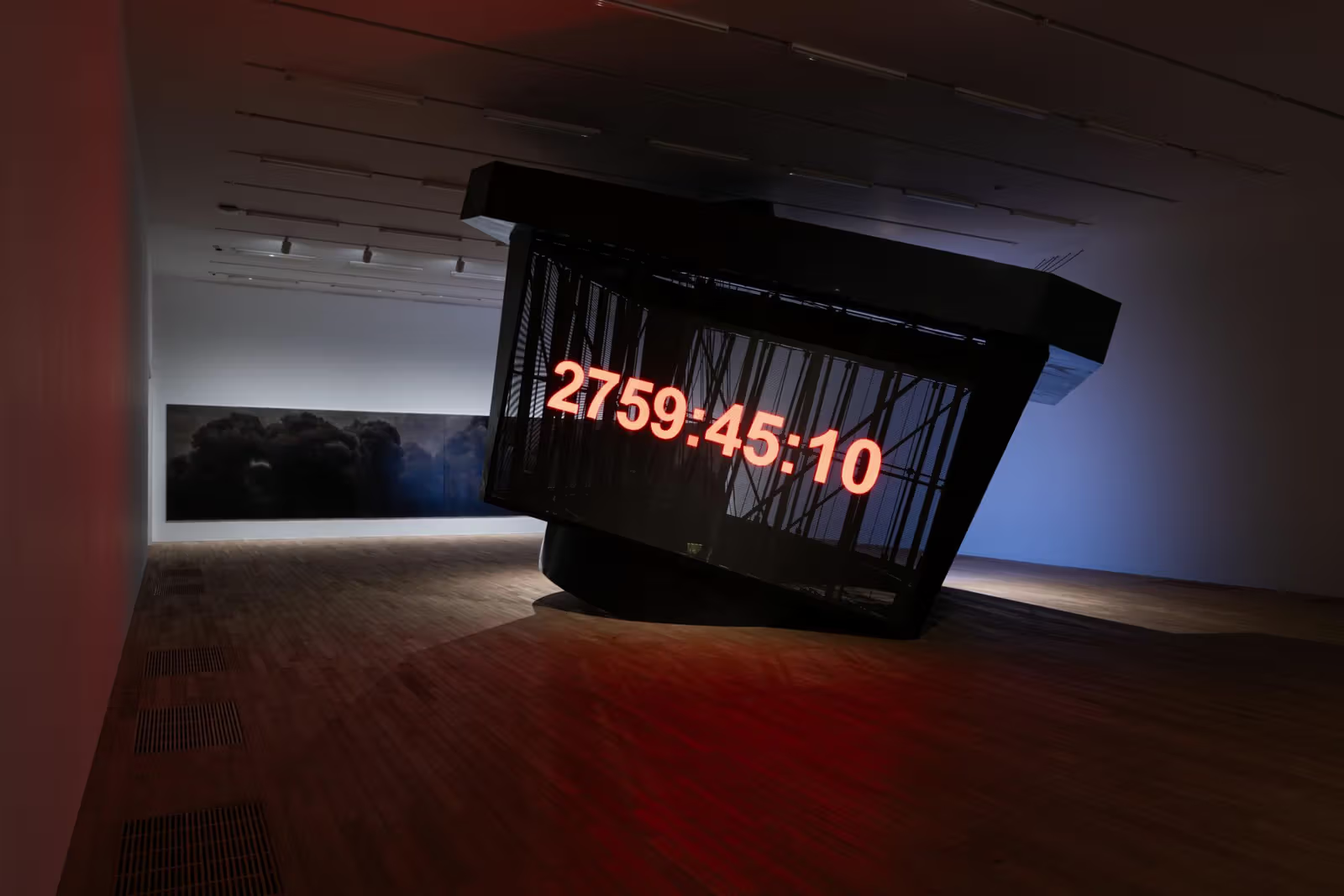
Red numbers and grey clouds make time part of the image
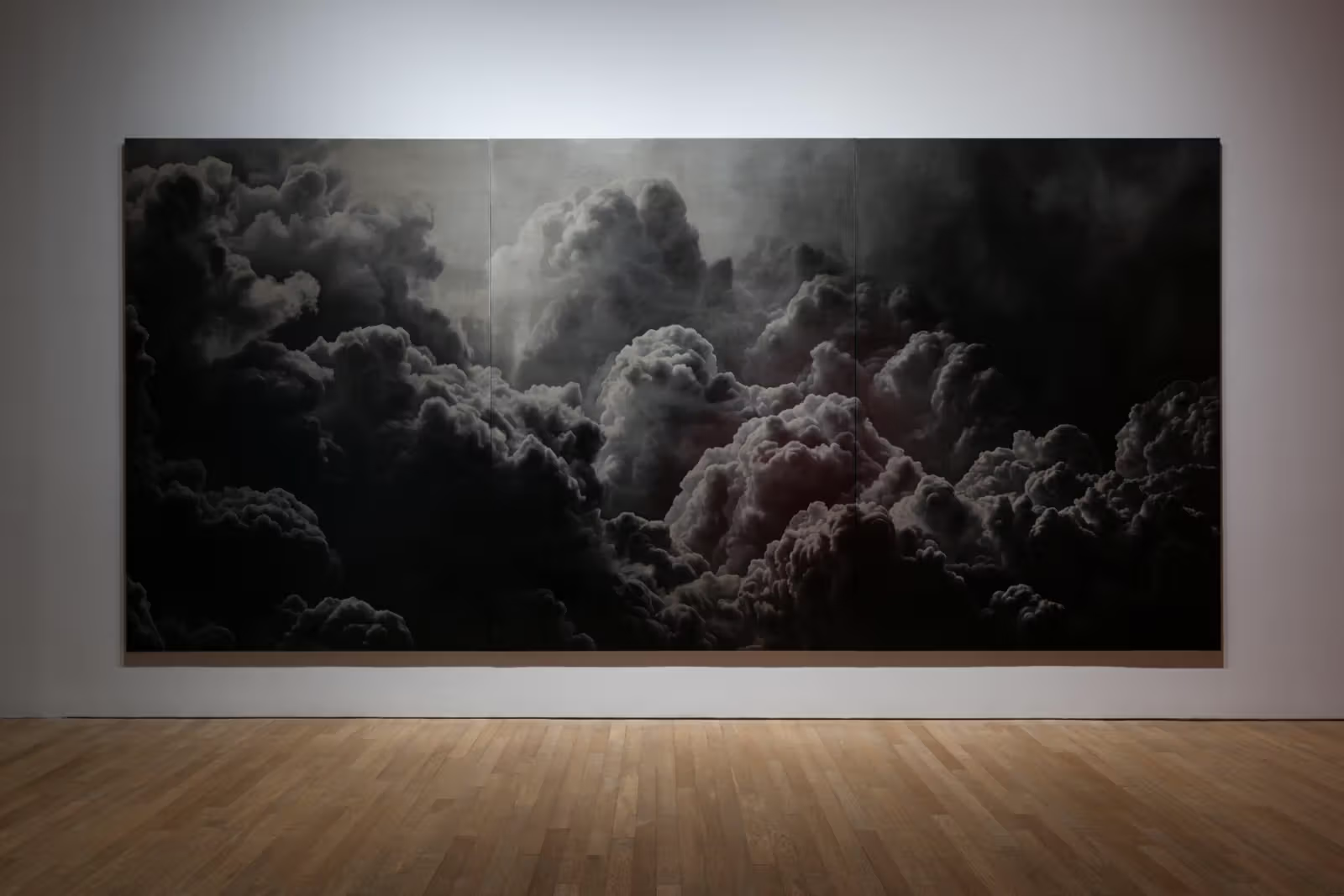
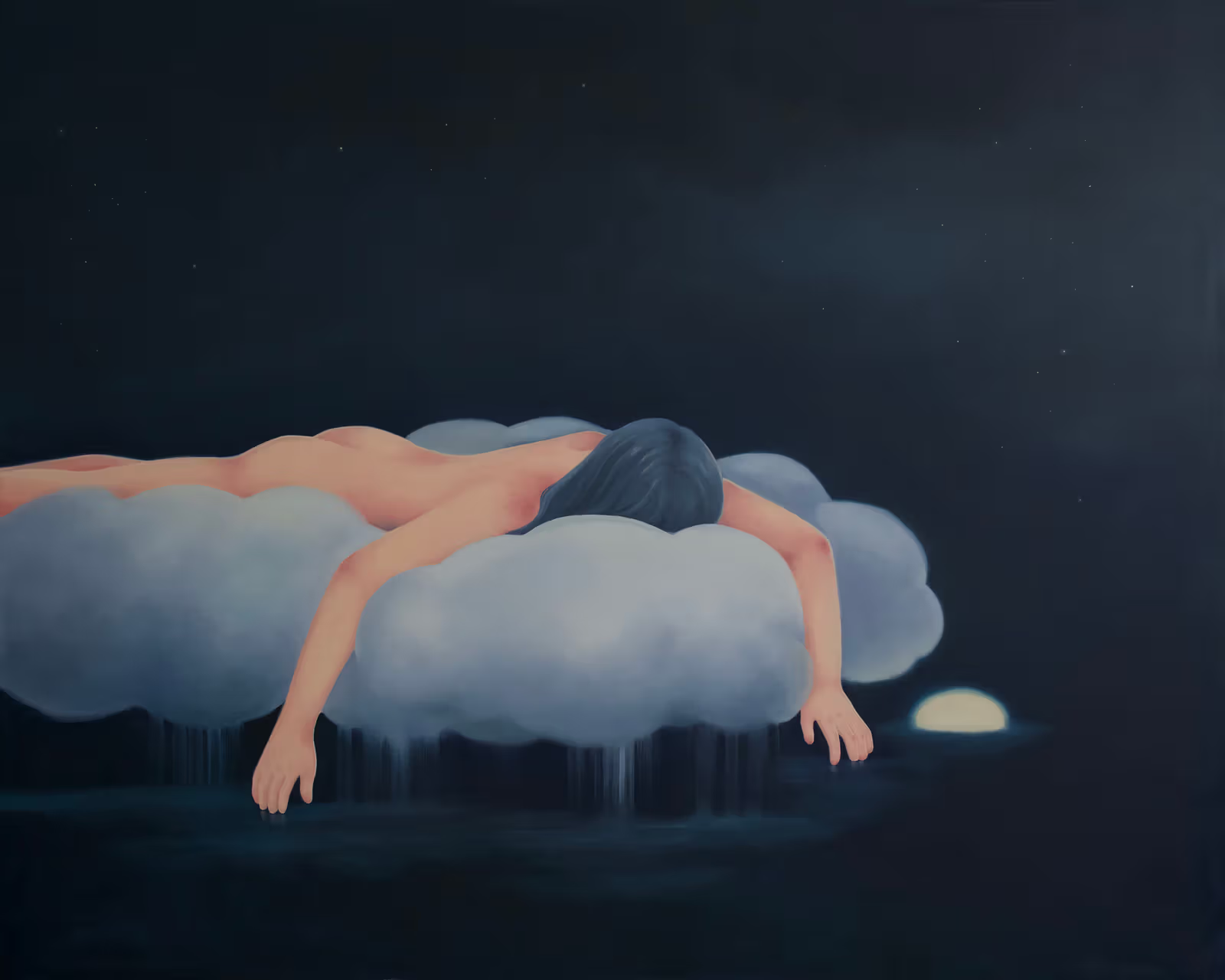
In the first-floor main-gallery view, a tilted black structure carries glowing red numbers, with a horizontal cloud painting behind it. Sharp numeric edges contrast with the clouds' softer light and shade. Another photograph isolates Untitled, a three-panel oil painting from 2026, where dark grey clouds move towards a lighter centre. Comparing the images suggests how the presence or absence of an installation in the foreground changes attention to cloud imagery. A still photograph cannot establish how the numbers operate.
Installation view of Anne Imhof's Untitled (2026), a three-panel oil painting with dark grey clouds.
The official narrative places House of Swans in an imagined future city, following a heroine's path in search of love. This offers a background without requiring every painting to explain a complete story like a film storyboard. In the performance photograph, white ballet skirts overlap with black mesh; some dancers stand while others sit. It records a moment in a performance, not a fixed scene recreated whenever anyone enters. The image also provides no basis for assigning unconfirmed names to individual dancers.
Check performance times separately from admission conditions
The announced adapted performances on 31 October run at 14:30–15:15 and 15:45–16:30. The opening-week performances of 25–26 September have already ended. Before choosing a date, check the latest schedule on the official Tai Kwun exhibition page; do not assume the opening cast appears in every show. Last gallery entry is 30 minutes before closing. Reservations may still involve queuing, and performances are expected to attract more visitors. Allow separate time for entry and finding a viewing position if you want to see a full session.
Visitors should present a valid ticket at JC Contemporary reception on their reserved date and time, exchange it for an admission wristband and keep it intact throughout the visit. Concession eligibility, on-site availability and bad-weather arrangements follow the venue's latest rules. For a first encounter with Imhof's work, observe spatial boundaries, clouds and bodily movement separately, then consider how they meet. That approach may reveal more layers than entering with only a particular photograph in mind.