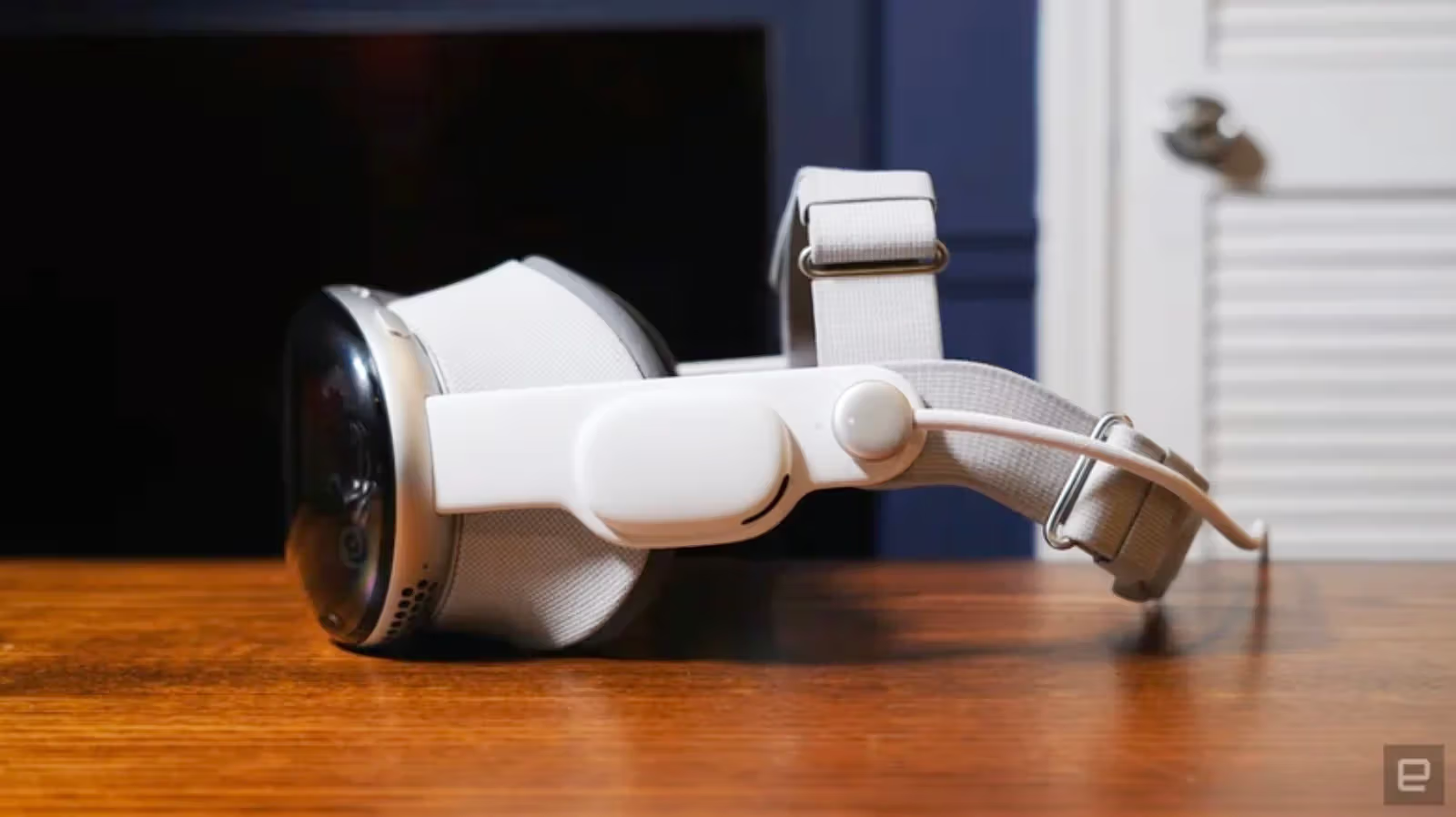
A pricey headset still searching for a clear target audience just made its way into the operating room. Medical device company Stryker announced this week that its SportSuite Vision software, built for Apple Vision Pro, was officially used during a hip arthroscopy procedure at Duke Health — the software's first real clinical application. Stryker said SportSuite Vision received De Novo clearance from the U.S. FDA on July 17 this year.
The procedure was performed by Dr. Chad Mather III, an orthopedic surgeon at Duke University Medical Center. During the surgery, Vision Pro let him simultaneously view Stryker's orthopedic surgical planning tools, arthroscopic imagery, and CT scans — all without having to look away from the surgical field toward an external monitor. "With spatial computing, I can customize where key clinical information is positioned based on my own workflow, and access that information directly within the sterile field," Dr. Mather said. "It makes the whole OR setup more comfortable and streamlined, while keeping the information I need right in my field of view."
This is, in theory, exactly the kind of scenario mixed-reality headsets are supposed to excel at — handling real-world tasks and digital information at the same time. The surgeon's hands and attention stay on the patient and instruments, while digital imagery is overlaid directly into view, eliminating the need for extra physical monitors. This procedure marks the first real-world case since SportSuite Vision received FDA clearance, giving Vision Pro a relatively concrete and verifiable professional application.
Still, this kind of setup is unlikely to show up in your average doctor's office anytime soon. The cost of the headset itself, combined with the difficulty of developing specialized software for it, puts it out of reach for most hospitals or individual physicians. Engadget also reported earlier that Apple may have significantly cut staff from its Vision Pro team last month — not exactly good news for the product's consumer prospects. Rather than the "everyone wears one" vision often pitched, Vision Pro currently seems better suited to a narrow set of professional settings that demand precise spatial information and are willing to pay for it — with the operating room being one of them.