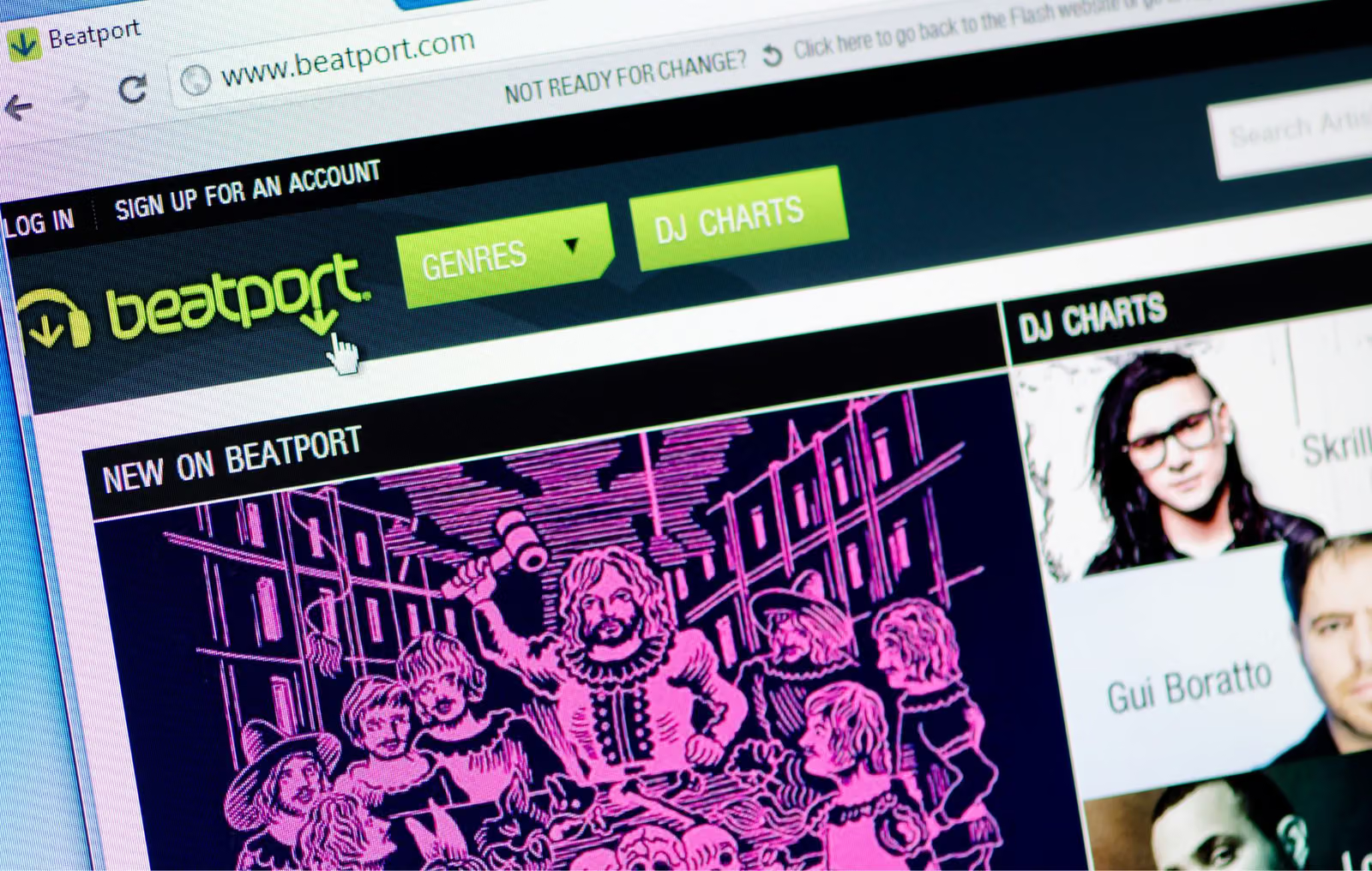
77% of users clearly stated they prefer human creators, and 60% said they would refuse to listen to AI-generated tracks — these are the internal survey numbers Beatport released alongside its new AI policy. As one of the world's leading online music stores and streaming platforms for electronic music DJs, Beatport has chosen not to sit in a gray area this time, instead drawing a clear line: tracks that are fully or mostly AI-generated will be taken down.
According to Beatport's policy update, if a track is "AI-assisted" but the final product "remains predominantly human-created," it can stay on the platform — though it will be labeled at the point of upload, so Beatport's curation team knows exactly what kind of content they're reviewing and recommending. For tracks found to violate the new rules, the platform will notify the rights holders directly.
Enforcement of this policy relies on Beatport's expanded partnership with detection tech company Beatdapp, using upgraded technology and processes to identify auto-generated music. Beatport CEO Matt Gralen said in a statement: "Beatport exists to serve DJs and empower artists and labels, and that means standing with our community so everyone can have confidence in what's on the platform." He added that electronic music has always advanced through new production technologies, "but there's a difference between tools that assist human creation and systems that replace it entirely. Beatport is built on the former." Co-founder and Co-CEO Andrew Batey said the expanded partnership with Beatdapp brings listeners "greater transparency" while "protecting human creativity."
The survey numbers form the most direct basis for this policy: only 8% of users said they'd be willing to listen to AI-generated music, while 13% said they'd consider it if creators were fairly compensated. In other words, Beatport's user base — mainly DJs and electronic music professionals — shows far lower acceptance ofAI musicthan the impression given by the broader streaming market. Beatport's statement frames this policy as a direct response to community feedback.
Other Platforms Have Already Drawn Their Lines
Beatport isn't the first platform to set limits on AI music. According to NME, Apple Music is also labeling AI-generated tracks, while TIDAL has stopped paying royalties for music entirely produced by AI. Deezer has rolled out a tool to detect AI-generated content across playlists spanning 20 streaming services. Earlier this year, Bandcamp announced a full ban on AI-made music uploads, and SoundCloud clarified its stance following user backlash. Spotify recently unveiled a new labeling system to help users quickly identify AI-generated artists and content.
These moves come against a backdrop of a clear surge in AI-generated music. Deezer said last month that AI-generated tracks now account for over half of daily uploads on the platform — the first time AI output has outnumbered human-created music in volume. An earlier study also found that 97% of people "can't tell the difference" between human- and AI-made music. For Beatport, this survey data may well be exactly why it chose to draw a clearer line — when most users can't tell the difference, the platform has simply decided to do the gatekeeping for them.