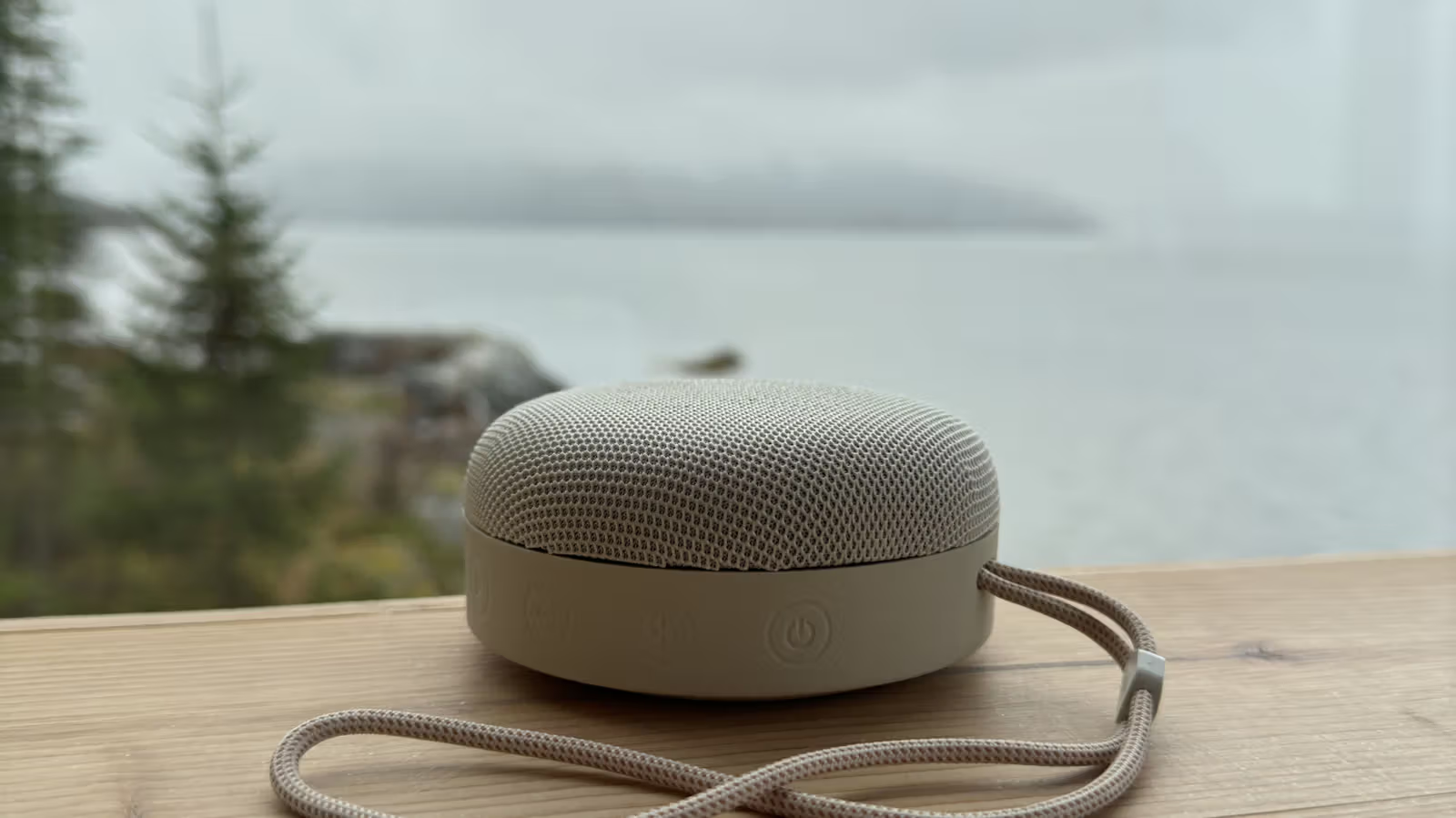
Before buying a Bluetooth speaker, most people focus on sound quality and battery life first. But what actually determines whether a speaker can go with you to the beach, into the shower, or even survive a drop into water and still work — is that unassuming set of numbers on the device: the IP rating.
IP stands for Ingress Protection, and it's used to indicate a device's resistance to dust and water. The standard format uses two digits: the first represents the dust resistance level, ranging from 0 to 6; the second represents the water resistance level, ranging from 0 to 9. For example, IP56 means high dust resistance plus the ability to withstand strong water jets. If a manufacturer hasn't tested dust resistance, the first digit is replaced with an X, resulting in a format like IPX7.
How Long Can IP67 and IP68 Actually Hold Up?
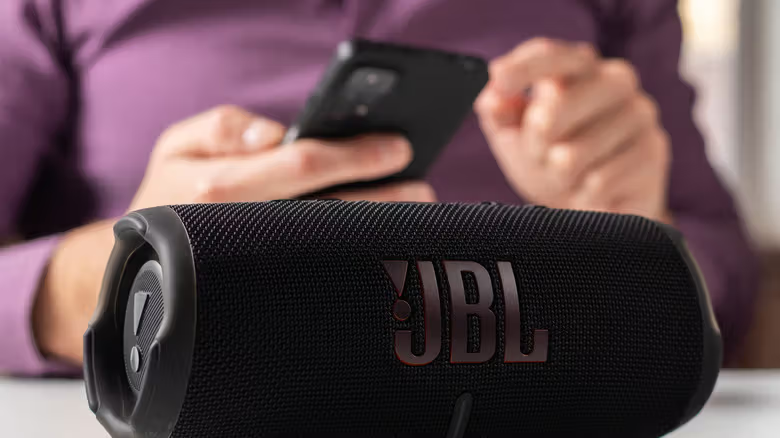
In theory, the highest waterproof rating is 9, but this level rarely appears on consumer Bluetooth speakers and is mostly reserved for niche industrial products. For most high-end speakers, IP67 or IPX7 is already the common ceiling — meaning the speaker can withstand not just splashes and spray, but also brief submersion in water without damage.