Busui Ajaw’s The Preservation of Fire closes November 1 in Bangkok: the final week for Akha textiles and a reconstructed house
Bangkok Kunsthalle connects Akha textiles, everyday objects and a house relocated from Chiang Rai across two floors. General admission is free, Wednesday–Sunday; the venue is closed Tuesday, October 27, so plan accordingly.
Busui Ajaw’s The Preservation of Fire at Bangkok Kunsthalle continues through November 1, bringing Akha textiles and a reconstructed house together in Bangkok. Open since May 15, the exhibition is now in its final week. The venue opens Wednesday–Sunday and is closed on Tuesday, October 27, so a visit can be planned from the following day. Beyond attractive patterns, it invites attention to the people and skills needed for a garment, a bamboo basket and a house to continue existing.
Two floors: from the scale of clothing into a house
Developed in close collaboration with the Akha community, the exhibition unfolds on two levels: textiles and everyday objects carry memory below, while a reconstructed Akha house stands above. This arrangement brings looking at cloth into dialogue with entering a structure at the scale of dwelling. Clothes sit close to the body; a house surrounds it. Both hold time through connections, repairs and prolonged use. Moving between scales extends preservation from collecting individual objects towards ways of living and making together.
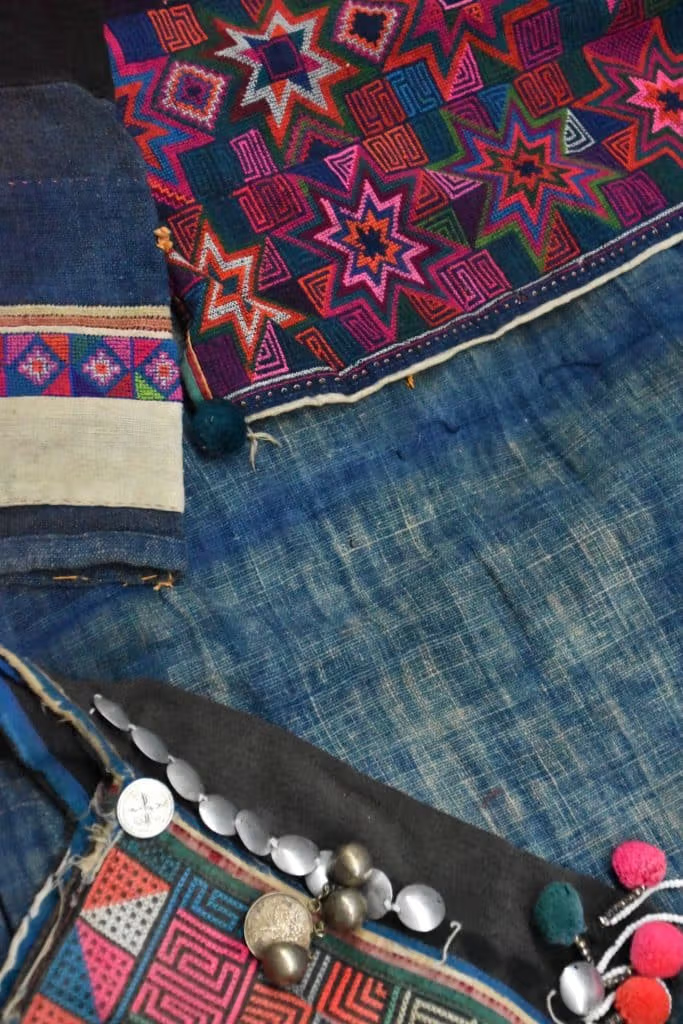
The textile close-up shows a dark-blue ground, red, pink and green geometric embroidery, pale fabric borders, metal pieces, beads and small pom-poms. Different materials meet on one object, with smooth, soft, dense and worn surfaces. The clothes, bags and fabric fragments presented connect to their users and knowledge passed between generations. Treating them only as patterns to transfer directly onto new products would overlook the relationship between stitching, attachment and bodily movement. Looking at seams and how ornaments are fixed reveals more specific handwork.
Akha textile details connect geometric embroidery, dark-blue cloth and different decorative materials.
Disassembled in Chiang Rai, rebuilt in Bangkok: bamboo and everyday tools
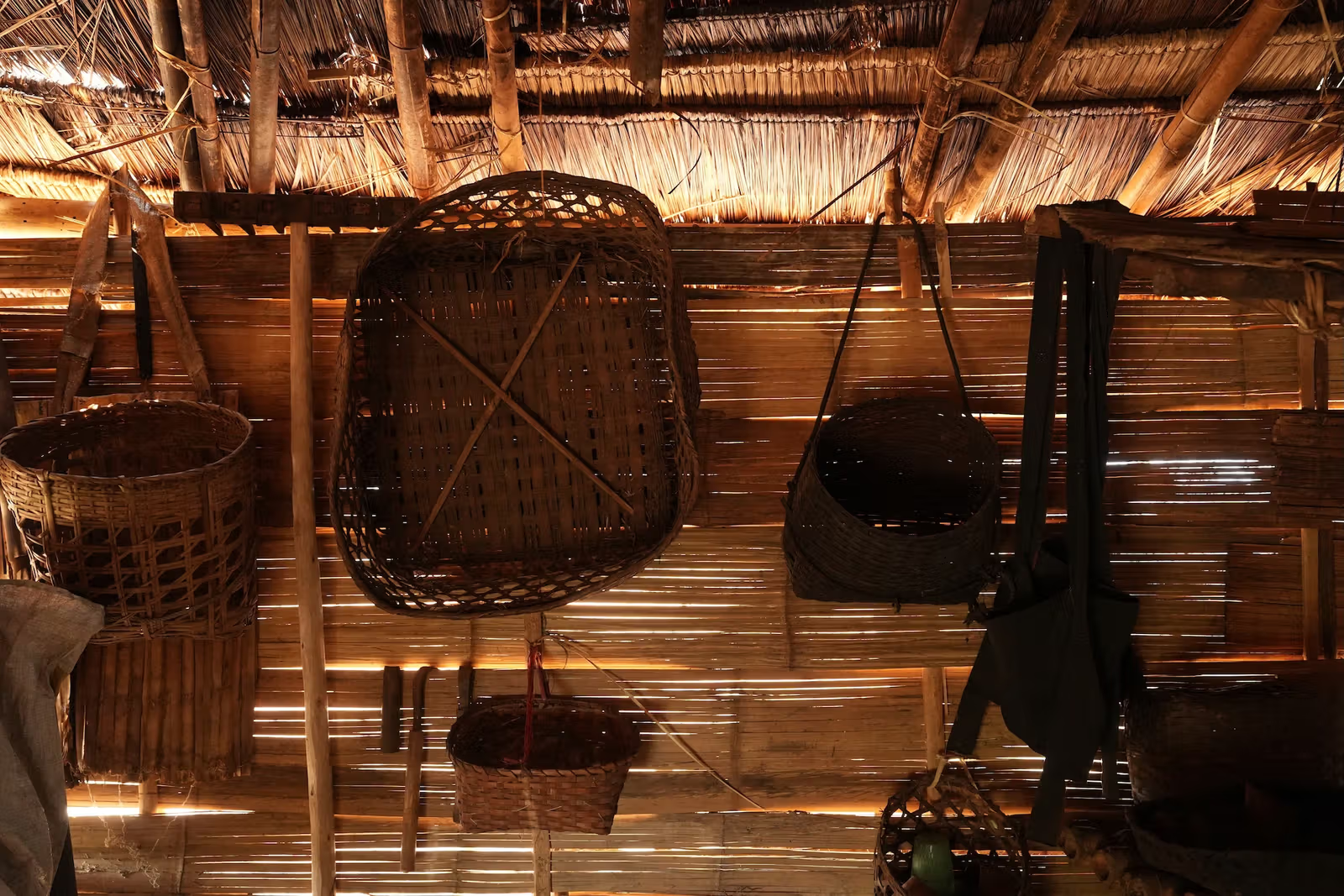
The upper-floor house was dismantled in Chiang Rai and reassembled at Bangkok Kunsthalle. It retains traces of actual use, including a stove, farming tools and soot on the ceiling. Rather than representing a building only through a photograph, it brings scale, components and the relationships between objects into the venue. Comparing roof, walls and utensils offers a way to consider how cooking, storage and material choices develop through life, beyond recognising an abstract architectural style.
The organiser-provided interior image shows a bamboo framework, bundled roofing material, woven baskets and hanging tools, with daylight passing through gaps in the walls. It does not isolate each object against a white background, but preserves their overlapping, hanging and neighbouring relationships within the arrangement. Basket weaving enters a dialogue with the house’s woven construction: repeated interlacing can create a portable object or define a space for human activity.
Final-week visiting: Wednesday–Sunday, free general admission
Curated by Gemmica Sinthawalai, Mark Chearavanont and Stefano Rabolli Pansera, the exhibition centres on sustaining dwelling, making and transmission through community collaboration. Clothing and houses are not unrelated collecting categories; the same material questions can connect them. What can bend, what needs support, and what requires users to maintain it repeatedly?
The full exhibition dates are May 15–November 1, 2026. Organiser information lists free general admission. Official venue hours are Wednesday–Sunday, 14:00–20:00, closed Mondays and Tuesdays. The address is 599 Pantachit Alley, Pom Prap Sattru Phai, Bangkok; enquiries can be sent to info@bangkok-kunsthalle.org. Check the organiser-provided exhibition information, then choose an opening day in the final week to read embroidery, weaving, dwelling and traces of use together.