Kim Lim’s Source in Hong Kong: slowing down between carved stone and sound
Axel Vervoordt Gallery in Wong Chuk Hang presents sculptures, prints and photographs by Kim Lim alongside a new sound commission by Bianca Chu and Flora Yin-Wong, through January 30, 2027.
Looking at sculpture in Wong Chuk Hang need not begin with deciding what an object resembles. Source, the Kim Lim exhibition at Axel Vervoordt Gallery Hong Kong, brings carved stone, printed lines and sound into a shared viewing experience. Curated by Bianca Chu, it runs from September 17, 2026 to January 30, 2027. The late Singaporean-British artist’s works do not rely on overwhelming scale: subtle grooves, intervals and shifting light give dense materials their rhythm.
How carving gives stone a sense of movement
The title comes from Lim’s 1988 sculpture Source, while also pointing towards the observations, experiences and records that feed artistic work. One useful distinction is between a line drawn onto a surface and a line cut into material. The latter has depth and casts shadows according to the direction of light. Grooves that look evenly ordered head-on can alternate between brightness and darkness from another angle. Attention moves beyond the outline to how a surface receives its surroundings.
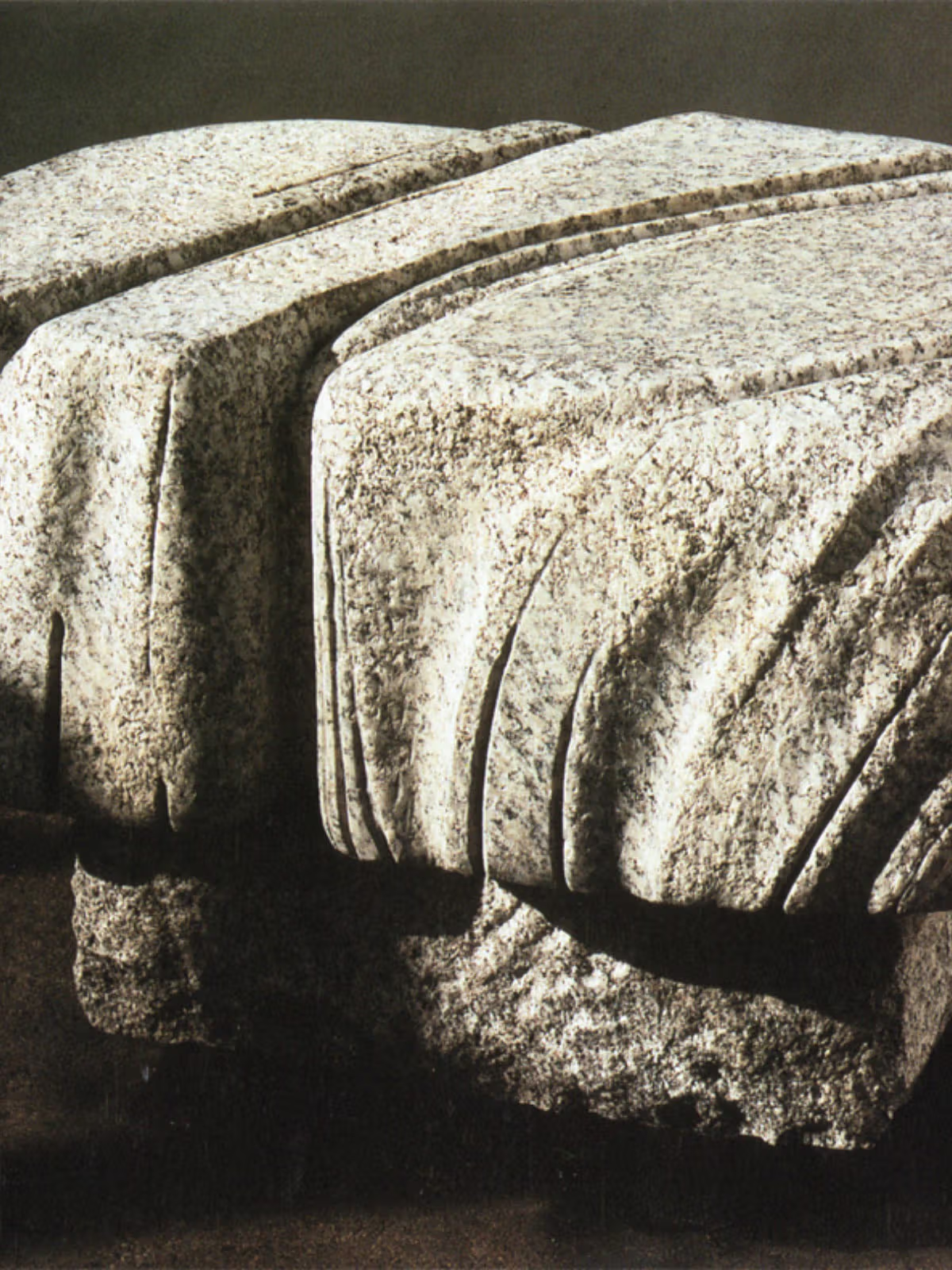
After 1979, stone carving became more central to Lim’s practice, with close attention to weight, resistance, texture and density. Wind-Stone (1992) and Sea-Stone II (1996–97) bring associations of moving air and water into a hard substance. A detail photograph released for the exhibition shows grooves crossing a granular surface, with rough particles and incised shadows sharing the same field. For anyone who thinks of stone as simply solid and closed, these openings and turns suggest another way to read it.
A close view reveals the stone’s granular texture, grooves and changing shadows.
From printed lines to Heavenly Stems
Her prints translate sculptural rhythm onto a flat plane. Curving lines may suggest contour maps, river channels, cells or whirlpools, without requiring one definitive answer for every shape. Viewers interested in graphic design or garment construction can compare how repetition generates differences: changing intervals, interrupted edges and areas left blank can alter visual pace and weight without adding colour or ornament.
The curatorial framework draws on wuxing, qi and transformation, joined by the newly commissioned 2026 sound work Heavenly Stems. Created by Bianca Chu and experimental musician Flora Yin-Wong, it plays continuously in the exhibition space and incorporates fragments drawn from writings preserved in Lim’s archive. This is a later sonic work, rather than a new interview recorded by Lim this year. The relationship between the Heavenly Stems, the Five Elements and yin and yang is likewise part of the exhibition’s conceptual framework.
Where to visit and how to look
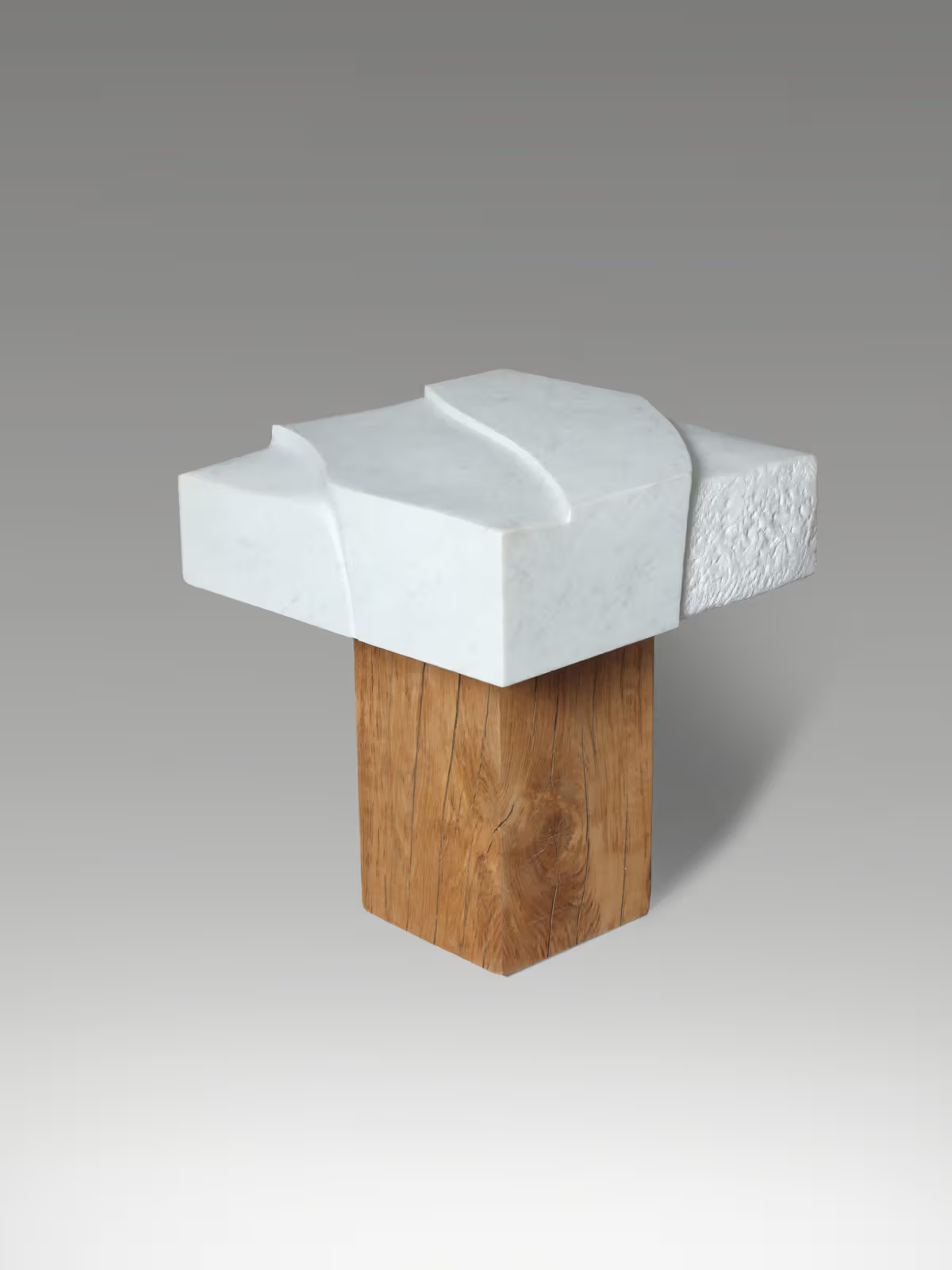
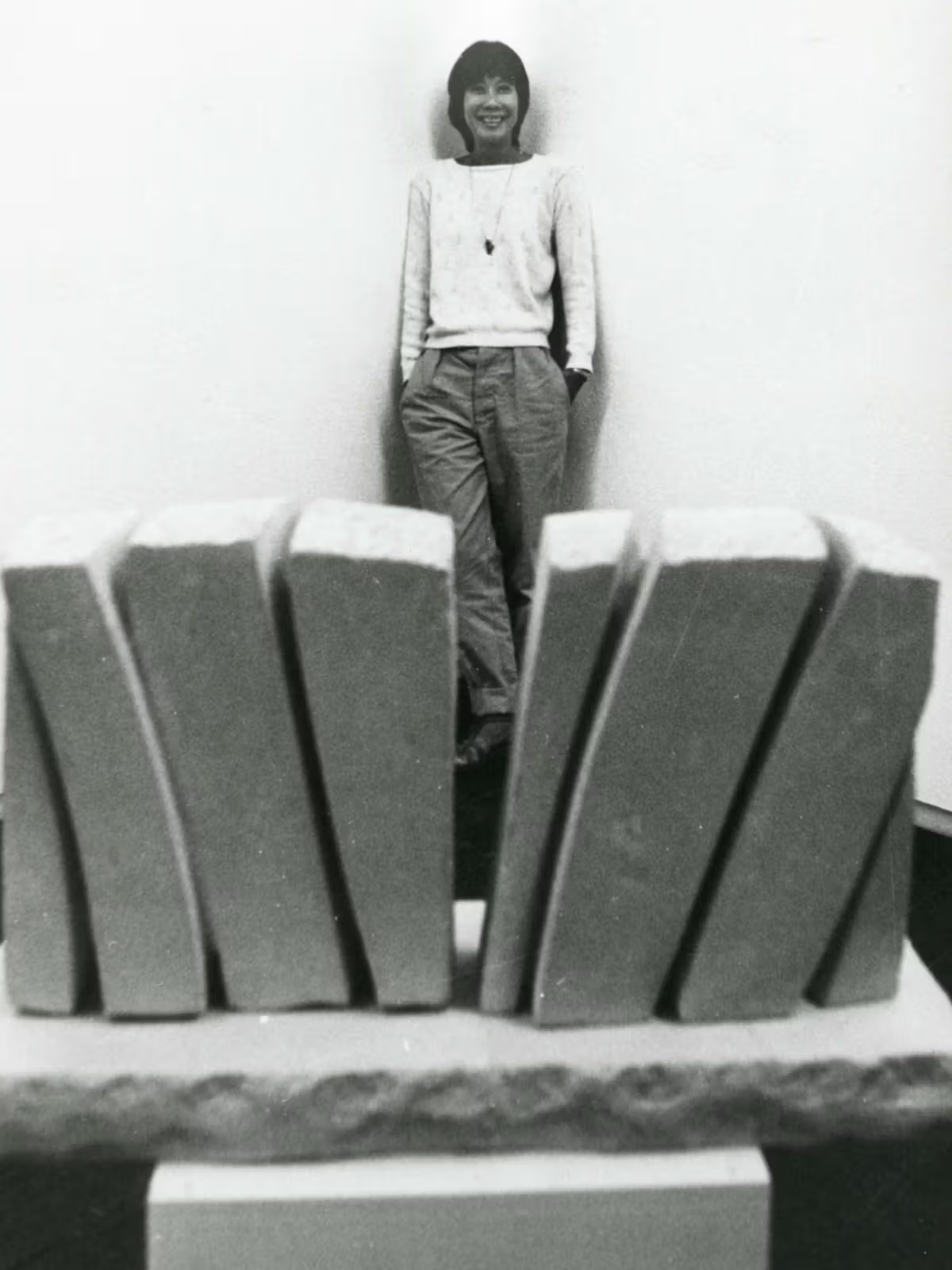
A useful viewing sequence is to approach a work for its surface, step back to compare its proportions, then notice how sound changes the length of your pause. In one artwork photograph, smooth curves on pale stone contrast with a rougher side and the different grain of the wooden structure beneath. A historical black-and-white photograph places the artist alongside a segmented sculpture. These images offer different scales of understanding: one clarifies material relationships, while the other records a person’s encounter with her work.
A historical black-and-white photograph places the artist alongside a segmented sculpture.
The Hong Kong gallery is on the 21st floor of Coda Designer Centre, 62 Wong Chuk Hang Road, with access via Yip Fat Street beside Ovolo Hotel. Regular opening hours are Tuesday to Saturday, 11am–7pm. Enquiries can be made on +852 2503 2220, and artwork and visiting information is available on the gallery’s exhibition page. For a gallery walk around the Southern District, this is a stop for visitors willing to slow down and compare lines carved into stone with those printed on paper.