Inside “INTERROOTED” in Hong Kong: Man Mei To’s108 Porcelain Pieces and Rico Lau’s Unbalanced Heroes
SC Gallery’s “INTERROOTED” runs until November 21. Man Mei To’s porcelain and suspended forms meet Rico Lau’s figures on aluminum, with material details, light and shadow, and visiting hours in Wong Chuk Hang.
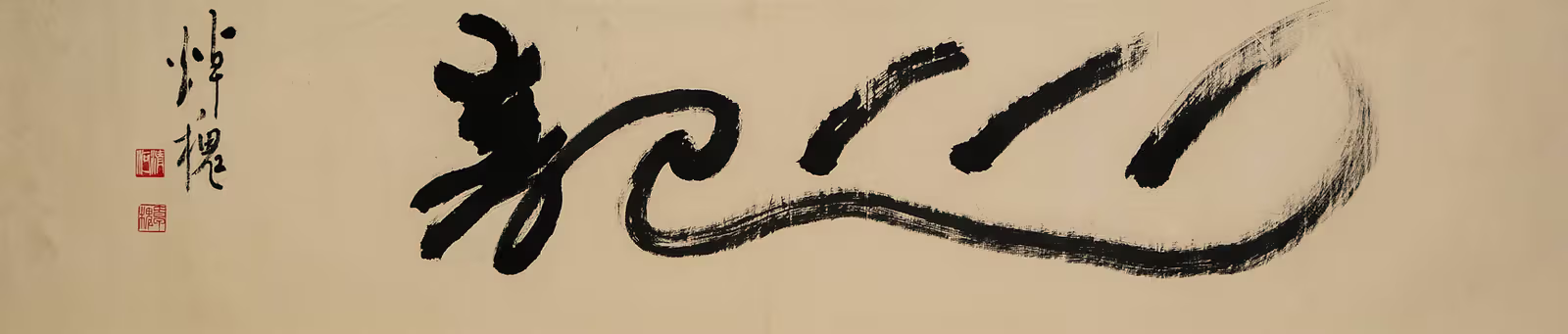
What shape does a body take when it falls out of sync with its surroundings? At Hong Kong’s SC Gallery, “INTERROOTED” puts that question to Man Mei To and Lau Ching Hei, Rico through sculpture, porcelain pieces and figurative painting. The exhibition opened on October 10 and continues until November 21. Its Chinese title, 身土不一, shifts a phrase meaning that body and land are inseparable toward their divergence, opening a gap in that relationship. The interest lies less in accumulating abstract concepts than in how two artists use different materials to make balance, support and fragility visible.
108 white porcelain pieces: from a whole wall to individual curves
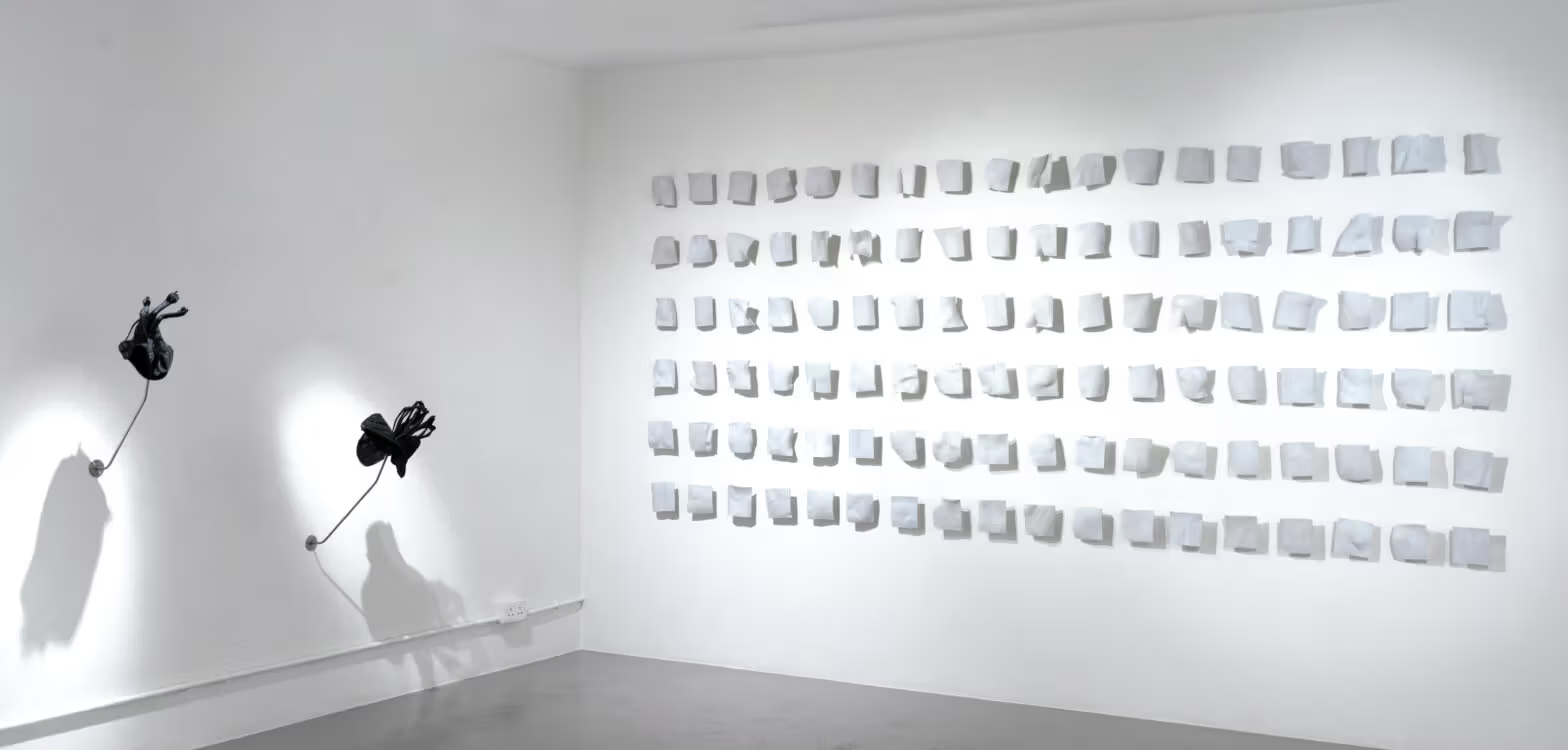
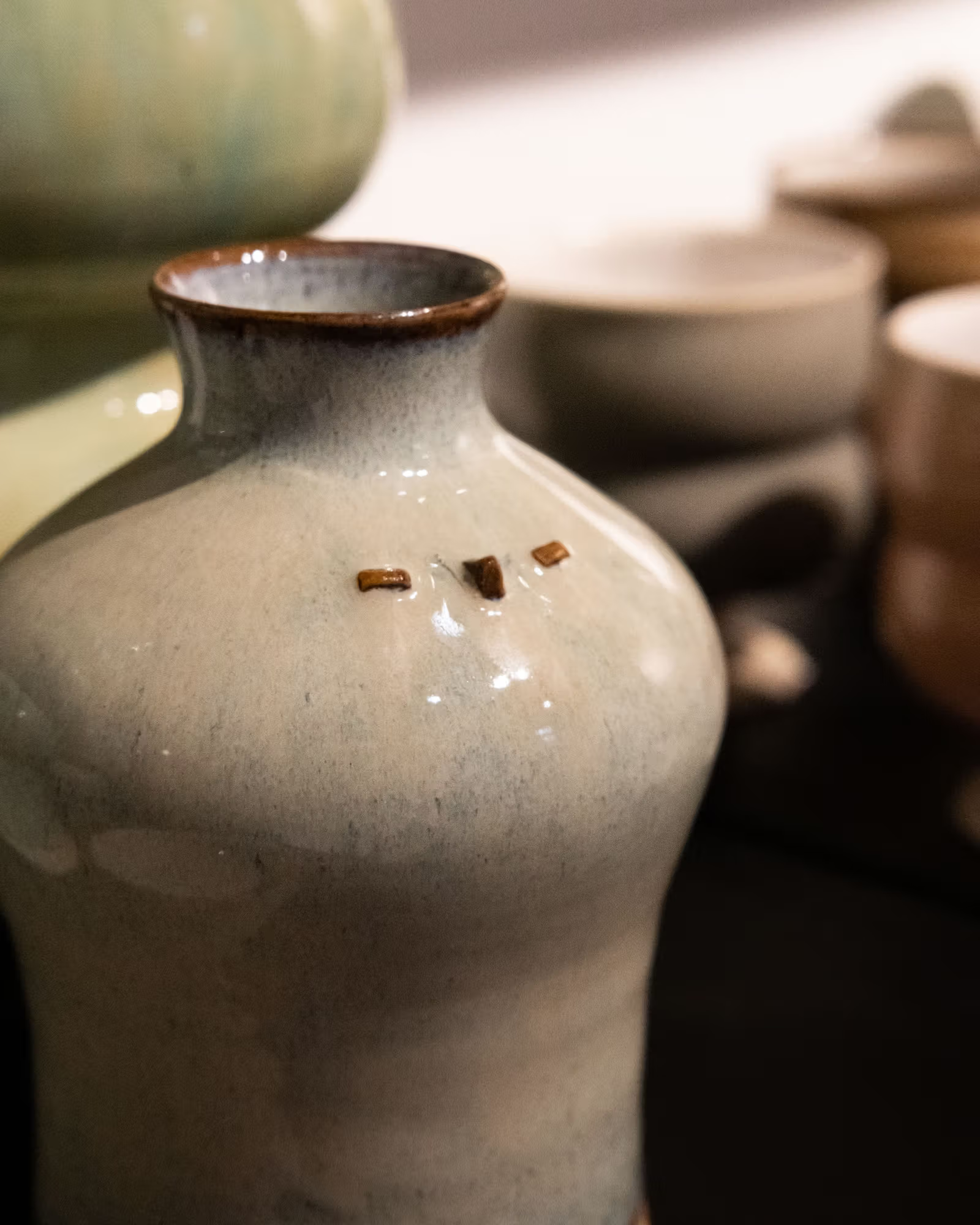
Man Mei To’s “Skin Line – IV” consists of 108 pieces in porcelain and acrylic, each listed at 11.5 ×11.5 cm and made in 2026. From a distance, they form an ordered white grid across a wall. Up close, their turns, contours and distances from the wall differ. White does not erase those variations; it makes edges, shadows and the rise and fall of curved surfaces the main clues. The same wall can be read first as an overall rhythm, then as individual forms.
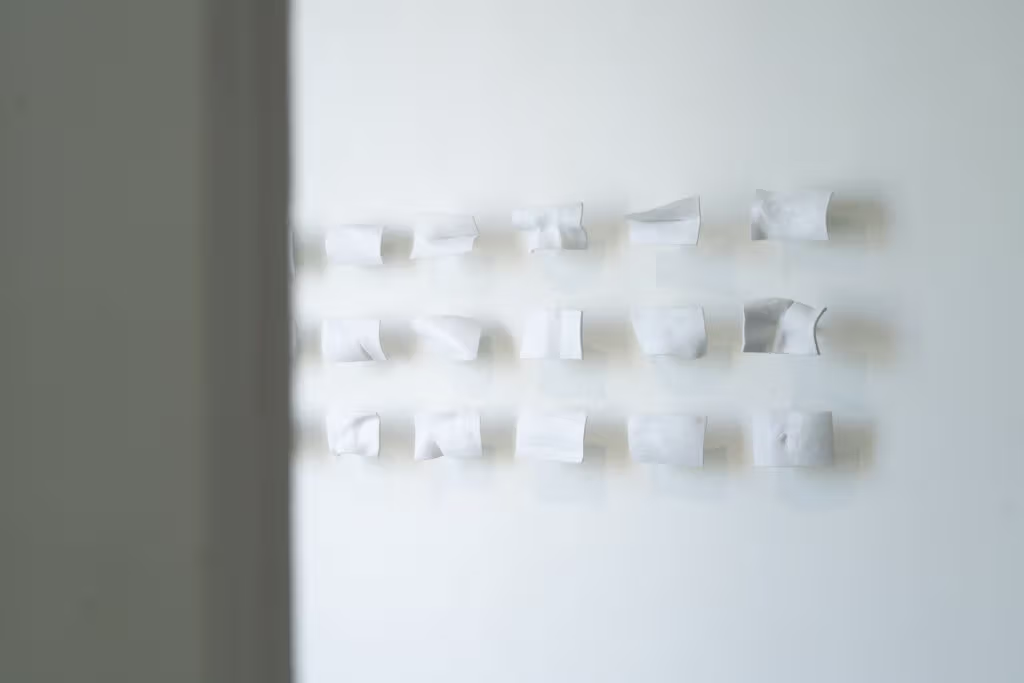
A closer view of Man Mei To’s white porcelain reveals different curves and folds within an orderly arrangement.
It is worth alternating between two viewing distances. Stepping back, the horizontal rows and similar dimensions establish a cadence reminiscent of writing. Moving closer, some surfaces lift outward while others turn inward, loosening the initial sense of order. The gaps between porcelain pieces are not inactive background, either: grey shadows fall along them, giving the flat arrangement another layer of depth. For anyone accustomed to seeing an isolated artwork on a phone, comparing an installation overview with details makes the difference particularly clear.
Resin sculpture and figures on aluminum: where does support come from?
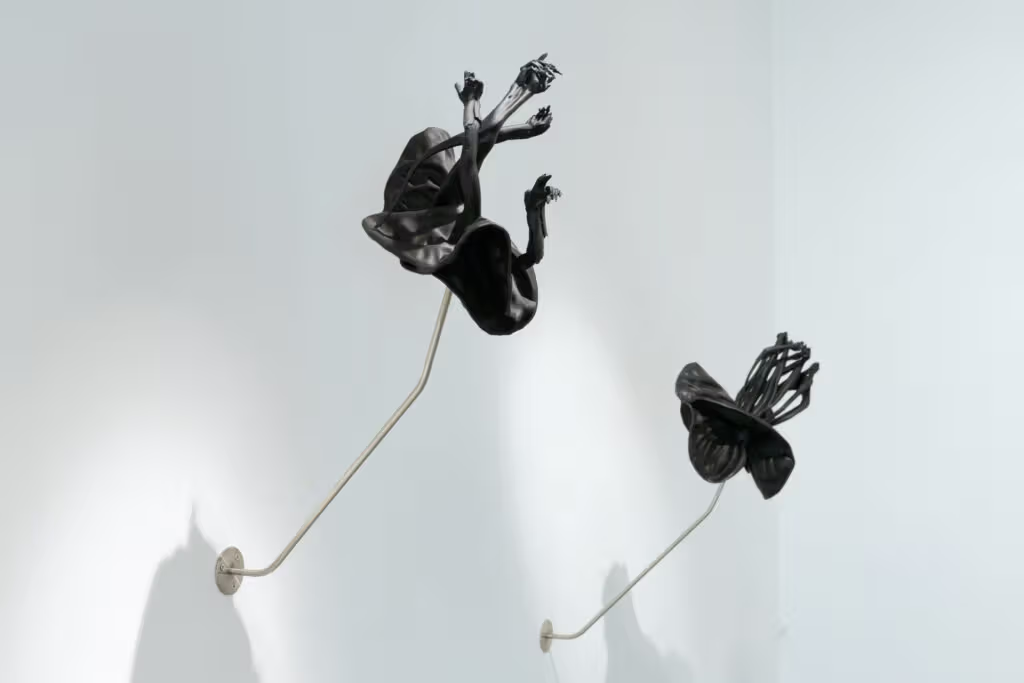
Another group of dark sculptural forms extends away from the wall on slender metal supports, suggesting both curled limbs and outward-growing plants. The official record for “Harmony in motion – I” dates it to 2025 and specifies oil on resin and stainless steel. The entire exhibition should therefore not be described as all-new work for this year, or entirely white porcelain. The object, its support and the long wall shadow establish three connected elements. Rather than concealing the support completely, the work lets it become a way of thinking about weight and suspension.
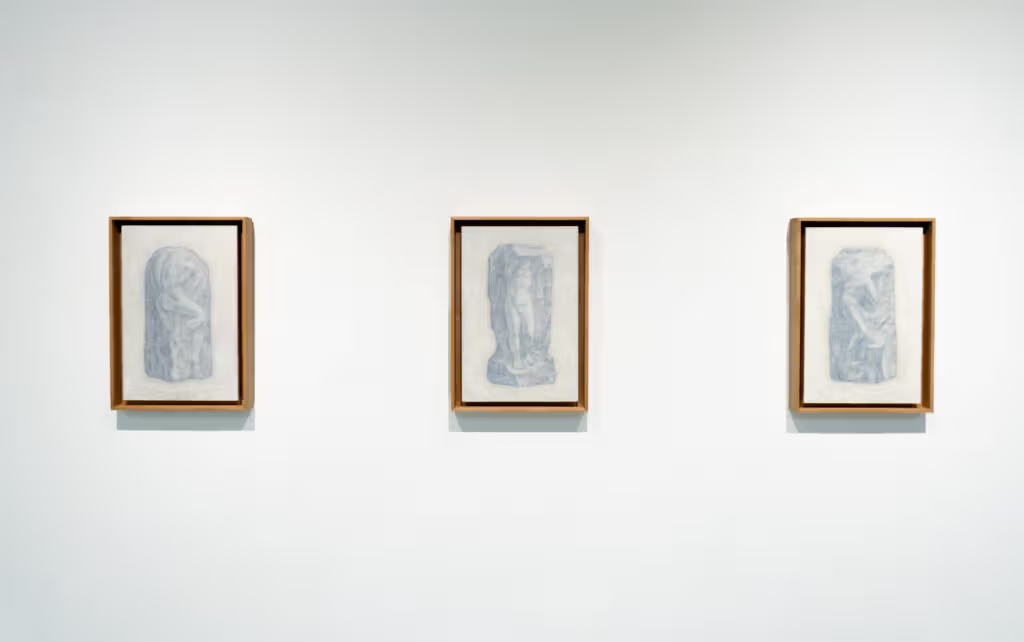
Pale grey forms in wooden frames leave generous blank space, creating a different viewing distance from the larger figurative works.Man Mei To’s dark sculptural forms project from the wall on metal supports, bringing objects and shadows into the same composition.
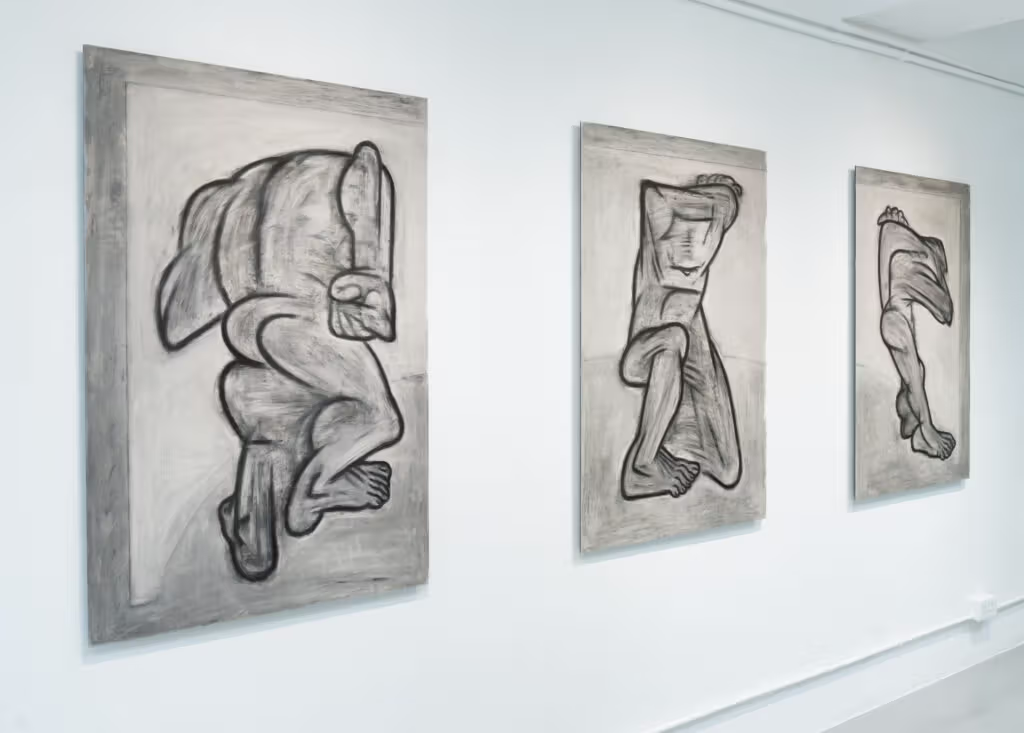
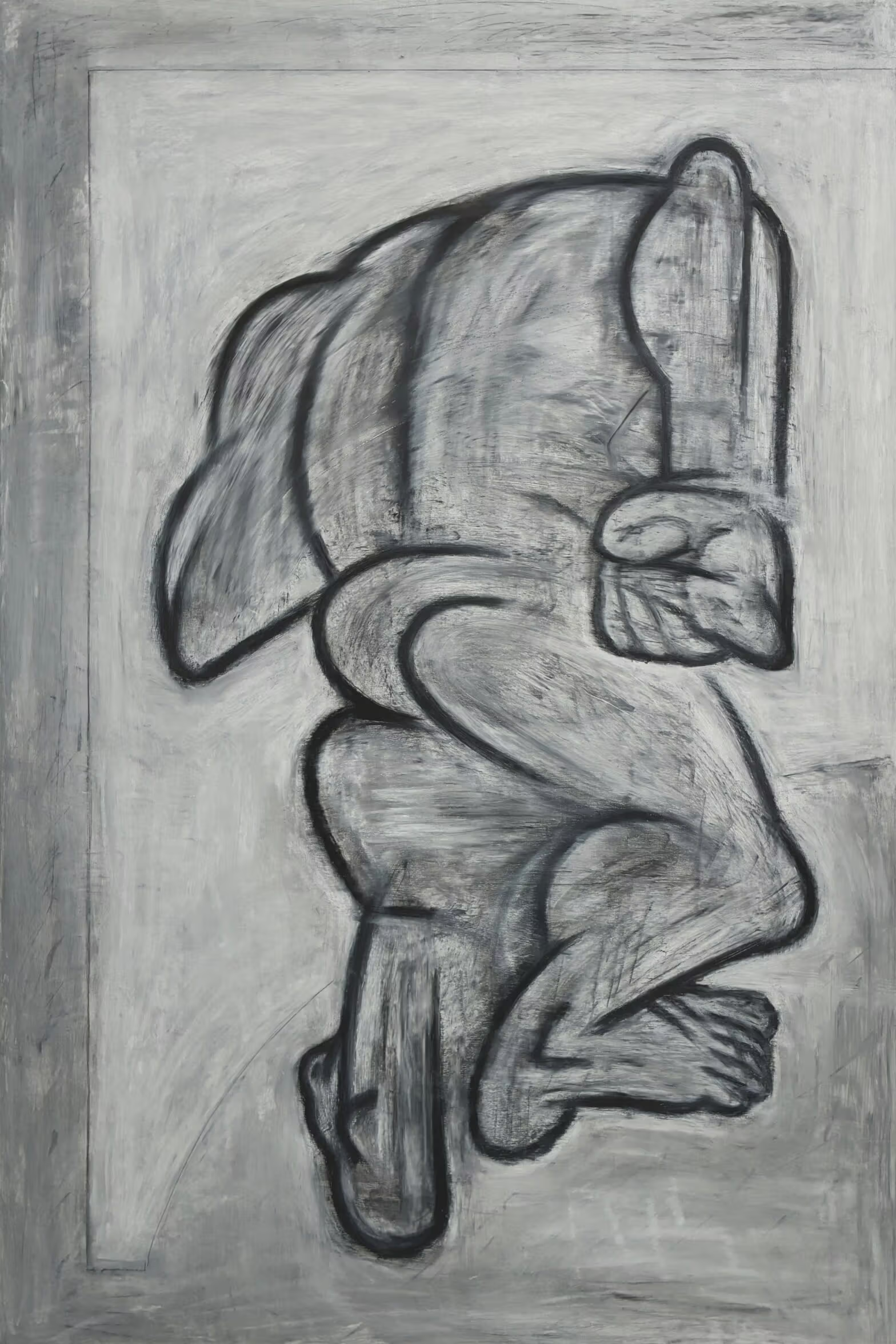
Rico Lau presses the body into a plane. “Performing I,” made in 2026, measures 120 ×80 cm and uses graphite, charcoal and pastel on an aluminum panel. Heavy outlines surround folded limbs, while grey rubbed marks bind the figure to its ground. The starting point for these poses is a fight scene in which Ultraman Tiga loses balance and falls. Removing the opponent and city backdrop, then reversing the original orientation, leaves the hero without a familiar victorious scene to rely on. Instead, the figure must find a new point of support inside the frame.
Three figurative works by Rico Lau hang together, their heavy dark outlines separating folded limbs from grey grounds.Rico Lau’s “Performing I” (2026) uses graphite, charcoal and pastel on aluminum to shape an unbalanced figure.
Where is the Wong Chuk Hang gallery? Hours and ways of looking
Placed together, the two artists’ works invite comparison less through their resemblance to a human body than through how they construct the ability to “stand.” Repeated porcelain pieces establish order, dark sculptures hang from supports, and painted figures bend within tight outlines. A restrained palette of black, white and grey keeps attention on surfaces, gaps and the sense of weight. Even before reading a long explanation, the distance of a work from the wall, the direction of its limbs and the length of its shadow can provide a viewing sequence of one’s own.
The gallery is inRoom 1902, Sungib Industrial Centre,53 Wong Chuk Hang Road, Hong Kong. SC Gallery generally opens Tuesday to Saturday,11:30 am–6:30 pm, except public holidays, with other visits by appointment. October 27 is a Tuesday, so a visit during regular hours starts from 11:30 am, rather than early morning. Consult the official exhibition page for exhibition and artwork information, or call+852 3795 3826 about particular visiting requirements.