Banqiao Caesar's Jiayan Chinese Restaurant Launches Autumn Food Festival with Crab Hotpot and Sour Soup Noodles
Banqiao Caesar's Jiayan Chinese Restaurant's September 2026 Autumn Food Festival features wild mushrooms, water bamboo, tea seed oil and seafood alongside Shaanxi-style sour soup noodles, flatbread and oil cakes, in set tables for various party sizes.
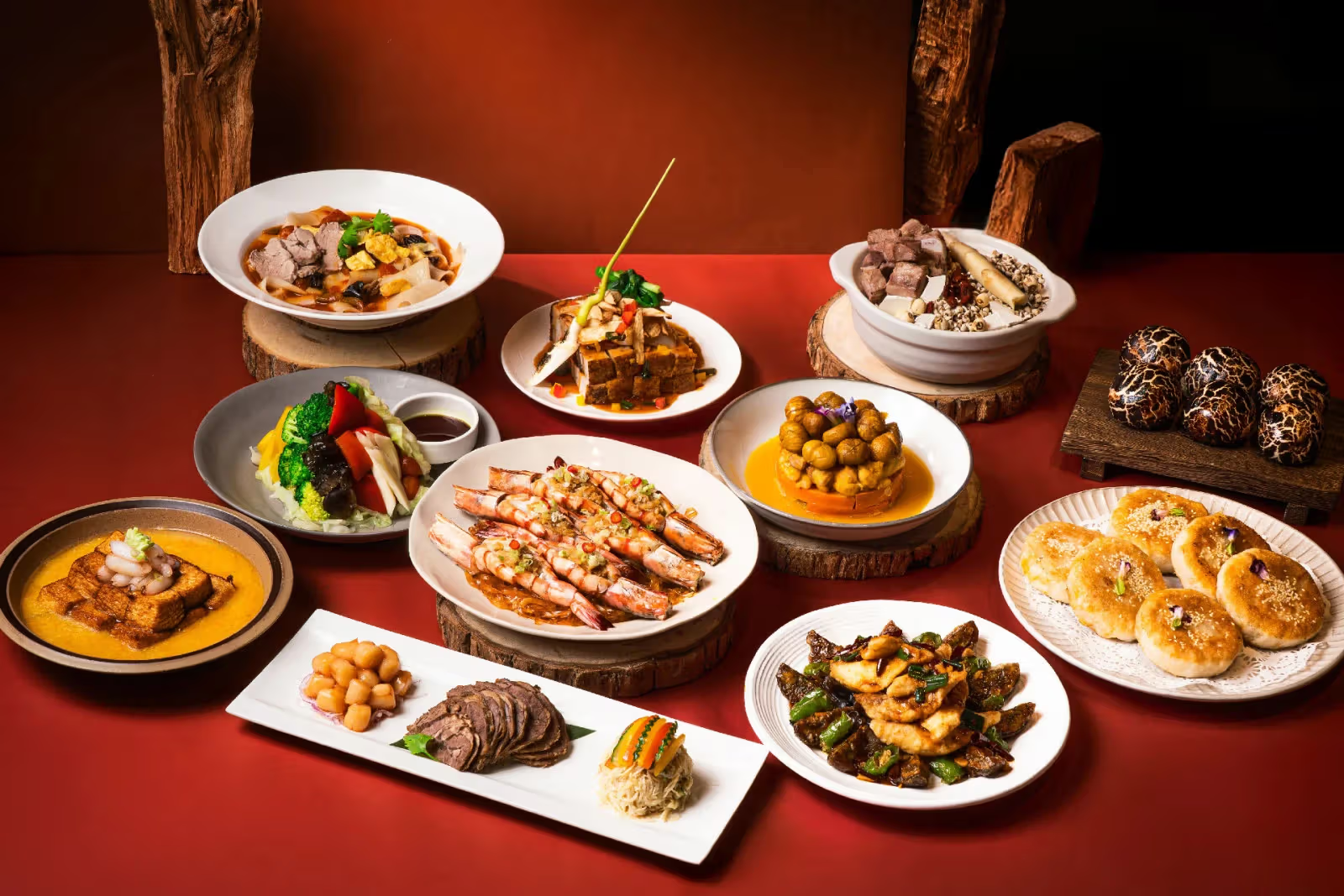
Since September 2026, Jiayan Chinese Restaurant at Caesar Park Hotel Banqiao has launched its "Autumn Delicacies・Seasonal Flavors Food Festival," designing set-table menus centered on seasonal wild mushrooms, water bamboo, tea seed oil and seafood, while incorporating elements of Shaanxi cuisine such as sour soup noodles, flatbread, and oil cakes to form this season's menu highlights. The set tables come in three sizes—for 2, 4, and 6 diners—and the restaurant is listed as a recommended restaurant in the Michelin Guide Taiwan 2026.
How does the autumn menu showcase seasonal ingredients?
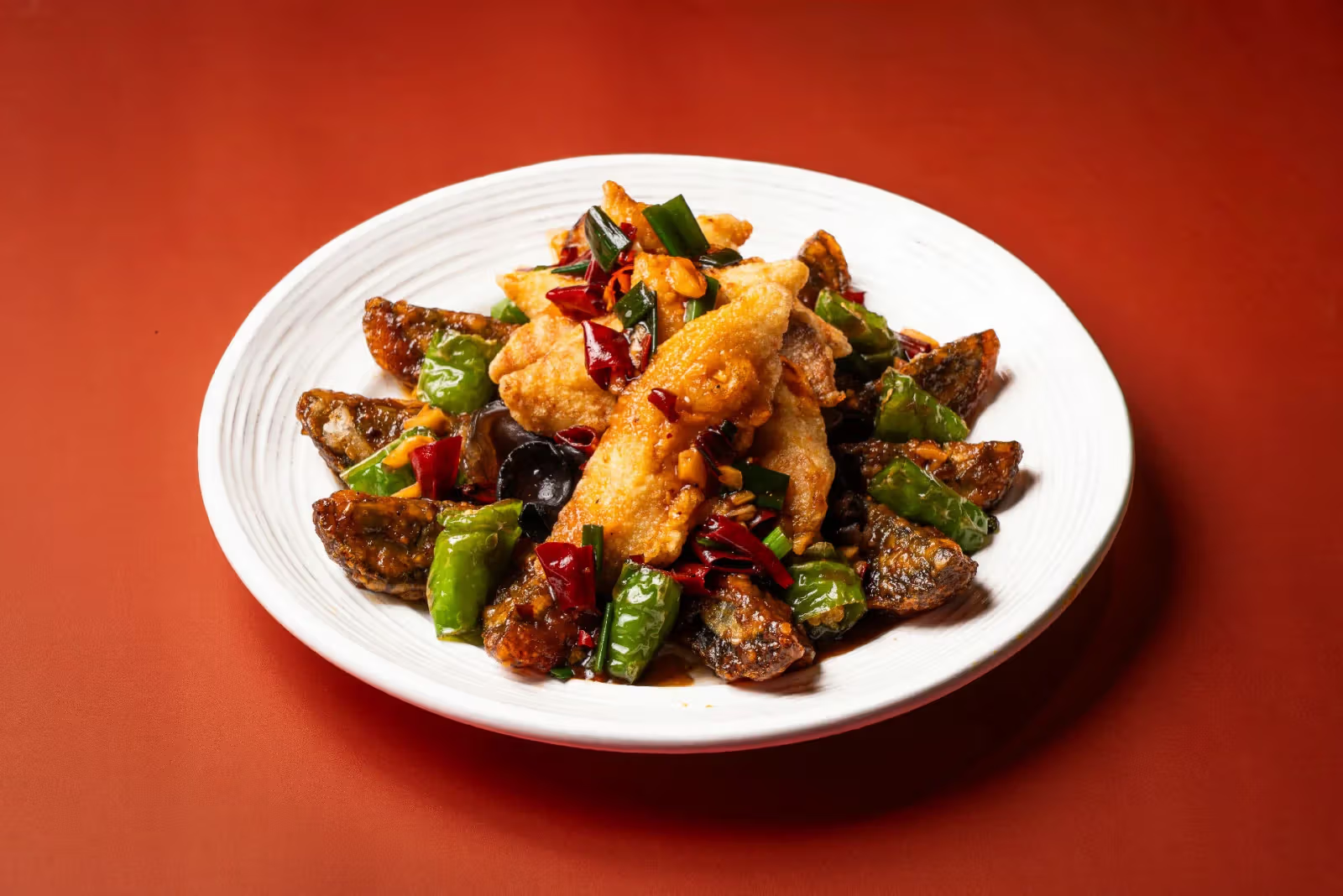
Among this season's signature dishes, the "Kung Pao Cloud Ear Fish Balls" are made with Taiwanese tilapia skin fried to hold its shape, paired with a Kung Pao-style sauce and seasoned with preserved egg; the "Wild Mushroom Stir-Fried Pork Collar in Savory Sauce" combines seasonal wild mushrooms with pork collar, highlighting the contrast between the mushrooms' aroma and the meat's texture. The "Traditional Tea-Oil Pan-Fried Eel" uses tea seed oil made by small farmers, slow-frying the eel so the oil's fragrance infuses the flesh. For the hotpot course, the "Aromatic Aged Wine Fresh Crab Hotpot" uses a broth made from Shaoxing wine and rice wine to cook crab and other seafood, presenting a soup where wine fragrance and briny flavors intertwine.
Fish balls made from fried Taiwanese tilapia skin, served with Kung Pao-style sauce and preserved egg. Image: 板橋凱撒大飯店
How are Shaanxi noodle elements incorporated into the menu?
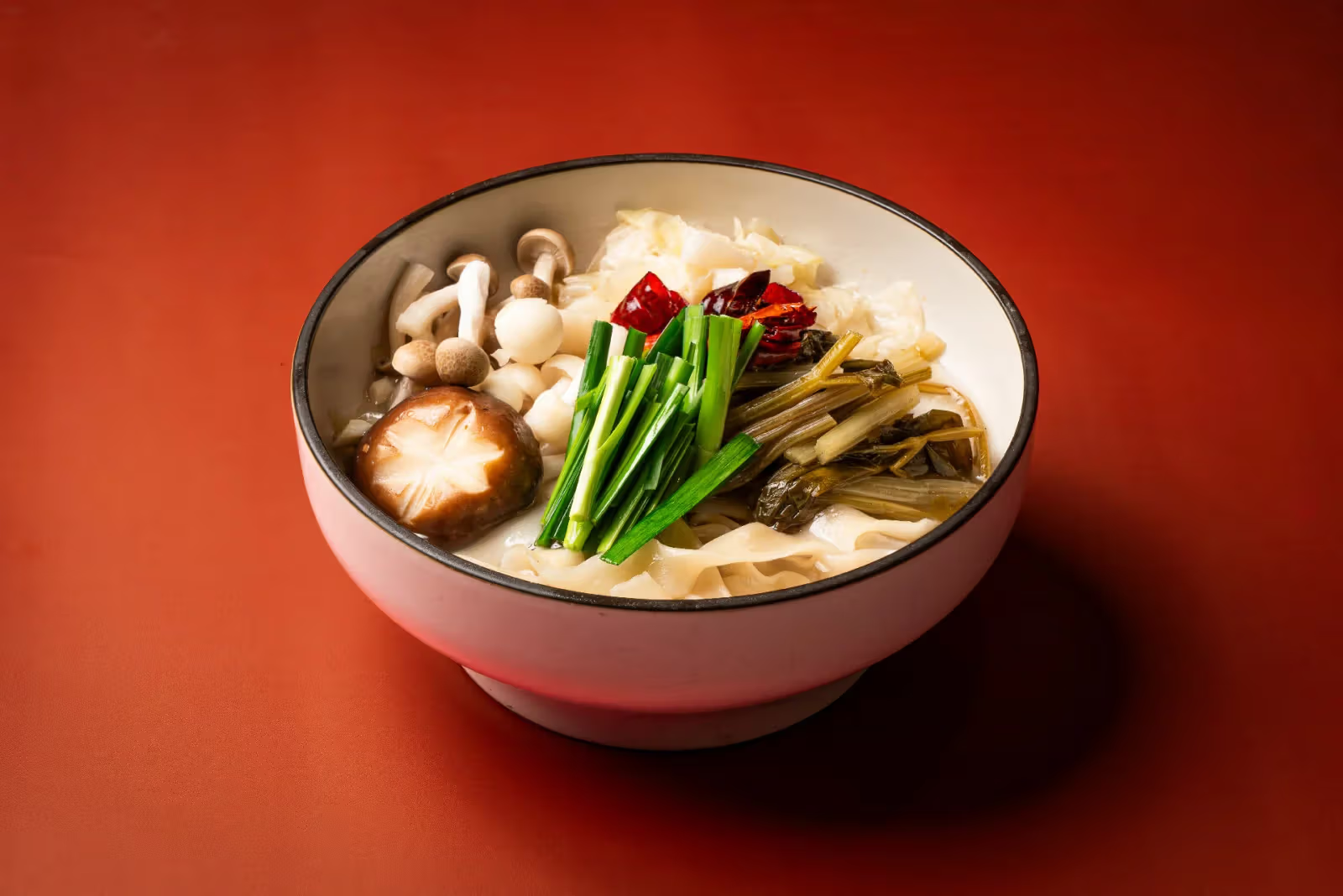
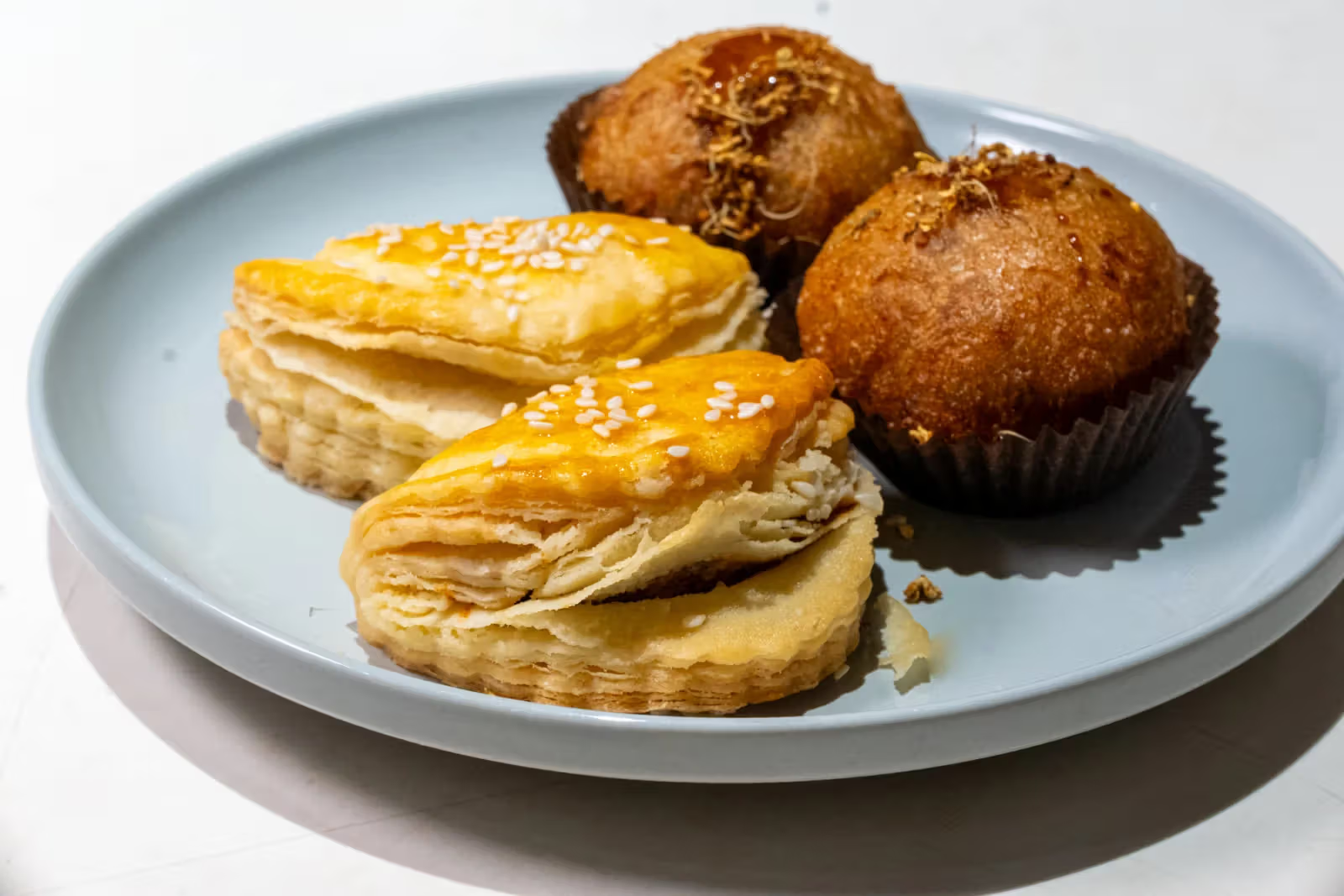
Another notable feature of this season's menu is the incorporation of classic elements from Shaanxi food culture. The "Qin-Style Wild Mushroom Sour Soup Noodles" use traditional sour soup as the broth base—made by fermenting blanched celery and cabbage—further enhanced with wild mushrooms for added depth of flavor, delivering a tangy, savory taste. The "Water Bamboo and Shredded Pork Flatbread" presents a miniature version of the Shaanxi staple guokui flatbread, filled with shredded water bamboo and Taiwanese black pork, combining noodle craft with local ingredients. For dessert, the "Chang'an Osmanthus Brown Sugar Oil Cake" is seasoned with osmanthus and brown sugar, crispy on the outside and soft within, providing a fitting finish to the meal.
A noodle dish with a fermented sour soup broth, paired with wild mushrooms. Image: 板橋凱撒大飯店
The sour soup noodles, flatbread, and oil cake each offer a different way of reading the menu: the noodle soup brings fermented tang into the meal sequence, the flatbread wraps local water bamboo and black pork into a single bite-sized item, and the dessert closes things out with osmanthus and brown sugar. Beyond the seafood and wild mushrooms, these elements offer another path to understanding the menu through noodle-based dishes.
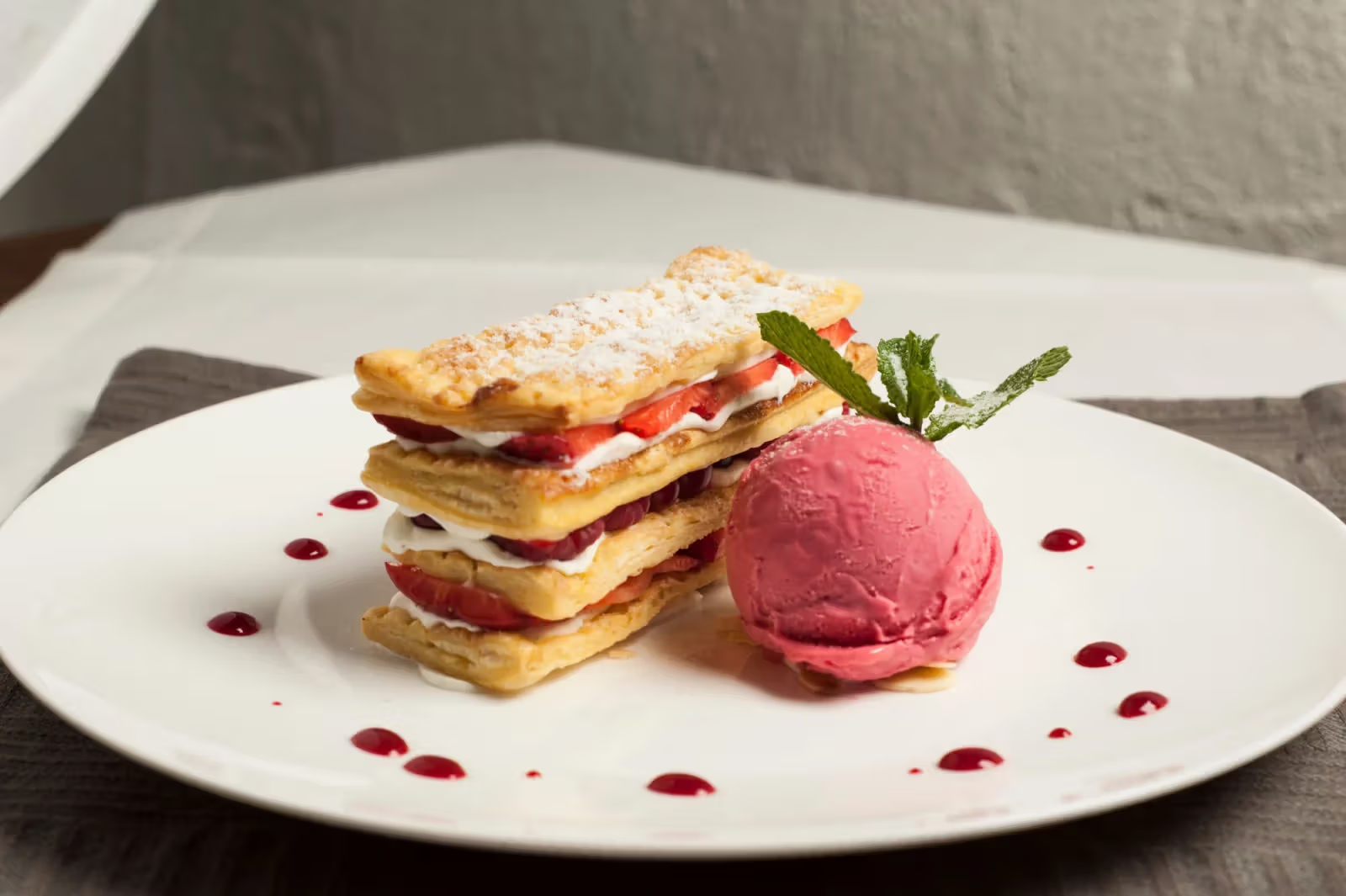
A dessert cake seasoned with osmanthus and brown sugar, crispy outside and soft inside. Image: Alec
How to choose between the 2-, 4-, and 6-person set tables?
The set tables are arranged for 2, 4, or 6 diners. When choosing, first confirm the number of people dining together, then check the dishes, portions, and actual total price for that combination. The names of the set menus, descriptions of individual dishes, and the actual contents of each size of set table are not necessarily equivalent; if you particularly want the crab hotpot or sour soup noodles, you'll need to confirm with the restaurant whether your chosen combination includes them, whether they're available that day, and the price difference between ordering à la carte versus as part of the set. This approach gives a clearer picture of what will actually be served at the table, rather than just noting the starting price.