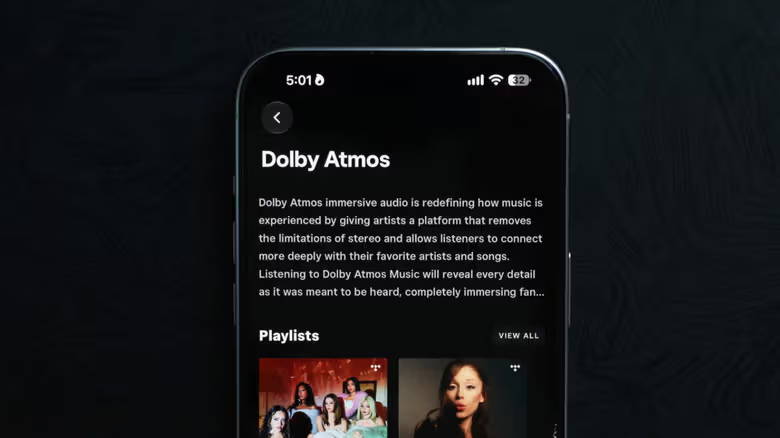
On streaming platforms, "Dolby Atmos" and "Lossless" often appear side by side next to the same album, seeming like two versions of the same upgrade. In fact, these are two sets of unrelated technologies. One is about how the sound is "placed", and the other is about whether the sound is "compressed". Engadget author Adnan Ahmed broke down the two issues in an article published on August 28, and also gave his own preference.
Dolby Atmos is an object-based audio system that can position sound vertically and horizontally to create a stereo sound field. Traditional stereo can only place the sound between the left and right channels, but Dolby Atmos can accurately place an instrument or vocal at any point in the three-dimensional space. Lossless sound quality deals with another level: common formats such as MP3 and AAC sacrifice part of the audio data in exchange for smaller file sizes, which is destructive compression; lossless sound quality pursues bit-perfect playback, which theoretically allows the listener to hear the same content as the master tape.
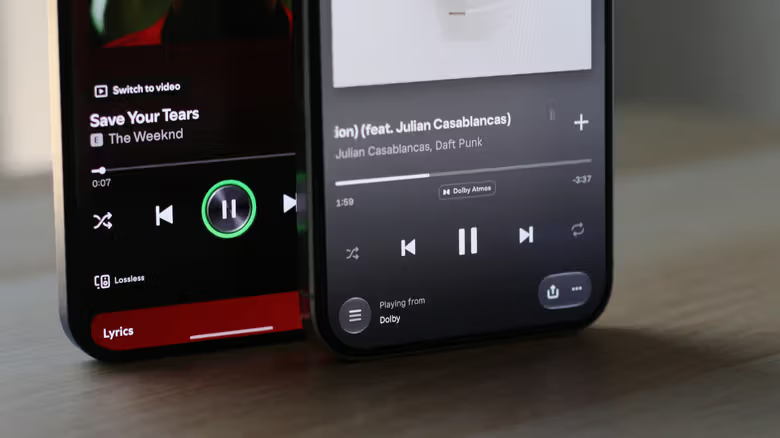
Although the two operate independently, there are currently almost no streaming platforms that allow you to enjoy both at the same time. Most Dolby Atmos content is encoded using Dolby Digital Plus, which is destructive compression in itself; lossless sound quality relies on encoding formats such as FLAC and ALAC that completely retain the original data. Technically, there is Dolby TrueHD that can achieve both lossless and Atmos, but this type of encoding mainly appears on physical media such as Blu-ray discs, and is not currently used by streaming services.
For lossless sound quality to really take effect, there are more conditions than you might imagine.
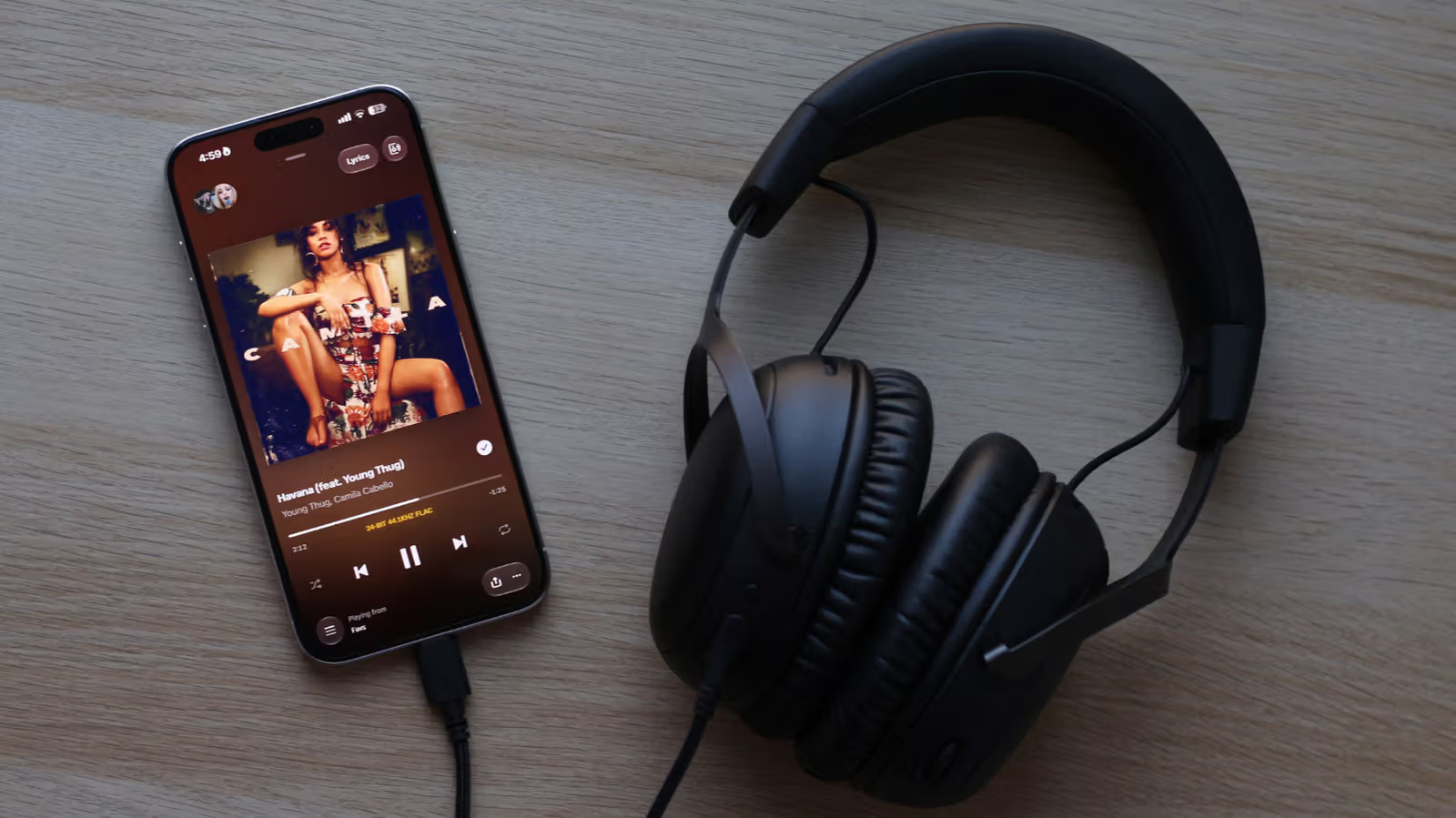
Whether lossless sound quality is perceptible depends on whether the entire playback chain is in place: the streaming service must provide true bit-perfect playback, and the playback device must be able to handle the extra details. Although both Apple Music and Tidal can transmit lossless audio via Bluetooth, the signal will still be transferred by destructive encodings such as SBC and AAC before reaching the headphones. Therefore, to hear the true lossless effect, you must rely on a wired connection, which is also officially recommended by Apple. The exception is Qualcomm's aptX Lossless code, which can achieve bit-perfect transmission through Bluetooth, but only if an Android phone is used with a wireless headset that supports this technology.