TIDEZINE.

Florida Bans License Plate Readers on All State Roads, DeSantis Says Surveillance Has "Spiraled Out of Control"

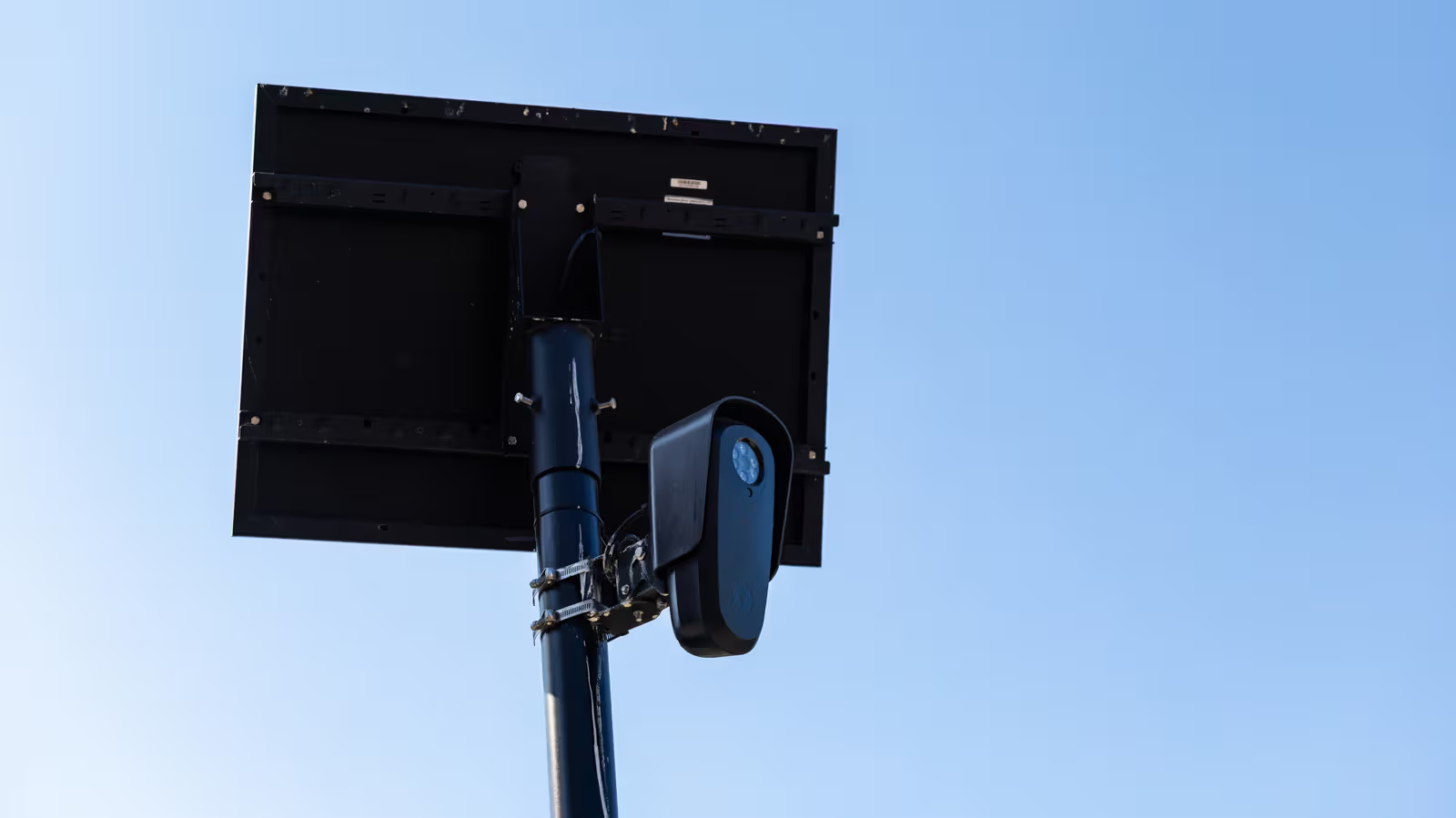
A single memo from Florida's transportation department revoked all license plate reader permits on state roads, giving agencies 30 days to remove them. It's just one stop in a nationwide backlash against Flock Safety, but it exposes just how deep surveillance tech has embedded itself into our roads.

Jordan Lin, Deputy Editor
Florida Bans License Plate Readers on All State Roads, DeSantis Says Surveillance Has "Spiraled Out of Control"

A single-page memo revoked permits for every license plate reader on Florida's state roads. It was signed by Will Watts, the state transportation department's chief operating officer, dated August 31, and it gives law enforcement agencies 30 days to remove the devices from state roadways.

In the memo, Watts wrote that while Florida law had already limited license plate reader (LPR) system permits to law enforcement agencies, "the exponential growth in deployment in recent times, coupled with reports of misuse, data privacy, and surveillance concerns, is enough to warrant immediate action to protect the autonomy and quality of life of Floridians." The department also said it would use its discretion to stop approving any future LPR system applications.

The driving force behind the ban is Florida Governor Ron DeSantis, who said in an August 2026 interview that use of the technology in the state had "spiraled out of control." Still, DeSantis himself admitted on a podcast that changing transportation department rules only goes so far — 98% of automated license plate readers statewide are actually installed on local roads and private property, places the state road ban can't touch. Sheriff's offices in Jacksonville and Okaloosa County have each pledged to remove the devices from their jurisdictions.

The company caught in the crosshairs is Flock Safety, which faced the most concentrated backlash of 2026. On its website, the company lists plenty of non-law-enforcement use cases, like letting firefighters get a read on a fire scene through the cameras before they even arrive. But the criticism has consistently centered on the feeling of being under constant surveillance, plus documented cases of camera misuse. Flock has responded with software updates and policy changes, including limits on how long footage is stored, but public protests and acts of vandalism against the readers haven't let up.

Similar pullbacks aren't limited to Florida. The Los Angeles Police Department suspended its contract with Flock in July; in August, two counties in Ohio suspended use of Flock cameras following misuse reports; and Texas Governor Greg Abbott froze funding for state agencies to purchase Flock hardware outright. Most of these moves target Flock the company rather than license plate reader technology itself, but taken together, they show local and state regulators are starting to rethink how public safety should actually work.

Worth noting: license plate readers aren't new technology. They've been used for decades to track down stolen vehicles, locate missing people, and even chase leads in criminal cases. Just over a week before Florida's ban was announced, police used one of these cameras to track down a murder suspect who'd fled Florida, all the way to West Virginia — exactly the kind of case supporters point to when making the argument for their law enforcement value.
Related

Ring Rolls Out New TAKE Encryption Standard, But Its Surveillance Ambitions Show No Signs of Slowing
Tech

Ring Rolls Out New TAKE Encryption Standard, But Its Surveillance Ambitions Show No Signs of Slowing

Ring has announced a new encryption scheme called TAKE, which deletes the decryption key once video data has been processed in the cloud. At the same time, though, features like Search Party and Familiar Faces—plus the CEO's talk of achieving "zero crime" in communities—are keeping outside observers wary of where the company's surveillance push is really headed.

Nintendo Sets Two Livestreams Back-to-Back: Zelda 40th Anniversary Opens, Full Direct Closes the Next Day
Tech

Nintendo Sets Two Livestreams Back-to-Back: Zelda 40th Anniversary Opens, Full Direct Closes the Next Day

Nintendo has announced back-to-back livestreams on September 8 and 9, starting with a 30-minute Zelda 40th Anniversary special, followed by a full 45-minute Nintendo Direct revealing its year-end lineup.

Microsoft Unveils Project Zenith, a Streamlined Dev Version of Windows—But the Catch Is 64GB of RAM
Tech

Microsoft Unveils Project Zenith, a Streamlined Dev Version of Windows—But the Catch Is 64GB of RAM

Microsoft has announced Project Zenith, a distraction-free Windows experience built specifically for developers. It'll first ship on an AMD Ryzen AI Halo mini desktop, but you'll need at least 64GB of RAM just to run it.

Is the New One Pricier? Apple Sells M6 and M5 Pro Mac Mini Side by Side, and It's the New Chip That Starts at $899
Tech

Is the New One Pricier? Apple Sells M6 and M5 Pro Mac Mini Side by Side, and It's the New Chip That Starts at $899

Apple is now selling two generations of chips in the Mac mini at once: the brand-new M6 at $899, and the M5 Pro—which actually debuted back in March last year—starting at $1,699. The newer chip number doesn't come with the higher price tag.

New GTA VI Trailer Streams Exclusively on Netflix for Six Hours Before Hitting YouTube
Tech

New GTA VI Trailer Streams Exclusively on Netflix for Six Hours Before Hitting YouTube

The new trailer for Grand Theft Auto VI will debut exclusively on Netflix on August 27 for a six-hour window, before landing on Rockstar's YouTube channel at 9 PM for everyone to watch for free.

Panic refunds 19% tariff fee to Playdate players after US tariff ruling is illegal
Tech

Panic refunds 19% tariff fee to Playdate players after US tariff ruling is illegal

The Trump administration's tariff policy was ruled illegal by the Supreme Court. Panic refunded all the 19% overcharged tariff fee to Playdate at checkout to customers, while Amazon, Sony, and Nintendo are all still facing class-action lawsuits for the same money.