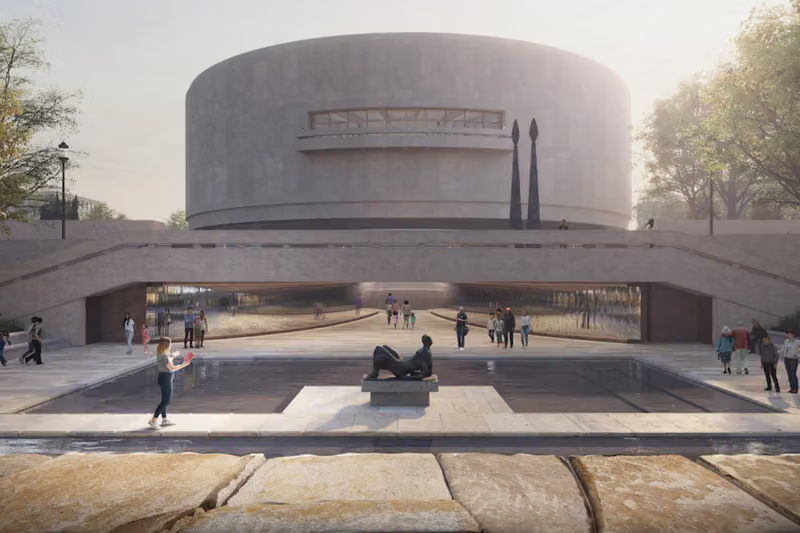
A passage sealed shut for nearly fifty years — older than most visitors who'll walk through it. The Hirshhorn Museum and Sculpture Garden, which opened on the National Mall in Washington, D.C. in 1974, originally had an underground passage connecting the museum building to its outdoor sculpture garden. That passage was later closed off, splitting people from the art across two separate spaces for half a century.
The person tasked with stitching it back together this time is Hiroshi Sugimoto. The Japanese artist and architect, who previously redesigned the Hirshhorn's lobby, has now taken on a far larger project: a four-year, $68 million overhaul aimed at the most thorough renovation of the campus since the museum opened in 1974. Rather than overturning architect Gordon Bunshaft's original modernist design, Sugimoto worked within its existing framework to reopen that underground passage — linking the museum building, the central plaza, and the sculpture garden into a single continuous flow for the first time.
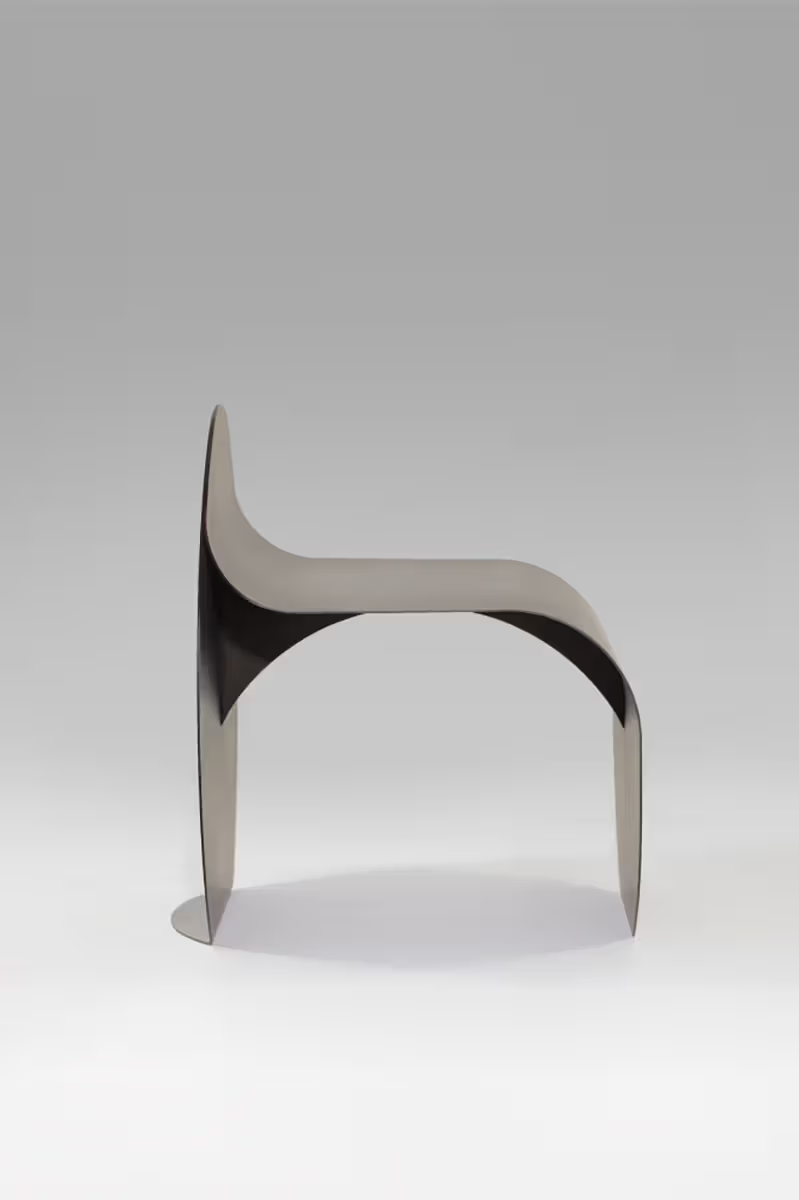
Reopening on October 31, the 1.3-acre sculpture garden now has room for up to 60 works, roughly doubling both its space and its capacity for art. The curatorial logic is straightforward: on one side sits the collection left by founding donor Joseph Hirshhorn — unavoidable names in the history of modern sculpture like Auguste Rodin, Alberto Giacometti, Barbara Hepworth, and Henry Moore. On the other side sit new contemporary works by KAWS, Izumi Kato, Lauren Halsey, and Raven Halfmoon. Placing old and new on the same lawn isn't about one replacing the other — it's a deliberate staging of two eras of sculptural language, facing off across time.