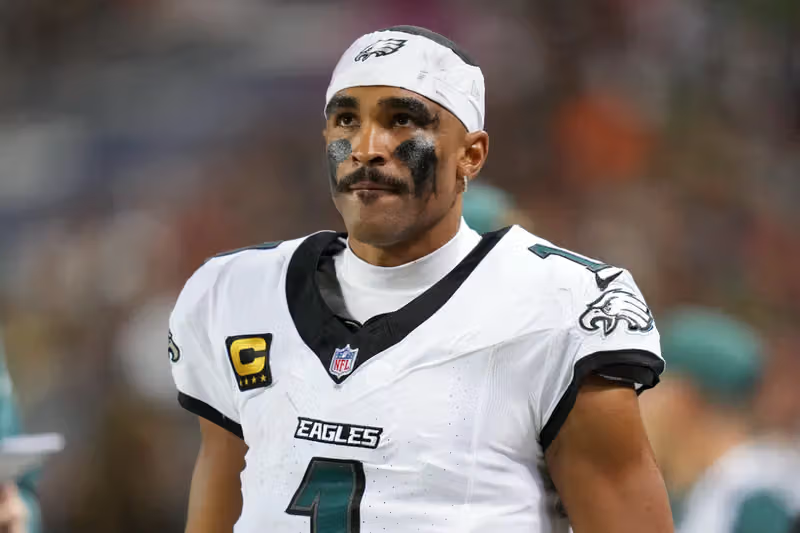
Philadelphia Eagles quarterback Jalen Hurts is receiving anticoagulant treatment after blood clots were discovered in his lungs, affecting his availability for the 2026 NFL season. The team and his agent, Nicole Lynn, released a joint statement on Monday, October 19, announcing the medical update.
What Happened to Hurts?
The statement indicated that Hurts was initially diagnosed with a superficial venous thrombosis in his calf. During subsequent further medical evaluations, doctors discovered he had deep vein thrombosis along with bilateral pulmonary embolisms. The statement noted that his clinical condition is currently stable and he has no significant functional limitations.
How Will Treatment Affect His Season?
According to NFL league regulations and medical guidelines, players taking anticoagulant medication are not permitted to participate in any contact football activities. According to reporter Ian Rapoport, the treatment course for such blood clots is expected to take at least three months, meaning he cannot return to the field before the end of the 2026 season.
What Will He Do During Treatment?
The statement confirmed that Hurts will travel with the team during his rehabilitation and conditioning period, continuing to participate in team affairs and maintaining physical training.
How Do the Team and Medical Staff View His Recovery Outlook?
The joint statement stated that Hurts' prognosis is favorable, he is expected to make a full recovery, and he is anticipated to have the opportunity to resume contact football activities once he stops taking anticoagulant medications. The statement also mentioned that the medical team expects this condition to cause no long-term aftereffects for him.
From Calf Examination to Pulmonary Blood Clots, How Did the Information Update?
Tracing back to the Eagles' team statement on October 15, Hurts suffered a calf laceration from a cleat during the October 4 game against the Rams and requested treatment after practice on October 8. An ultrasound on the Saturday after the team traveled to London revealed a superficial thrombosis; at the time, doctors evaluated that he could play and scheduled follow-ups after the game and upon return. By Wednesday evening, examinations revealed that the clot had migrated, and the team initially announced he would miss the game against the Panthers. The October 19 joint statement then announced the deep vein thrombosis and bilateral pulmonary embolisms, with the two reports reflecting examination results at different times.
What Is the Difference Between Deep Vein Thrombosis and Pulmonary Embolism?
The US CDC's guide on blood clots refers to deep vein thrombosis as DVT, which means a blood clot forms in a deep vein. If the clot breaks loose, travels to the lungs, and blocks blood vessels in the lungs, it is called a pulmonary embolism (PE). These terms are used to understand the medical background announced by the team, while Hurts' individual treatment and return evaluation are still handled by his medical team.