Sportswear, tailoring and workwear can keep their outlines, then connect through excessive decoration. Presented in Paris in June 2026, JUNYA WATANABE MAN Spring/Summer 2027 used “Bling Bling Bling” to bring chains, pearl-like pieces, crystals and large embellishments into menswear. Revisiting the collection, the interesting question is how decoration shifts a garment’s centre of gravity, beyond simply counting shiny objects.
The first look moves sneakers to the chest
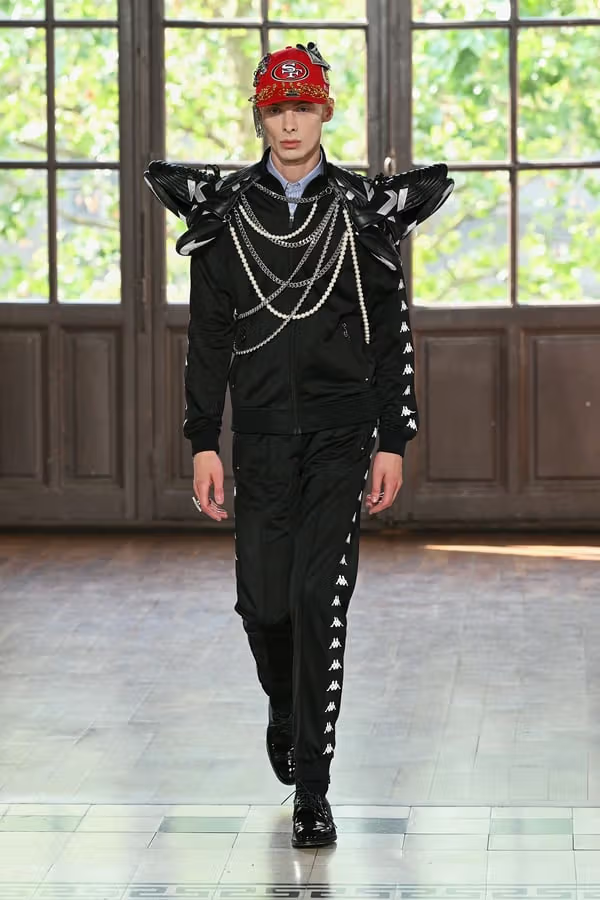
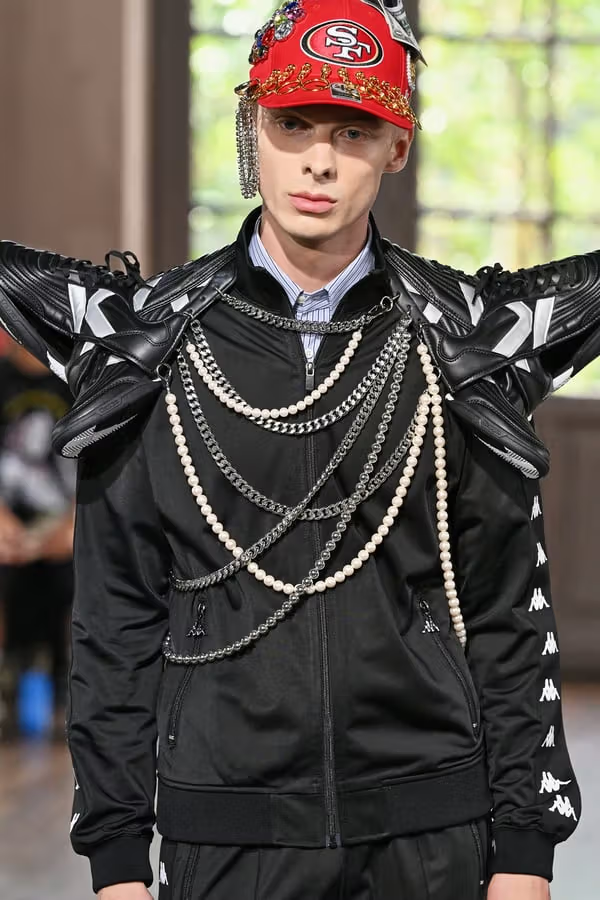
The opening builds on Kappa collaborative sportswear, adding a structure made from multiple sneakers around chest and shoulders, hung with dense chains. Footwear moves from the ground into shoulder-like masses, interrupting soft tracksuit lines with outward shapes. Chains fall across the chest, bringing straight and curved lines together and giving a familiar outfit another viewing order.
Sneakers and chains cross the upper body, with a decorated cap.
Repositioning objects goes further than enlarging a logo. Sneakers, beads and zips retain recognisable everyday parts while no longer dividing duties by their original use. The eye reaches shoulder volume before pockets, collars and trouser stripes. Focus shifts from clothing surfaces to connections between different things.
Workwear shapes retain their own pockets and lines.
Caps become the show’s most consistent shared language
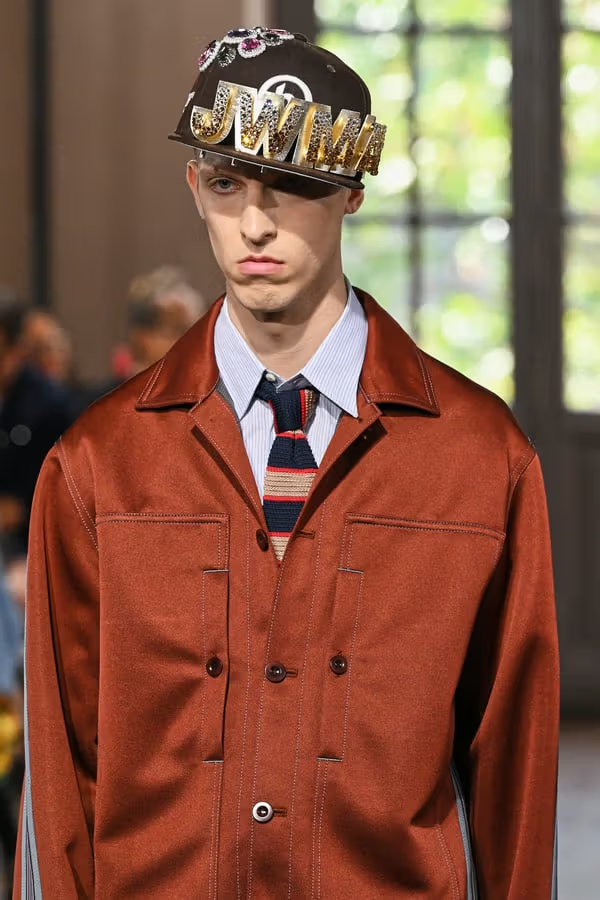
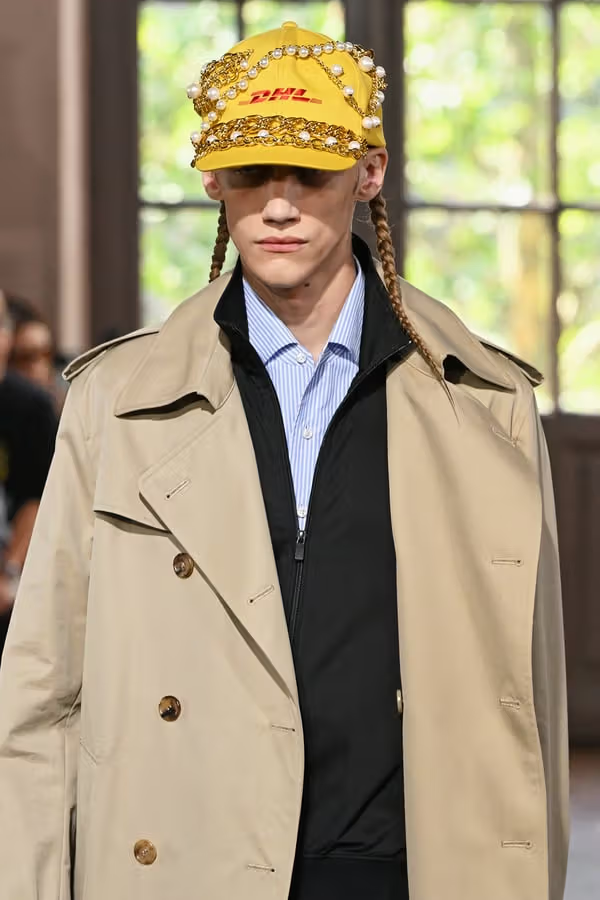
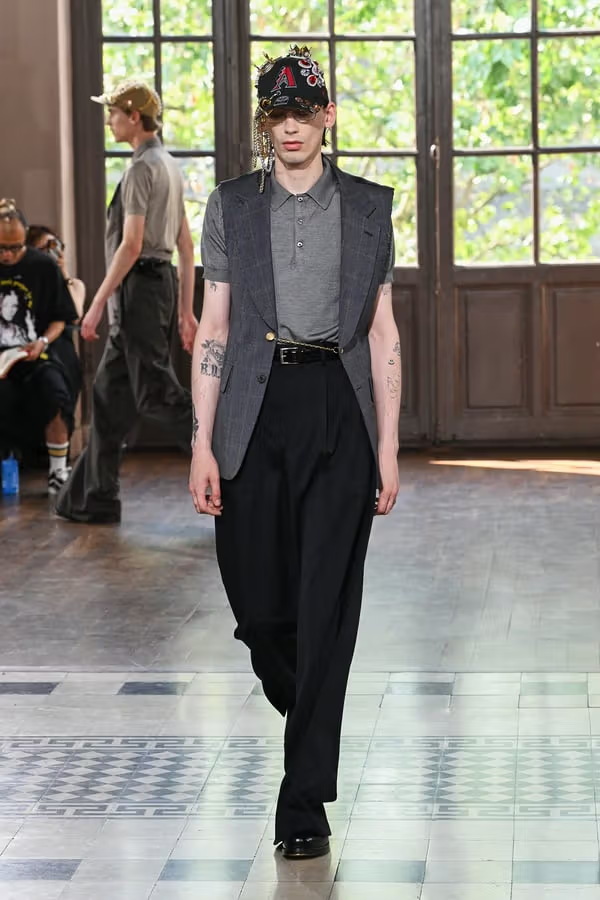
Every look wears a cap decorated with gold-tone chains, crystals or large ornaments, providing one anchor across different clothing types. Red, blue, yellow and black crowns make clear blocks, with detail spreading onto brims and sides. Tailoring, trench coats or sportswear may change below, but dense decoration overhead continually recalls the theme.
The same cap method meets a trench-coat silhouette.
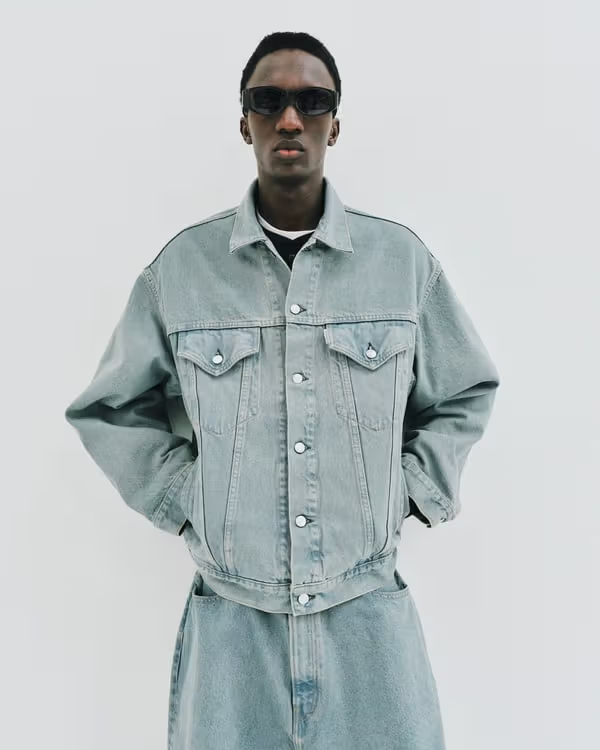
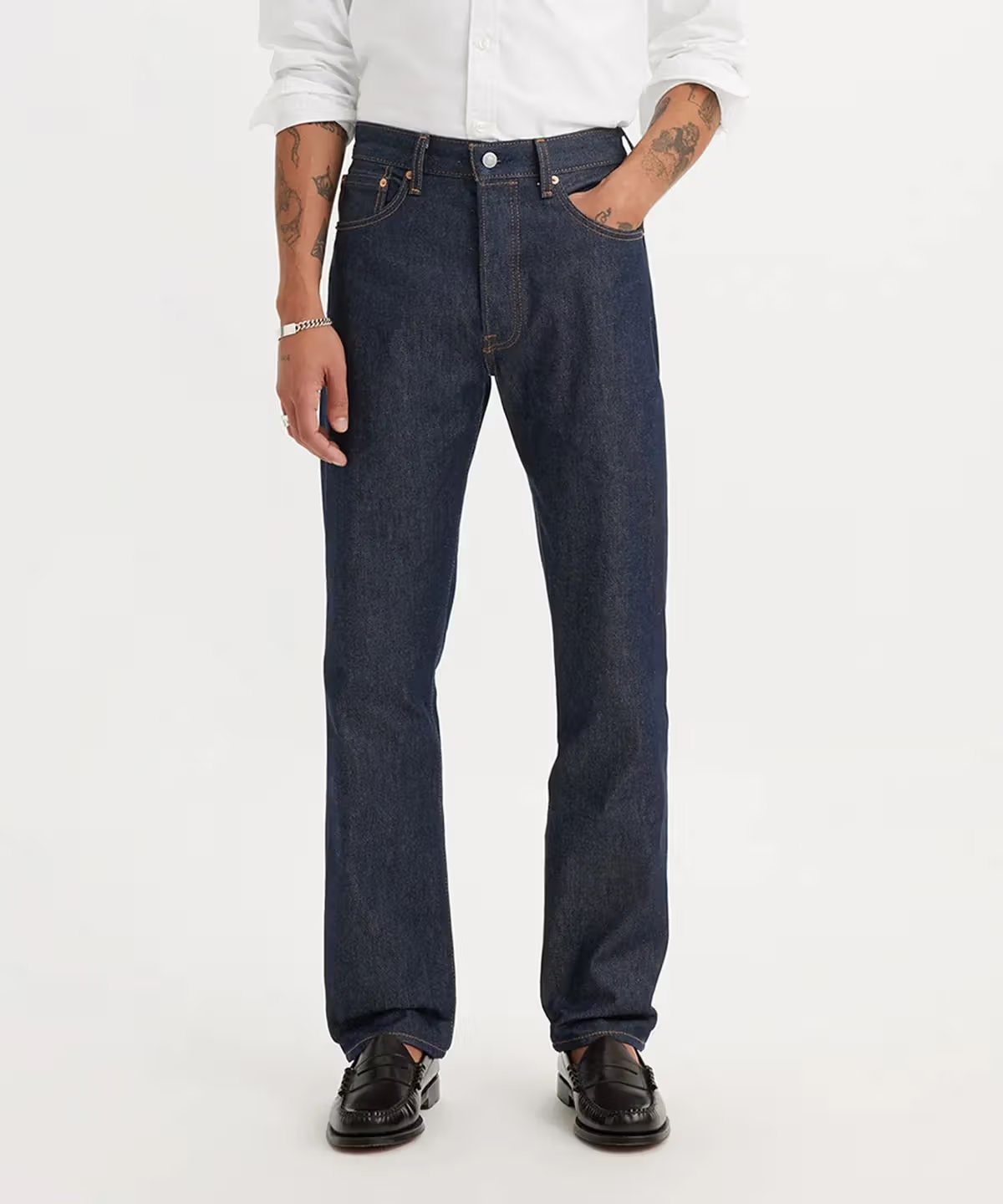
Collaborations include Kappa, NEEDLES, Carhartt and Levi’s, bringing sportswear, workwear and denim identities into one method. Photographs retain track stripes, workwear-like buttons and varying coat lengths rather than making every garment identical. Decoration establishes common ground while cut and brand cues preserve differences; that tension is the point.
Dismantled tailoring takes decoration into the framework
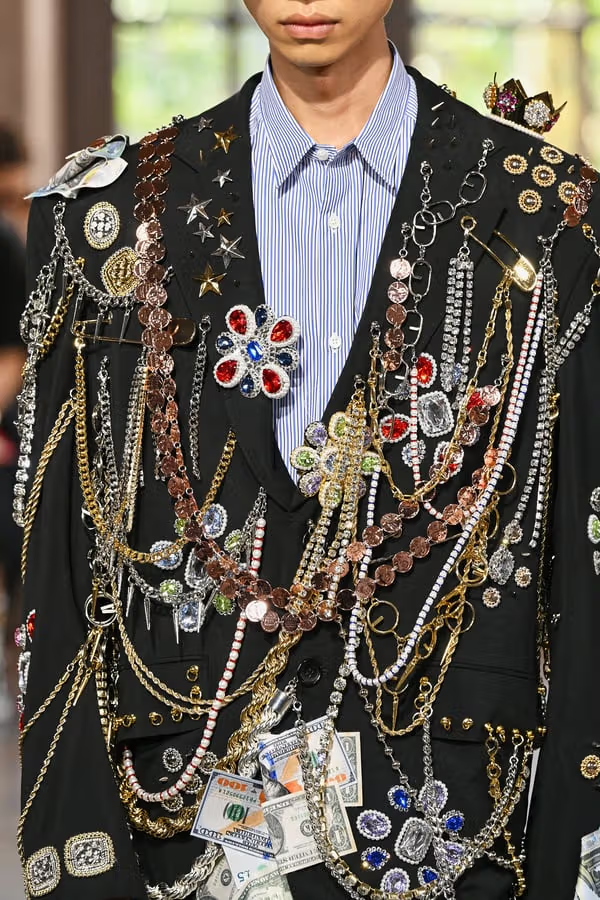
Towards the end, several tailored jackets are taken apart and their fragments recombined into complex outlines. Excess enters the clothes themselves, not just accessories. Repositioned lapels, fronts and hems remain recognisable as tailoring while leaving the logic of a single jacket. This echoes the opening sneakers at the shoulders: familiar categories are separated, then relationships rebuilt.
Recombined tailoring changes proportions near the finale.
An everyday wardrobe need not reproduce all the jewellery. Choose one focus—a cap, chest accessory or jacket structure—and leave room elsewhere. This June presentation is a design retrospective; prices, sizing and release timing for collaborations still require formal announcements. Seeing decoration as a tool for proportion explains Bling Bling Bling more precisely than calling it flamboyant.
Decoration extends over tailoring’s lapels and chest.