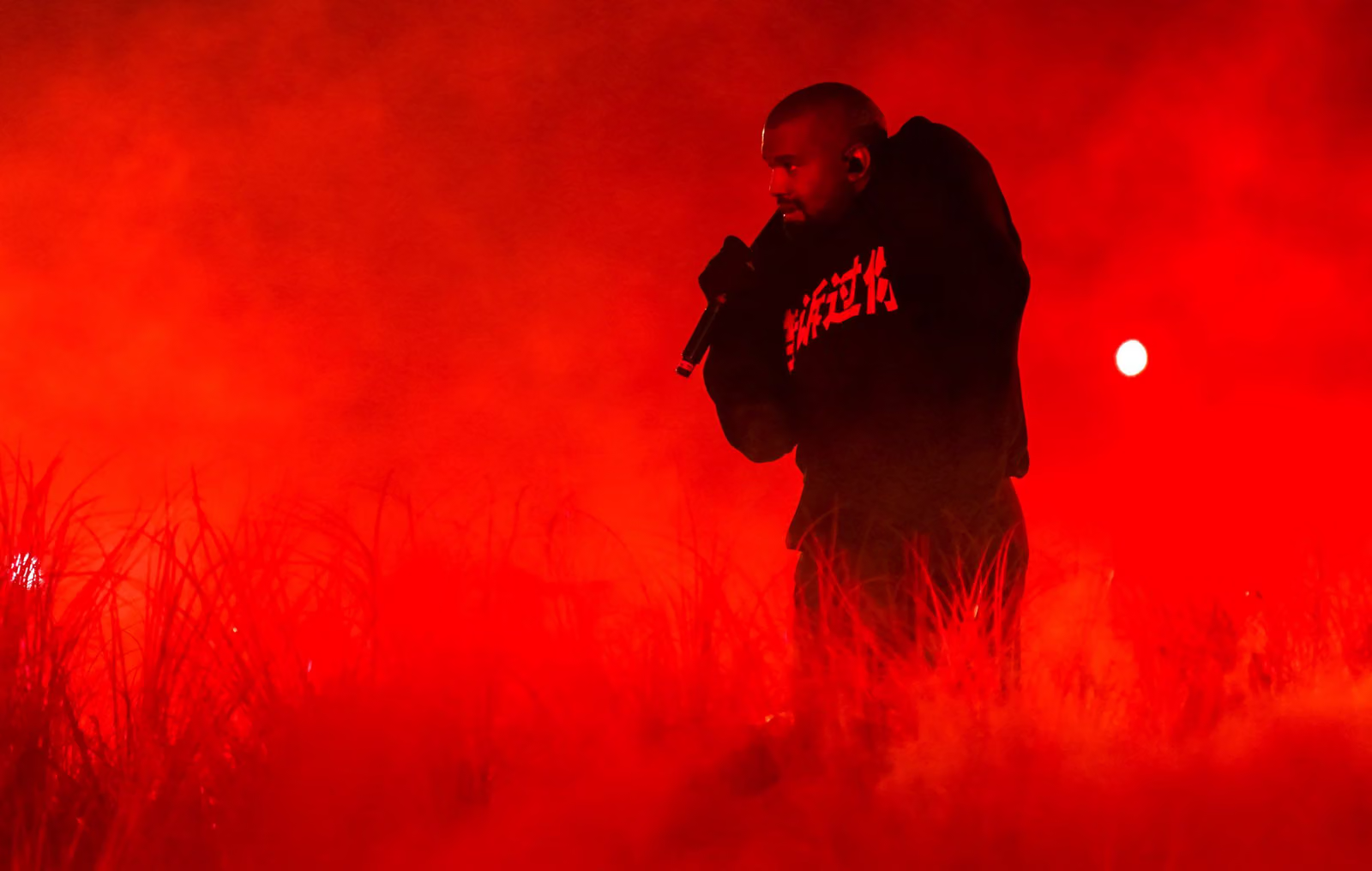
While most Western artists have refused to perform in Russia since its 2022 invasion of Ukraine, Kanye West is doing the exact opposite. The rapper, who has repeatedly faced boycotts in recent years over antisemitic remarks, chose this moment to announce his Russian shows — and tickets sold out within hours.
Kanye West (now known as Ye) announced on Monday, August 17, that he'll perform at Gazprom Arena in St. Petersburg on October 10 and 11. According to BBC News, tickets for the 70,000-capacity venue ranged from 9,000 rubles (about £78) to 160,000 rubles (about £1,394), and completely sold out within hours of going on sale.
Russian lawmaker Vitaly Milonov responded to the announcement of the two shows, suggesting the rapper should perform traditional Russian songs instead of his usual setlist. As quoted by The New York Times, he said in a video statement: "Maybe after this, he'll stop with those disgusting antics and turn back into a normal person."
From SoFi Stadium to Istanbul, a Comeback Tour Dogged by Controversy
The Russia shows are part of Ye's comeback tour this year, which kicked off in April at SoFi Stadium in California before moving on to the Netherlands and Turkey. After the Istanbul show, Ye claimed it drew 118,000 attendees, calling it the largest stadium concert in history.
Stops in Albania, Spain, Portugal, and Chicago are still going ahead as planned, but several dates along the way have been canceled due to Ye's history of antisemitic remarks and use of Nazi imagery. In April, after the UK government denied Ye entry, Wireless Festival scrapped his entire 2026 appearance outright — he had been booked to headline the London festival for three consecutive nights. Shows in Poland and Switzerland were also canceled under public pressure, the French date was postponed, and the Italian show was called off over security concerns. This summer, Florida Senator Rick Scott attempted to persuade the Tampa Sports Authority to cancel his two June shows there, and San Antonio's mayor tried to block his July 4th performance at the Alamodome — neither effort ultimately succeeded.
From "Forgive Hitler" to Self-Proclaimed Nazi: A Timeline of Antisemitic Controversy
Ye's antisemitism controversy dates back to 2022, when a series of offensive remarks on social media led to his Instagram and Twitter accounts being suspended, his lawyers, agency, and record label cutting ties with him, and fashion brands like Balenciaga and Adidas ending their partnerships. At the time, he repeatedly refused to apologize in interviews, even saying Jewish people should "forgive Hitler." It wasn't until 2023 that he publicly apologized to the Jewish community, and the following year he blamed his behavior on alcohol.
Since then, multiple lawsuits have alleged a pattern of antisemitic behavior: one former employee claimed he said Jewish people were "conspiring against him," while another accused him of using antisemitic language in the workplace and praising Hitler, for which he reportedly paid a settlement. In 2024, another former employee accused him of openly displaying antisemitic views in front of staff. In early 2025, he posted a series of controversial messages retracting his previous apology to the Jewish community and declaring "I am a Nazi"; days later he reversed course on X, saying "upon further reflection, I realize I am not a Nazi," but soon after, clothing bearing Nazi imagery reappeared on his account. In January of this year, he took out a full-page ad in The Wall Street Journal apologizing for past antisemitic and other offensive remarks, linking his behavior to mental health struggles and pledging to take responsibility and seek treatment. His latest album, "Bully," premiered via YouTube livestream this past March.