US Treasury Yields Break 5.33%—Korean Stocks Hit Circuit Breaker as Memory and AI Hardware Names Tumble
The 30-year US Treasury yield surged to its highest level since 2007, driving capital out of risk assets. KOSPI plunged intraday and triggered a circuit breaker, with SK Hynix and Samsung Electronics tumbling hard. Seagate, Micron, and other memory and AI hardware stocks fell in tandem, and Taiwan's market wasn't spared either.
The same capital that sent AI hardware stocks soaring is now the force pulling them down. The 30-year US Treasury yield spiked to 5.33%, its highest level since 2007. Combined with rising global oil prices and escalating geopolitical risk, this triple threat has driven capital out of risk assets, with the memory and AI hardware supply chain taking the first hit.
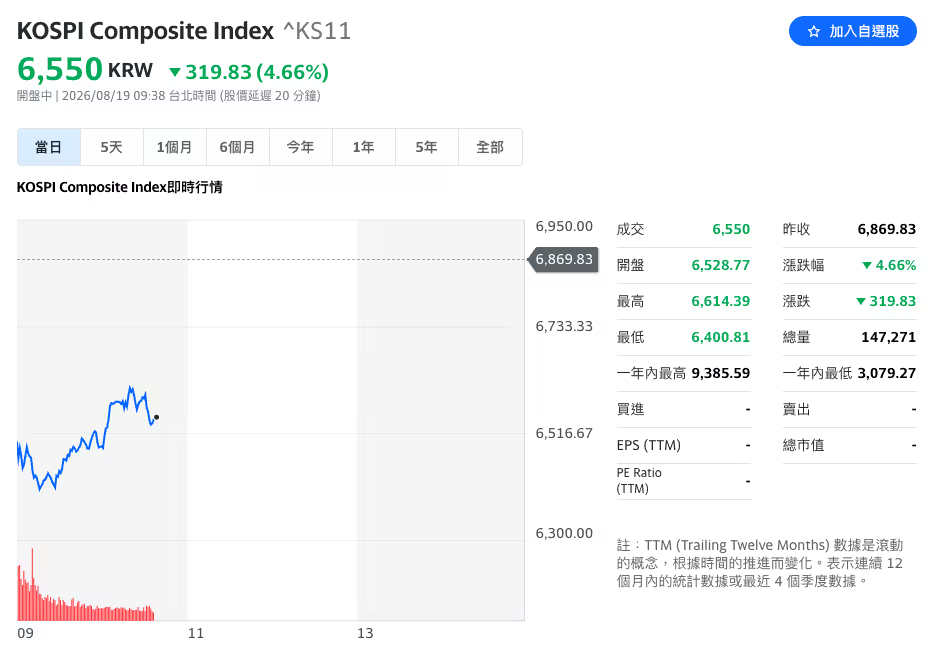
South Korea's stock market opened sharply lower on August 19, plunging 4.96% right out of the gate, with KOSPI dropping to 6,528.77 points. At 9:27 a.m., it plummeted further to 6,413.43 points, with losses expanding to 6.64%—triggering the year's 48th program sell-order circuit breaker (sidecar). Blue-chip stocks were hit across the board: SK Hynix fell 7.45% intraday, Samsung Electronics dropped 6.64%, holding company SK Square's decline widened to 10.31%, Hyundai Motor slid 4.6%, and Samsung Life plunged 8.7%. Small and mid-cap stocks suffered similarly.
The root of this sell-off traces back to overnight trading on Wall Street. All four major US indices closed lower yesterday, with the Philadelphia Semiconductor Index tumbling roughly 5%, triggered directly by the spike in US Treasury yields. The memory and AI hardware supply chain fell in unison: Seagate and SanDisk both plunged 9%, Micron dropped 7%, and Western Digital fell 7%. Bloomberg noted that anxiety sparked by surging Japanese government bond yields is also draining risk appetite for AI trades across the market.
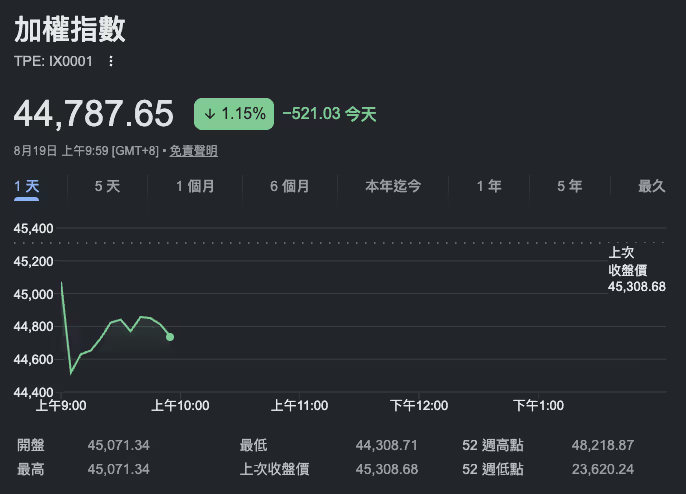
Taiwan's market didn't escape the fallout either. The weighted index plunged more than 500 points at one point after the open today, though losses have since narrowed, currently down 1.15%. Among individual stocks, TSMC fell 1.26%, Nanya Technology dove 6.21%, and Winbond Electronics dropped 5.95%.
This marks the 48th time this year that Korean stocks have triggered a program sell-order circuit breaker, underscoring the market's continued high sensitivity to interest rate and geopolitical risks. As of press time, no further information is available on subsequent market movements or shifts in US Treasury yields.