LAIKA’s Wildwood exhibition in London: read a stop-motion world through braids, costumes and miniature forests
At the Design Museum until 10 January 2027, original props, puppets, sketches and sets reveal the making process. The main second-floor show is ticketed; a separate Mezzanine display is free.
LAIKA presents Wildwood: The Exhibition is on view at London’s Design Museum from 15 October 2026 to 10 January 2027. The main exhibition in the Helene and Johannes Huth Gallery on Level 2 requires a ticket; an additional Mezzanine display is free. The two should not be confused with free access to the whole show. Created with stop-motion studio LAIKA, the exhibition uses Wildwood sketches, puppets, costumes, props and miniature sets to examine how a film world is designed and made.
Look beyond the character to how it is made
The exhibition follows early ideas and visual research through character and environment design, puppet fabrication, rapid prototyping, set construction, animation and cinematography. For audiences who enjoy Coraline or Kubo and the Two Strings, it offers a way back from the finished image: personality and atmosphere also involve choices of scale, surfaces, fabric and shooting space. An exhibition visit is not a film screening, and exhibition dates should not be used as cinema release dates around the world.
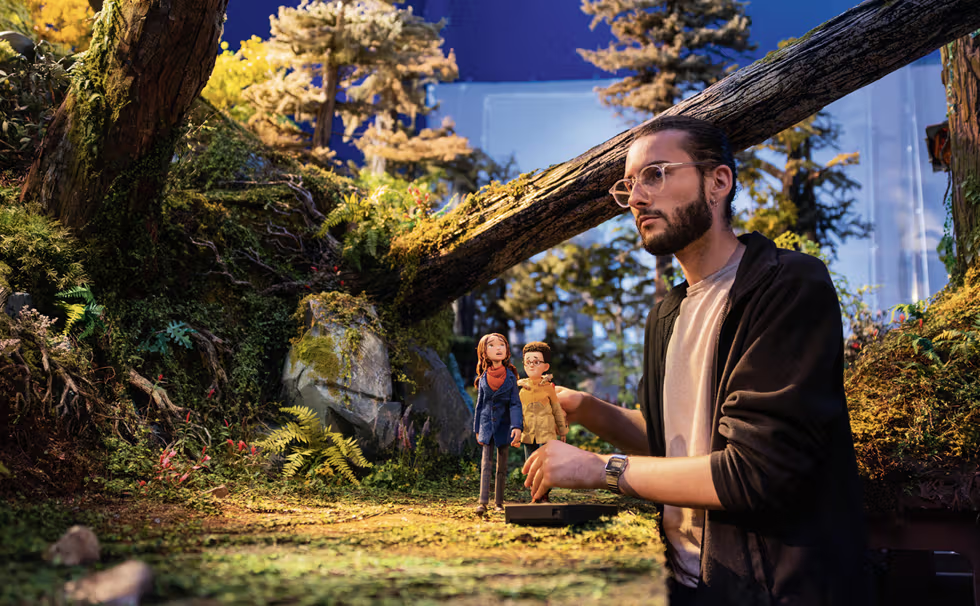
In an official behind-the-scenes photograph, a person works beside a forest set, with small characters, tree trunks and moss-like surfaces in the same view. A human arm beside miniature figures exposes another scale within an apparently real environment. That comparison brings attention to tree heights, ground detail and character positions. It does not establish that every exhibit can be touched, and the image is not TIDEZINE’s documentation of a studio visit.
Braids and a horse’s costume hide craft in small places
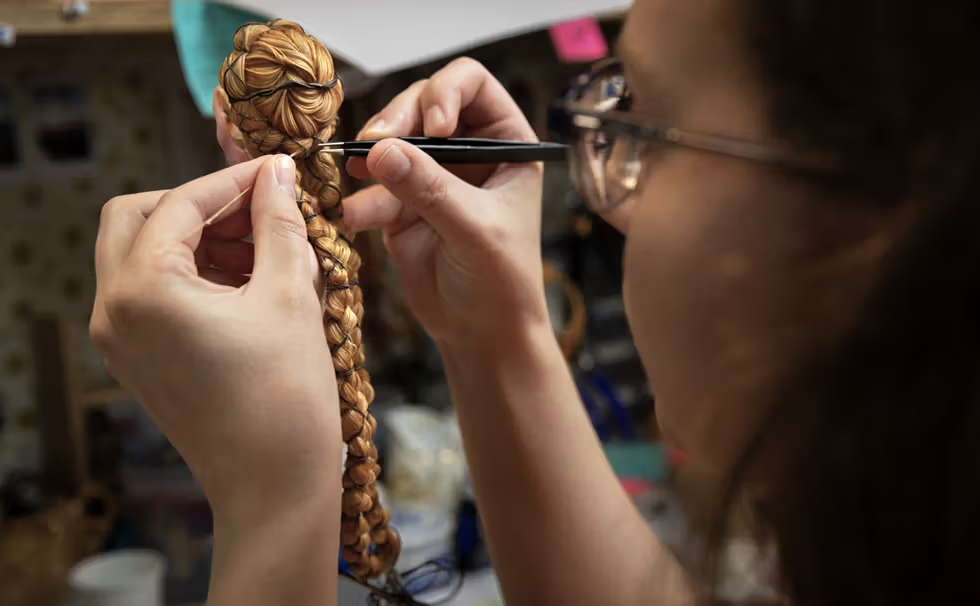
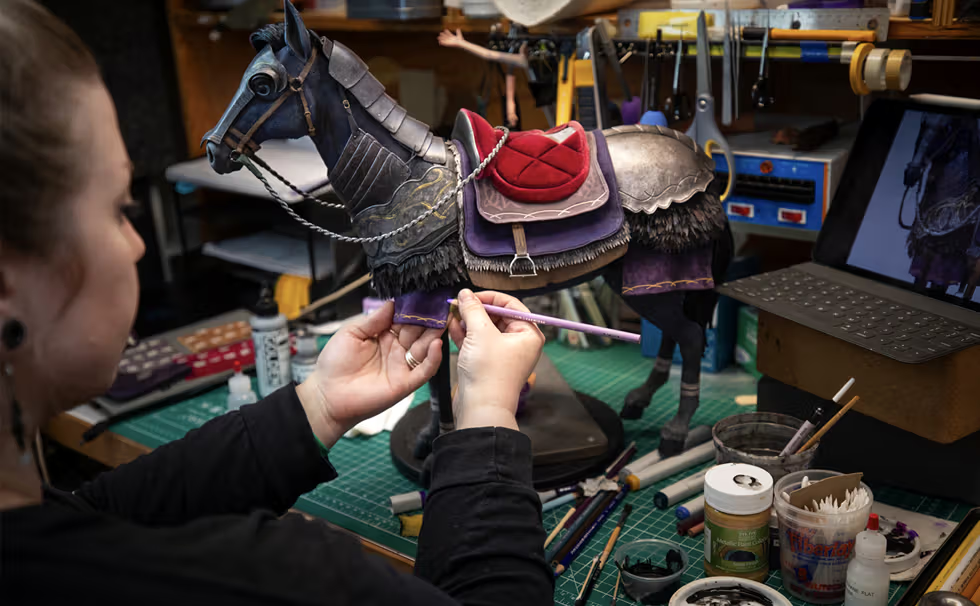
Another close-up narrows attention to a braid being worked on with fine tools. Hair colour, tying and layers become clearer at this distance. A horse-shaped puppet’s making image brings together armour-like surfaces, a red saddle pad, purple fabric and tools on the table. Such details suggest that a character needs connections between materials as well as a recognisable outline. A photograph alone cannot establish every material, production time or maker’s identity, and captions should not assign names to unconfirmed people.
A braid-making close-up focuses attention on fine tools and layered hair.A horse-shaped puppet’s making image shows fabric, a saddle pad and painting tools.
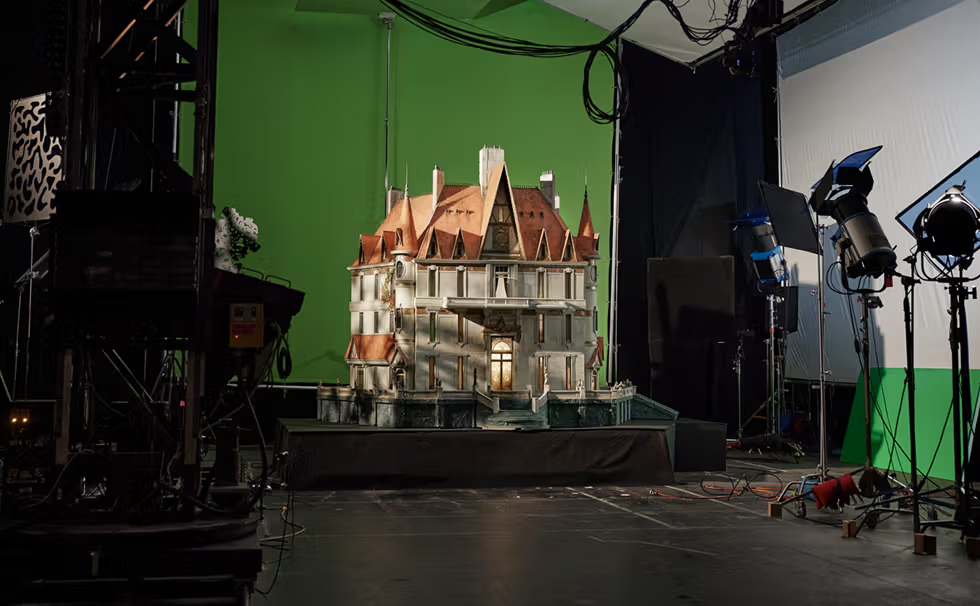
A miniature-building photograph puts the fantasy world beside its workspace: reddish pointed roofs, windows and a base sit on a platform surrounded by green screen, lights and cables. It invites consideration of how support outside the frame helps establish space inside it. Stop-motion’s handmade quality need not imply an absence of digital tools. The exhibition itself includes rapid prototyping, animation and cinematography, allowing craft and technology to participate together rather than be treated as opposites.
A miniature building shares the frame with green screen, lights and cables.
Check the main ticket, free display and events separately
The current website lists adult tickets from £15.29, student/concession tickets from £11.47 and children’s tickets from £7.65; check the booking page for applicable dates and categories. The museum accepts digital or card payments. Regular opening is 10:00–17:00 Monday–Thursday and 10:00–18:00 Friday–Sunday, at 224–238 Kensington High Street, London W8 6AG. There is late opening on 31 October, but the event page gives several formulations of gallery closing arrangements. Confirm the booked time for Halloween evening rather than equating the building’s closing time with last admission.
For more on movement and performance, consider the 3 November talk with animators Tom Carey and Amy Greenspan, 19:00–20:20, reading its separate booking conditions rather than assuming it is included in the exhibition ticket. The 27 October children’s camp has passed, and the 14 November adult clay-animation workshop is currently marked sold out. Afternoon tea and publications are additional choices too. Decide whether the aim is production detail, an activity or the free display before allocating time and budget.