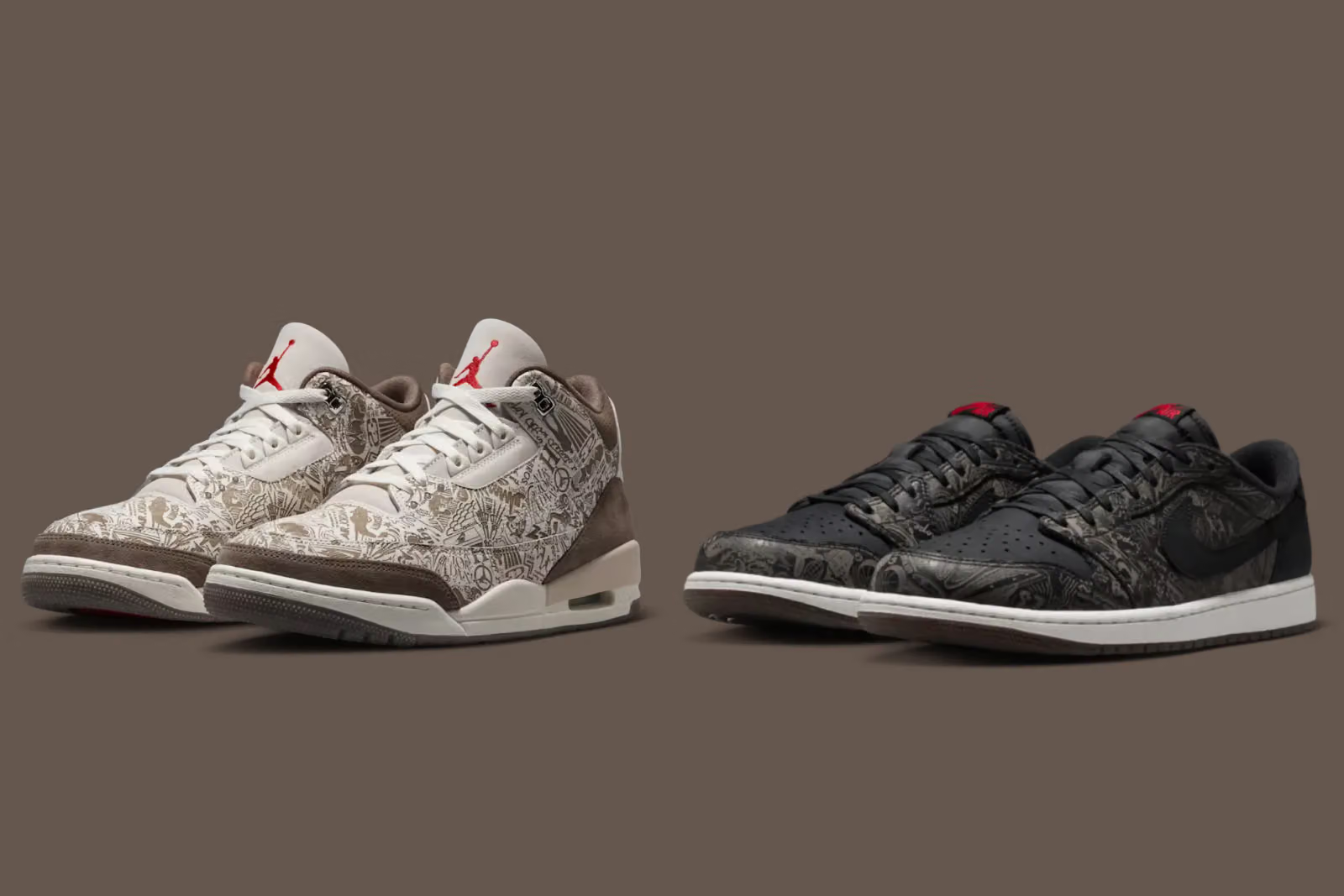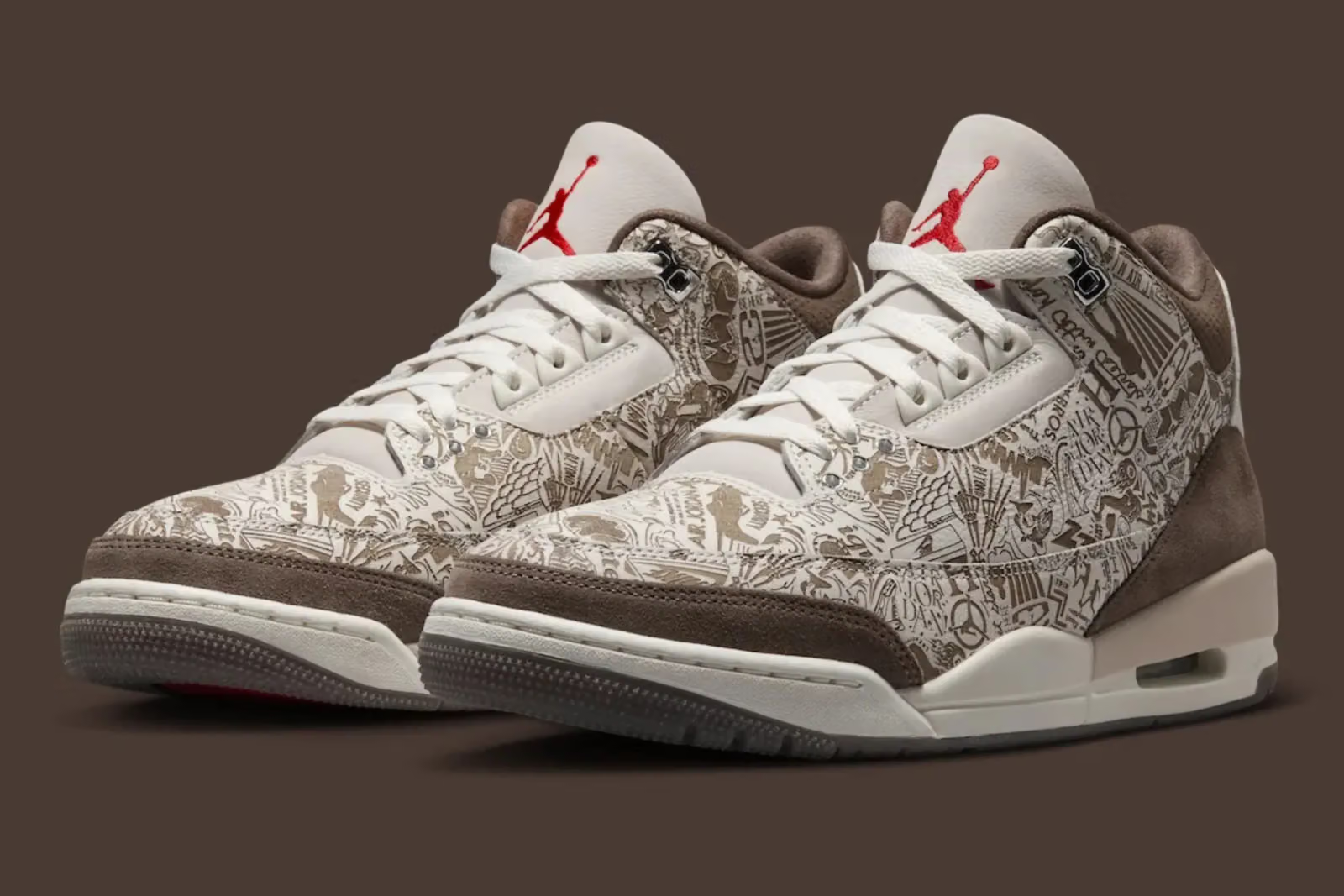
One sneaker, made for one man, kept hidden for 23 years. In February 2003, Nike designer Mark Smith crafted an Air Jordan 3 Player Exclusive for Michael Jordan's 40th birthday, featuring a laser-etched upper that was, at the time, an extremely confidential internal showpiece. According to a 2021 Sneaker Freaker interview with Smith, Innovation Kitchen colleagues Chanmy and Mike Friton were also involved in making the shoe, with Smith describing the pressure as considerable. Rumor has it around 40 pairs circulated internally at Nike's Beaverton headquarters, though that number has never been confirmed. The one thing that's certain: Michael Jordan got the shoe. The public did not.
Fast forward to August 2026, and the Air Jordan 3 'Laser' is officially dropping to the public. Jordan Brand has turned that birthday concept into a retail release, packing the upper with details tied to Jordan's career and personal interests — a visual scavenger hunt of sorts. The Air Jordan 4 'White Laser' and 'Black Laser' are set to return in 2027, continuing this laser lineage. To understand why this shoe is worth writing about, you have to go back to 2003, an era when nobody quite knew what lasers could even be used for.
Scorch Experiments Inside the Innovation Kitchen
The story starts in 2003, when Nike designer Mark Smith began exploring the possibility of laser-etching leather. The idea was straightforward: instead of printing or stitching patterns onto the upper, why not burn them directly into the surface using computer-controlled lasers? Smith once described experimenting with the precision of a single laser pulse, comparing it to the sharpest pen tip imaginable — the level of detail the machine could achieve went far beyond what human hands could manage, precise down to fractions of a millimeter.
This set of experiments eventually came together as the Nike Laser Project, exhibited at 255 Elizabeth Street in New York from September through October 2003. Six major designs spanned three iconic silhouettes: Mark Smith's one-piece Air Force 1, Stephan 'Maze' Georges' traditionally constructed AF-1, Chris Lundy's one-piece Dunk, Mike Desmond's traditionally constructed Dunk, Tom Luedecke's one-piece Cortez, and another traditionally constructed Cortez by Smith. The one-piece silhouettes were especially notable, since the laser wasn't decorating an existing upper — it was turning an entire sheet of leather into a canvas. Chris Lundy's Dunk used a single seamless piece of leather to create flowing, wave-like etched patterns. Mike Desmond brought his automotive design background into the Dunk. Tom Luedecke incorporated Celtic-style motifs reflecting his German heritage onto the Cortez. Boston graffiti legend Maze, who had served as art director for music videos for Mariah Carey and P Diddy, packed his AF-1 'Olive/Birch/Black Premium' series with spray-can imagery and subway train motifs, making it look like a subway car had been run through a laser cutter. Maze's AF-1 and Smith's 'Cashmere/British Tan' colorway were each limited to 2,500 pairs, and both are now highly valued collector's items. But reactions at the time were mixed — the laser process did scorch the leather surface, leaving some early pairs with a wood-burned appearance. Some saw a glimpse of the future of craftsmanship; others just saw an expensive sneaker that had been attacked by a branding iron.