Europe will stop selling original Switch in 2027, but the console you have has no expiration date
Nintendo will stop supplying original Switch to European retailers in mid-February 2027, which is the only confirmed suspension period at present. Sales numbers, Switch 2 backward compatibility, and battery specs show that hardware retirement and support end are two different things.
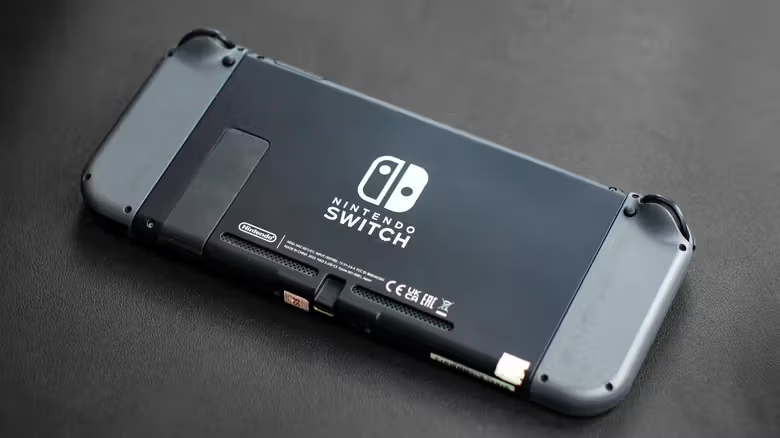
There is a clear date for the European market: in mid-February 2027, Nintendo will stop supplying original Switch to European retailers. The reason is that the European Union requires that certain devices must use replaceable batteries, and the original Switch is not designed to comply with this requirement. Nintendo said it will continue to produce Switch, Switch Lite and Switch OLED throughout 2026, and expects the consoles to remain "widely available" in Europe during this year. As for when the United States and Japan will stop selling, there is no official statement.
But this date only answers one question: when you won’t be able to buy a new phone. It does not answer another question that is closer to existing owners-how long can the console in their hands last. Nintendo stated on the Switch support page that players can continue to use purchased games and peripherals, and online services will continue to operate "for the foreseeable future" without giving a specific stop date.
Hardware is discontinued, but software is still making money
There is a gap between the suspension of sales signals and actual sales figures. As of June 30, 2026, Switch has sold 156.59 million units globally, surpassing Nintendo DS and becoming the best-selling console in Nintendo history. Even from April to June 2026, when Switch 2 has gained a foothold, Nintendo still sold 660,000 original Switch units and 33.81 million copies of Switch software. Hardware sales are indeed finishing, but the software side is obviously not finished yet.
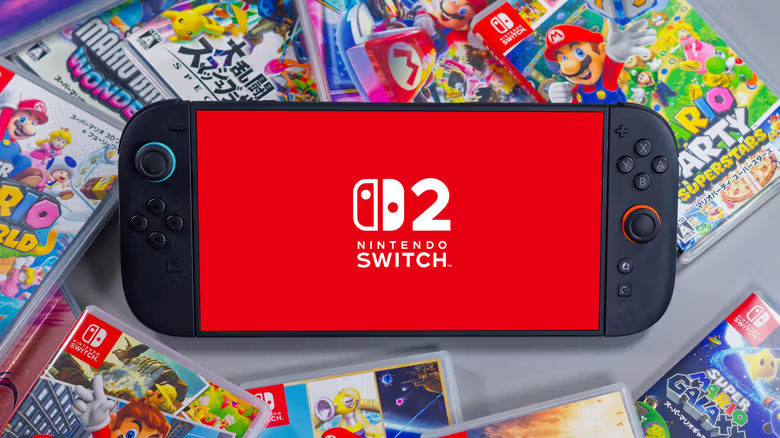
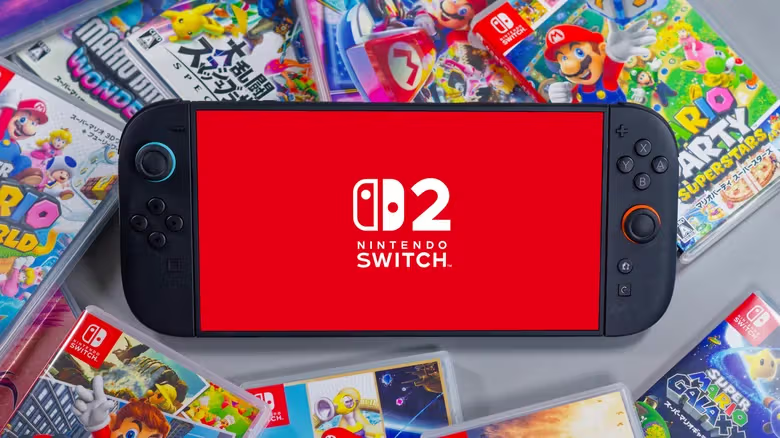
The downward compatibility of Switch 2 makes this gap more reasonable. Nintendo President Shuntaro Furukawa mentioned at the May financial report briefing that Switch 2 can fully support original Switch games, which is one of the reasons why this generation switch has been relatively smooth. "Tomodachi Life: Living the Dream", which was launched in April this year, is a specific case: this original Switch game has sold 7.94 million copies by the end of June. Furukawa also said that about 40% of players play this game on Switch 2. In other words, a game developed specifically for older consoles can still continue to reach players who have upgraded. Furukawa later also mentioned that when Nintendo looks at the software business, it will calculate Switch and Switch 2 works together, rather than just looking at the sales performance of Switch 2 alone.
This does not mean that the status of the two generations of consoles is equal. Nintendo is creating exclusive lineups for Switch 2, such as "Star Fox" and "Splatoon Raiders". The original Switch is obviously at the end of the generation rather than the beginning. After the launch of "Rhythm Heaven Groove" in July, there are currently no new first-party Nintendo games scheduled for the original Switch. The official statement is that it will continue to use the existing huge installation base and existing game lineup to drive sales.
From Wii to 3DS: The exit of old consoles is never done at once
Nintendo's past practices provide a reference model: shopping, online battles, and access to purchased content often end at different points in time, and will not all be closed on the same day. The Wii Shop Channel stopped selling new content in January 2019, nearly two years after the Switch was released and the Wii itself launched 12 years earlier. More than seven years later, players can still re-download Wii Shop content they purchased in the past, but Nintendo says this option will eventually be removed.
Wii U and Nintendo 3DS are taking a more clearly segmented route: new eShop purchases will end in March 2023, and most online battle services will be closed in April 2024, but players can still re-download purchased games and DLC, and can continue to receive software updates. The Switch may not necessarily follow the same schedule, but this model at least illustrates one thing: the day it stops selling new games does not mean losing access to purchased content.
The durability of the hardware itself is another variable. Nintendo has not announced the average service life of the original Switch machine. The battery is one of the few components with specific numbers: According to Nintendo's official battery guidelines, the Switch's battery capacity will drop to about 80% of its original level after about 800 charging cycles. Officials regard this as normal aging rather than a failure signal. Battery aging does not mean that the entire machine is scrapped, but the original Switch is not designed to be able to quickly replace the battery on its own. iFixit lists battery replacement as a "moderately difficult" repair, which is estimated to take 45 minutes to two hours. The process requires disassembling the host, removing the internal cover, and handling the battery module that is fixed with glue. If the old Switch you have can still play the games you want to play, the shortened battery life itself will not make the console meaningless - connecting to the TV to play will always be an option.