Non-Alcoholic Wine Is Finally Worth Drinking: How Oceano and the Mondavi Family Brought Back the Flavor That Went Missing
Two TIDEZINE wine critics avoided writing about non-alcoholic wine for years—until vacuum distillation and aroma recovery technology changed their minds. Oceano and Isabel by Isabel Mondavi are using concrete techniques to bring back the body and aroma that get stripped away.
Wine critics Mike DeSimone and Jeff Jenssen have deliberately steered clear of the non-alcoholic wine beat for years, for a simple reason: they didn't think these wines tasted good. It's not just the alcohol that gets removed—the aroma, flavor, body and balance tend to disappear along with it. But the two never stopped trying, and after a recent round of tastings, they've come to a conclusion: the technology has finally caught up, and this category is worth taking seriously.
Irem Eren, a Barcelona-based consultant for non-alcoholic and low-alcohol beverages who currently works with Solos Technology—a company specializing in dealcoholization tech and product development—believes the standards for judging these wines need to shift. "The question shouldn't be whether it tastes like traditional wine, but whether it's balanced, enjoyable, has its own character, pairs well with food, and is worth pouring a second glass of."
Oceano's Aroma Recovery System and the Mondavi Family's 1,500 Trials
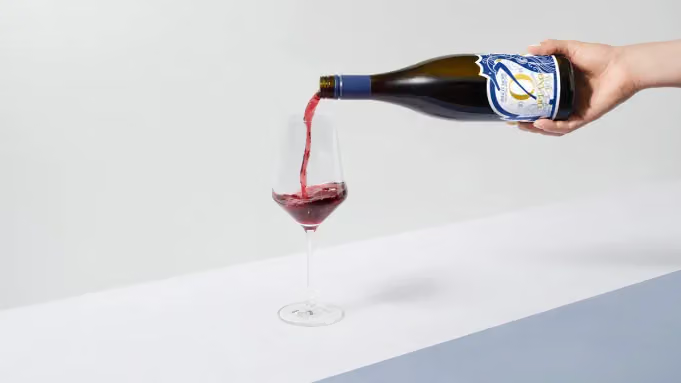
California winery Oceano Wines was one of the first in the U.S. to partner with Solos, and since launching its Oceano Zero line in 2023, founder and CEO Rachel Martin has become a leading figure in the non-alcoholic and low-alcohol movement. She explains that Solos' method starts with gentle vacuum distillation to remove alcohol, followed by its proprietary Aroma Recovery System (ARS), which uses solid-phase rather than gas-phase extraction to capture a more complete spectrum of the wine's aromas—then adds those aromas back into the wine. Oceano is also one of the few wineries making non-alcoholic wine from single vineyards, sourcing fruit from San Luis Obispo and Sonoma County.
Marco Mendoza, head sommelier at Navio, the restaurant at The Ritz-Carlton, Half Moon Bay, has added 20 non-alcoholic selections to a wine list of 1,700 bottles—Oceano among them. He first heard about the wine at SommCon, a trade conference for the wine and spirits industry. "Hearing colleagues rave about its flavor concentration, fruit expression, and structure caught my attention." When selecting non-alcoholic wines, he looks for complexity, flavor, finish, and the "intention" to give guests a consistent experience at the table, whether they're drinking alcohol or not.
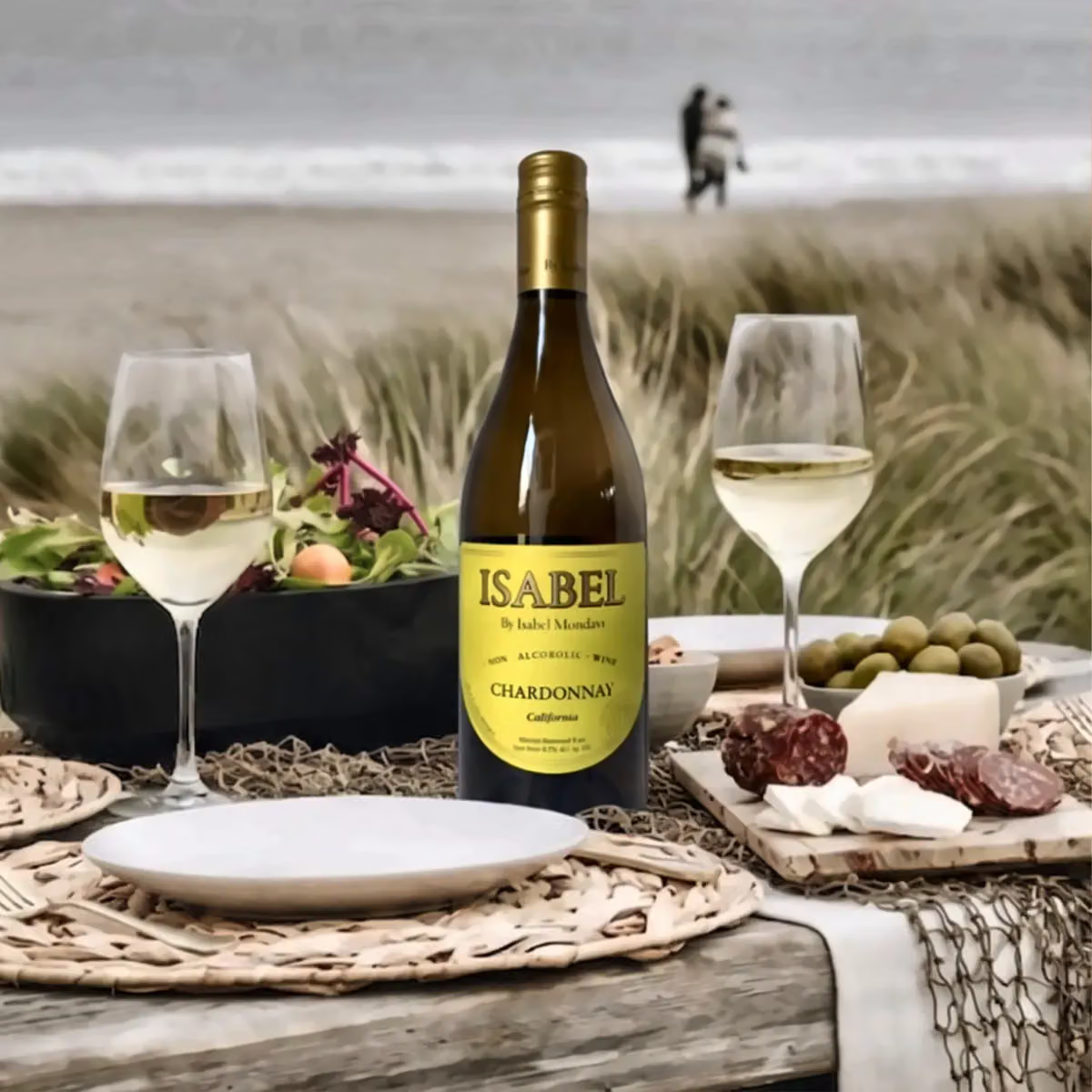
Meanwhile, Rob Mondavi Jr. of the Robert Mondavi family is taking a different approach. He ran more than 1,500 trials to develop the Chardonnay for Isabel by Isabel Mondavi, and tested 1,650 different formulations before finalizing the Cabernet Sauvignon. He uses spinning cone technology rather than vacuum distillation, believing it to be gentler. He also looked into yeasts that produce almost no alcohol during fermentation, but says frankly, "That made me uneasy, because alcohol itself is key to preventing microbial spoilage—wine without alcohol is very hard to preserve long-term." As a result, even though Isabel and Oceano are priced to compete with high-end conventional wines, these bottles aren't likely candidates for cellaring or aging, and there's little chance of a secondary market forming around them.
The reason Isabel's wines taste and smell close to traditional wine comes down to a proprietary formula: water-soluble extracts from toasted French and American oak barrels, combined with dehydrated, finely ground grape skin and seed powder, restore the body and texture lost during dealcoholization. "Using natural ingredients costs more, but it's how we make good wine," says Mondavi. Isabel Chardonnay and Isabel Cabernet are currently available at venues under True Story Brands, including Yebo Beach Haus, the Cape, and Lions Head Private Members Club in Atlanta. Sam Gamble, the brand's beverage director, says, "We're not positioning these as non-alcoholic substitutes—they're good wines worth drinking in their own right." He's also noticed that more and more customers are choosing non-alcoholic wine not because they can't drink, but because they genuinely want to.
Beyond Oceano and Isabel by Isabel Mondavi, DeSimone and Jenssen also recommend French Bloom, Lautus, Oddbird, Bergdolt-Reif & Nett, Zeronimo, Glasrose, and Natureo from Familia Torres as non-alcoholic wines worth trying.