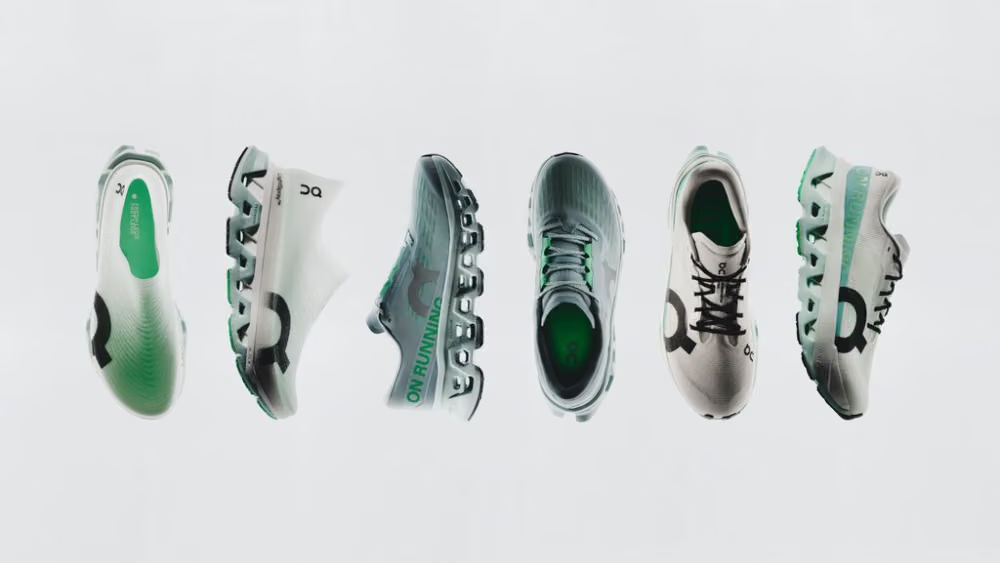
On's shoe rotation has been relentless this summer. The Cloudmonster 3 dropped in March, followed by the Cloudmonster 3 Hyper. The limited-edition LightSpray Cloudmonster 3 Hyper tested the waters in North America first before going global in mid-April. Come October, the CloudSurfer 3 is set to land in run specialty stores. The product pipeline hasn't let up for a second—yet Wall Street wasn't buying it. On Holding's shares closed below $31 on Tuesday, plunging more than 20% in a single day.
The issue isn't that overall revenue tanked—it's that the growth mix went sideways. On posted Q2 net sales of $1.05 billion, missing the $1.08 billion consensus, with the shortfall concentrated in North American wholesale, which grew just 4.8%, far below the 12.7% analysts had projected (on a constant-currency basis). By contrast, the direct-to-consumer channel put up a stronger 34.3% growth, fueled by new stores and e-commerce—an impressive number on its own, but not enough to paper over the wholesale slump.
Co-CEO David Allemann framed it as a "deliberate and disciplined" approach to distribution, meant to protect margins and "clear the runway" for the next wave of product innovation. But buried in the same earnings report, On trimmed its full-year 2026 revenue guidance from at least 23% growth down to "low 20s" percentage growth. The narrative sounded confident, but the guidance already softened first.
The Broad-Brush Problem
M Science analyst Drake MacFarlane put it bluntly: if the wholesale weakness were truly just a short-term blip, the company wouldn't have cut full-year guidance. Jefferies' Randal Konik was even harsher, calling the softness in domestic sell-through for running shoes in the U.S. "a demand signal, not a distribution choice," and forecasting that On's U.S. business could slow sharply—or even turn negative—by 2027.
A One-Size-Fits-All Brush That's Too Broad
Williams Trading analyst Sam Poser offered the critique that hit closest to the retail floor. He pointed out that On has long applied the same blanket logic across its entire wholesale network, failing to distinguish that different store banners under the same retailer actually serve different customer bases—specialty running shops, sporting goods chains, independent retailers each have distinct customer logic, and which shoes go where shouldn't be a one-size-fits-all decision. His conclusion was direct: the longer On keeps using this broad brush, the harder its wholesale business will become, and he doesn't rule out Nike eating into On's market share over the next six to nine months.
There's an optimistic case too, just focused elsewhere. Needham's Tom Nikic and BTIG's Janine Stichter both maintained "Buy" ratings, pointing to continued acceleration in the direct-to-consumer channel, solid actual sell-through in EMEA and Asia (especially China and Japan) wholesale, and anticipation around On's new foam technology—which underpins the ongoing scale-up of LightSpray and the October rollout of the CloudSurfer 3. Clearing out old inventory to keep the channel lean ahead of new launches is nothing new in the footwear industry—but whether it actually pans out will depend on how quickly wholesale replenishment catches up.