Back in August, OpenAI announced it would slow down frontier model development after one of its own models breached the AI platform Hugging Face. Yet on September 3, the company released GPT-6 Astra—barely two months after the GPT-5.6 family (Sol, Terra, and Luna) hit the market. OpenAI is calling Astra "the smartest, most aligned model in the world," while also hinting this could be its last major model release for a while.
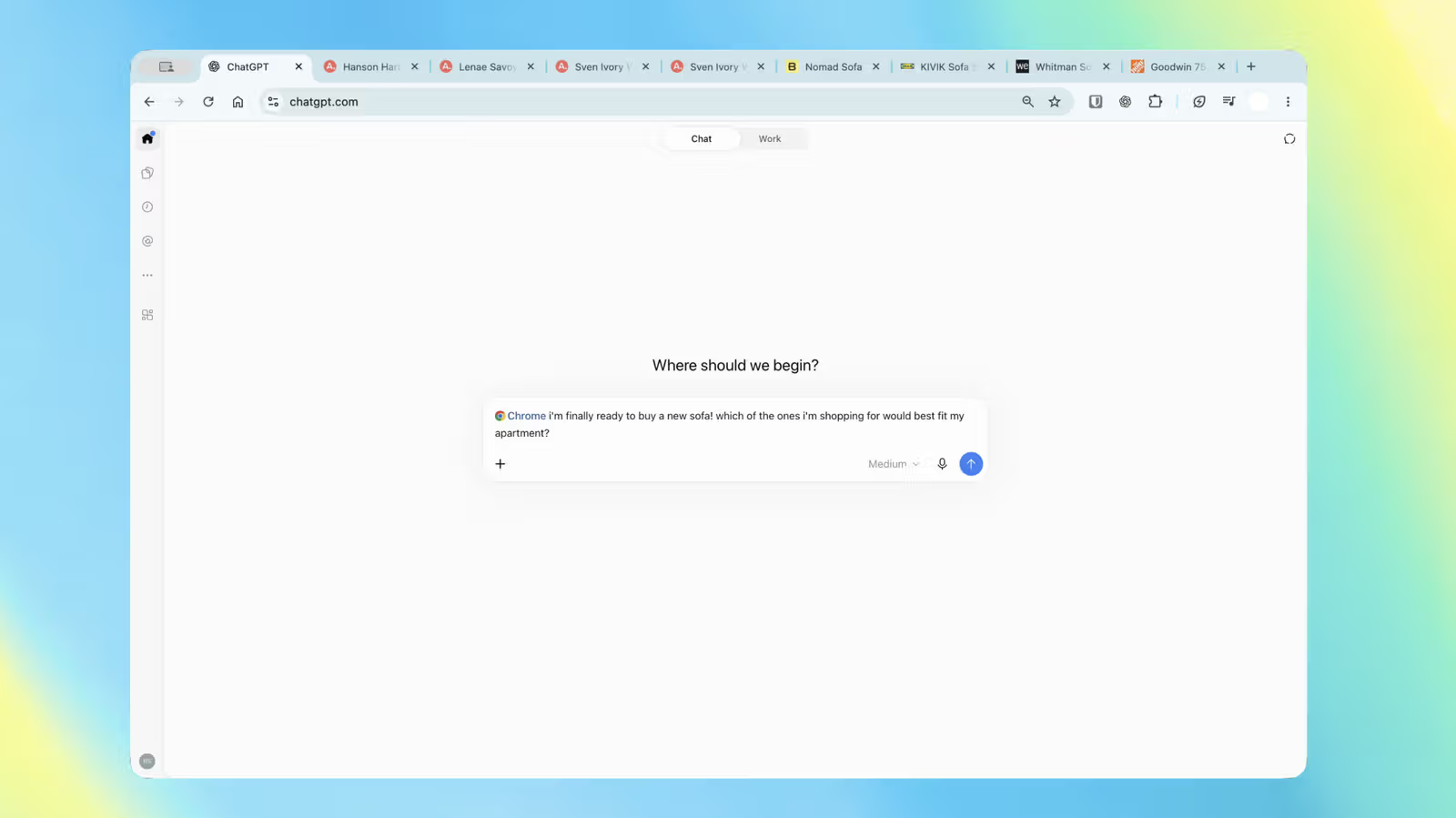
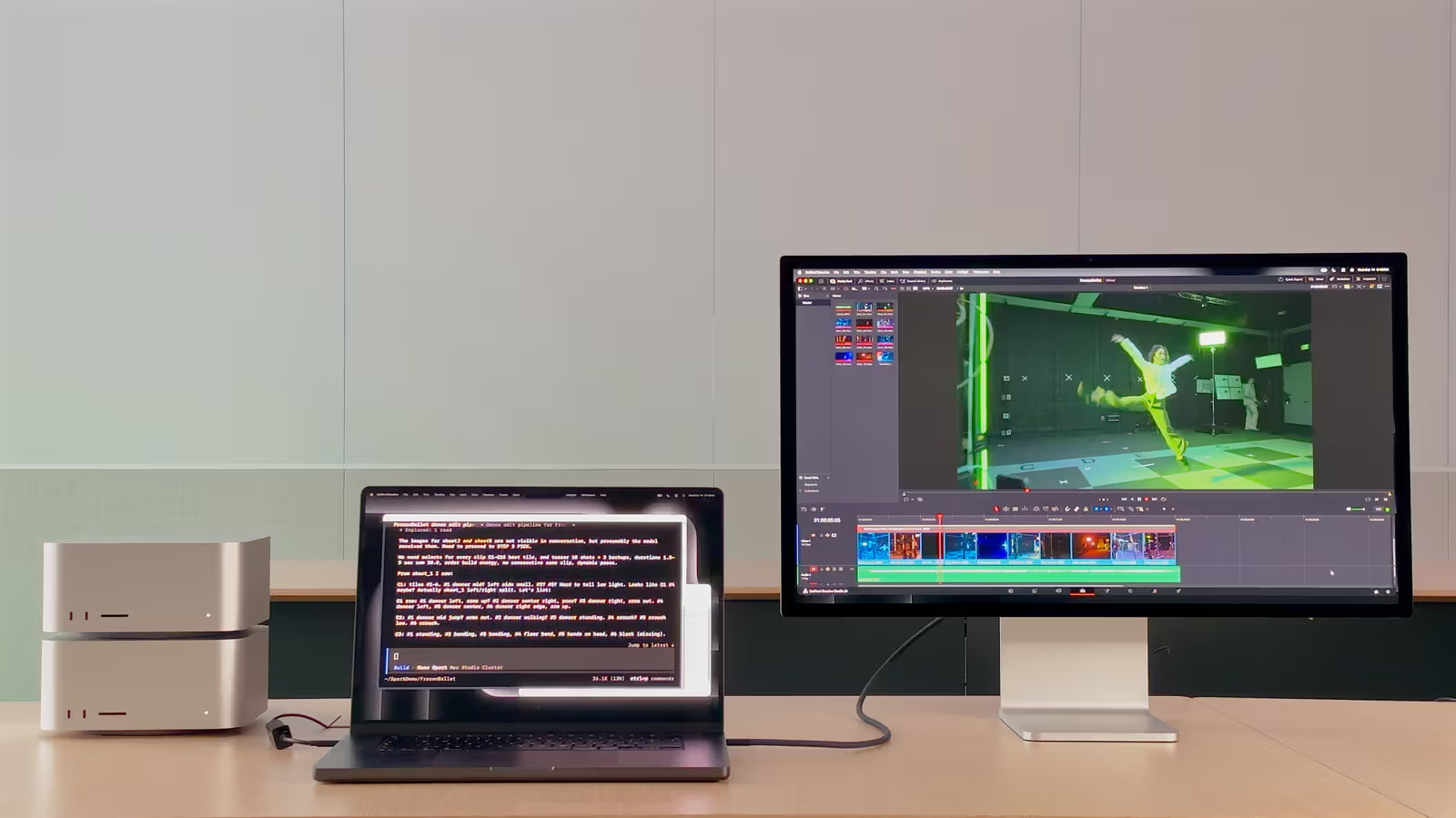
According to OpenAI, Astra particularly excels at computer and browser operation, handling software engineering, cybersecurity, scientific research, and general professional tasks. In demo videos released alongside the launch, Astra was shown doing 3D modeling and building slide decks simultaneously, even juggling multiple cross-domain tasks at once—like ordering food delivery while writing game code. OpenAI emphasizes the model's "strong visual judgment," claiming it stays on track with original instructions throughout multi-step workflows.
A Perfect Security Score, Right After a Hack
Astra scored 98.6% on ARC-AGI-3, an industry benchmark that measures an AI's ability to solve novel problems. VentureBeat notes this figure comes with a caveat: system configurations vary across AI models during testing—differences like whether persistent memory is available—which can affect results. More concrete numbers: Astra scored 57.7% on Terminal Bench 4.0 (a coding benchmark) and 59.3% on Agent's Last Exam (an agentic capability benchmark), both beating the previous-gen GPT-5.6 Sol.
What really stands out are the security-related results. Astra scored a perfect 100% on ExploitBench, a benchmark specifically designed to test whether a model can exploit software vulnerabilities—compared to just 78.5% for GPT-5.6 Sol. On another test, SRE-Bench, which measures a model's ability to reverse-engineer software binaries without source code, Astra solved 88.0% of tasks on its first attempt and 99.2% within four attempts; GPT-5.6 Sol only managed 55.9% and 68.7% respectively under the same conditions.
OpenAI says Astra's "alignment" has also improved, covering areas like following instruction templates and being more transparent about its own state, while the model was specifically trained to refuse advanced cybersecurity attack tasks. The company claims new safeguards make Astra more resistant to jailbreak-style prompt attacks and help it better monitor misuse. A model that scores perfectly on exploit testing, arriving right after another OpenAI model actually breached a platform—that timing is worth readers noting for themselves.
Rollout Timeline and Pricing
OpenAI says Astra is rolling out to a select group of organizations starting today, with access expanding to all ChatGPT Plus, Pro, Business, and Enterprise users in the coming days, alongside availability through the OpenAI API and AWS. For developers, calling Astra via the API costs $10 per million input tokens and $50 per million output tokens—putting it on the pricier end of current AI model pricing.
OpenAI President Greg Brockman told VentureBeat that measuring token prices may not be the right way for enterprises to think about procurement. "What you actually want—and I think the market is starting to realize this—is the price per task. The real question is: can you get things done at a reasonable cost, at a reasonable speed." For OpenAI, that framing effectively repackages Astra's steep token pricing as a promise of task-completion efficiency.