Panerai’s The Depths of Time in Hong Kong: Reading the Design of a Tool Watch
On view in Tsim Sha Tsui until October 25, the exhibition connects historic watches and documents through luminescence, the crown-protecting bridge and power reserve.
Panerai’s The Depths of Time historical exhibition is open to the public by appointment in Hong Kong from October 11 to 25, 2026. It occupies the ground to second floors of the Panerai boutique at 2 Canton Road, Tsim Sha Tsui. Historic watches, naval instruments, drawings and family documents trace a path from a Florentine workshop to contemporary watchmaking. Readers interested in design can follow luminescence, the crown-protecting bridge and long power reserve as three connected themes rather than simply memorising reference numbers.
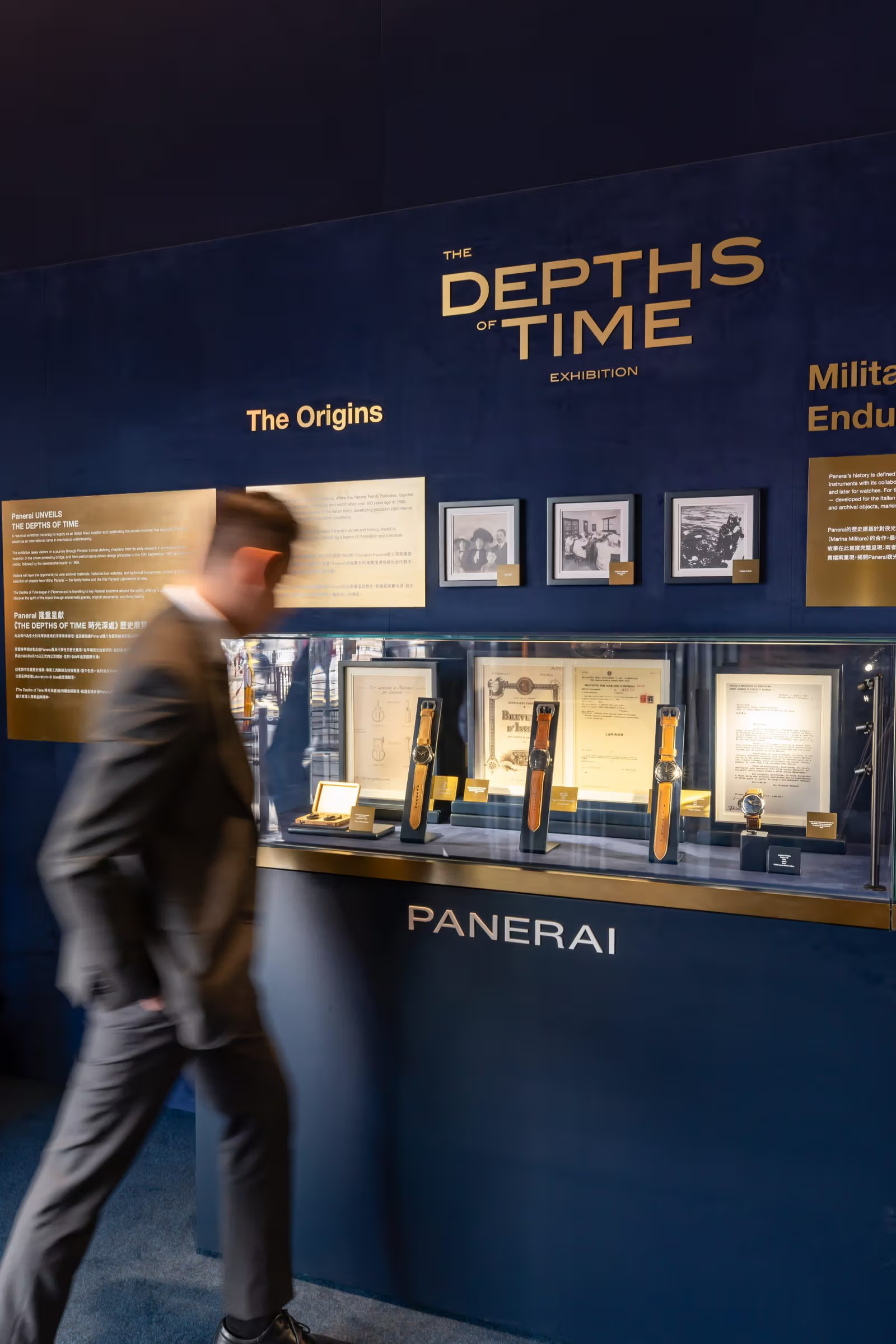
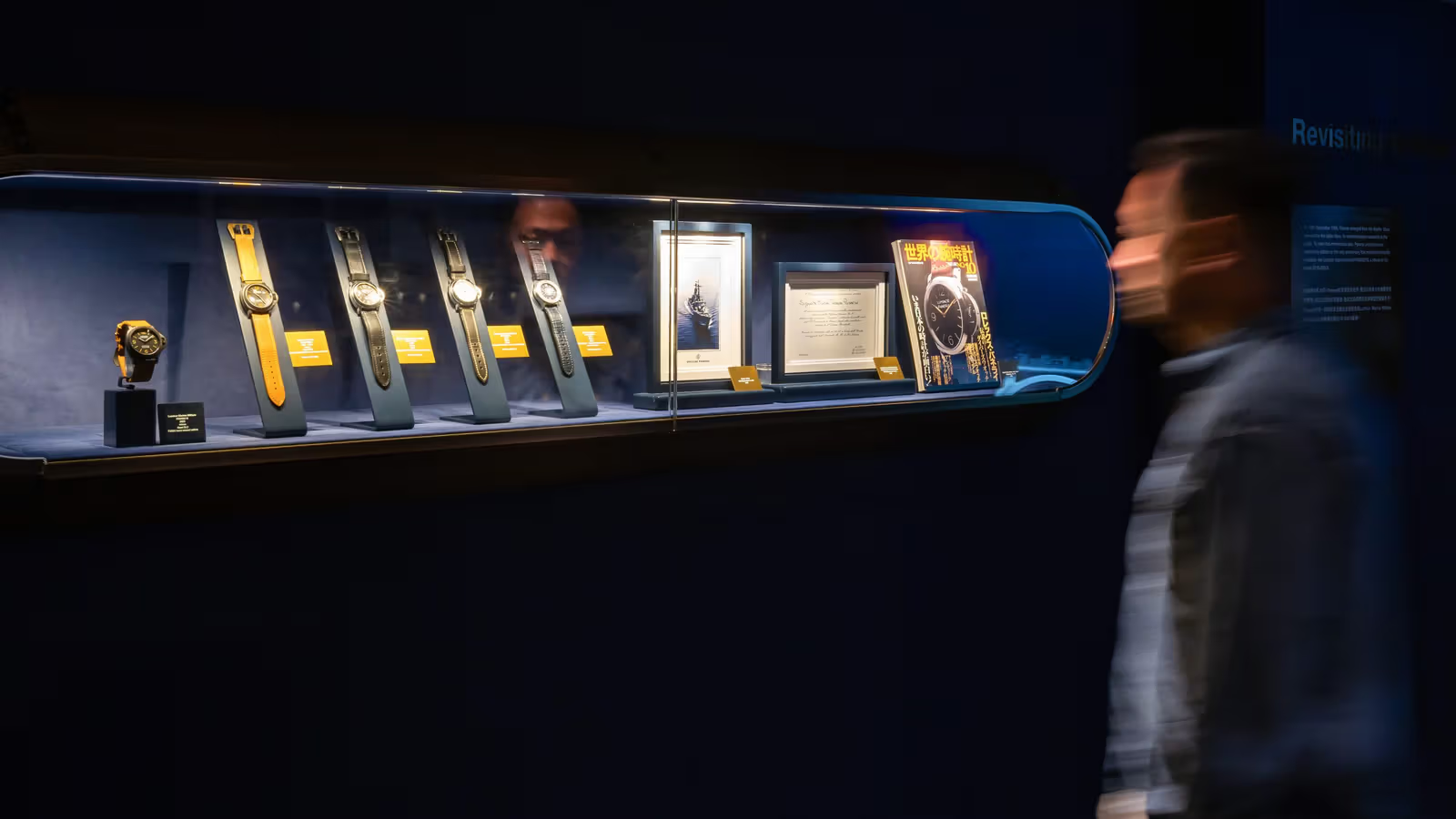
The exhibition entrance and historic watch display.
Begin with the workshop and naval instruments
Panerai’s history began in Florence in 1860 with a watch workshop and teaching, followed by cooperation with the Royal Italian Navy in the early 1910s. When instruments enter specialised missions, clear reading, reliable construction and durability become fundamental requirements. The exhibition places early equipment, prototype watches and documents together so that different objects can explain the relationship.
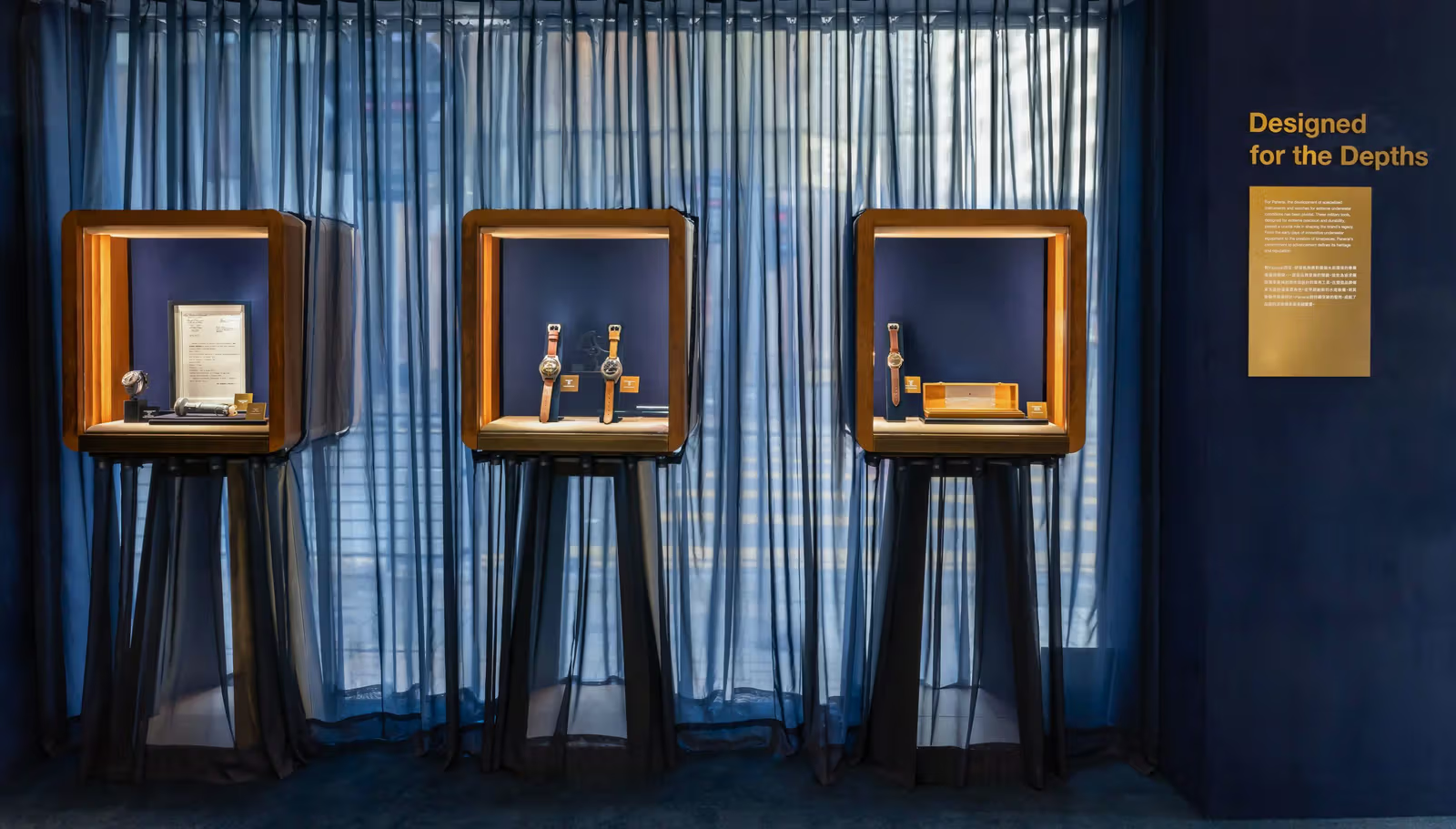
Display cases present historical timepieces and early instruments.
The 1935 Ref. 2533 prototype marks an important stage in the development of early diving watches. Similarities with current designs are immediately visible, but differences deserve equal attention: size, display and operating structures relate to the requirements of their time. Contemporary everyday wear should not replace that original context when assessing a historical object.
Why do luminescence and the crown bridge matter?
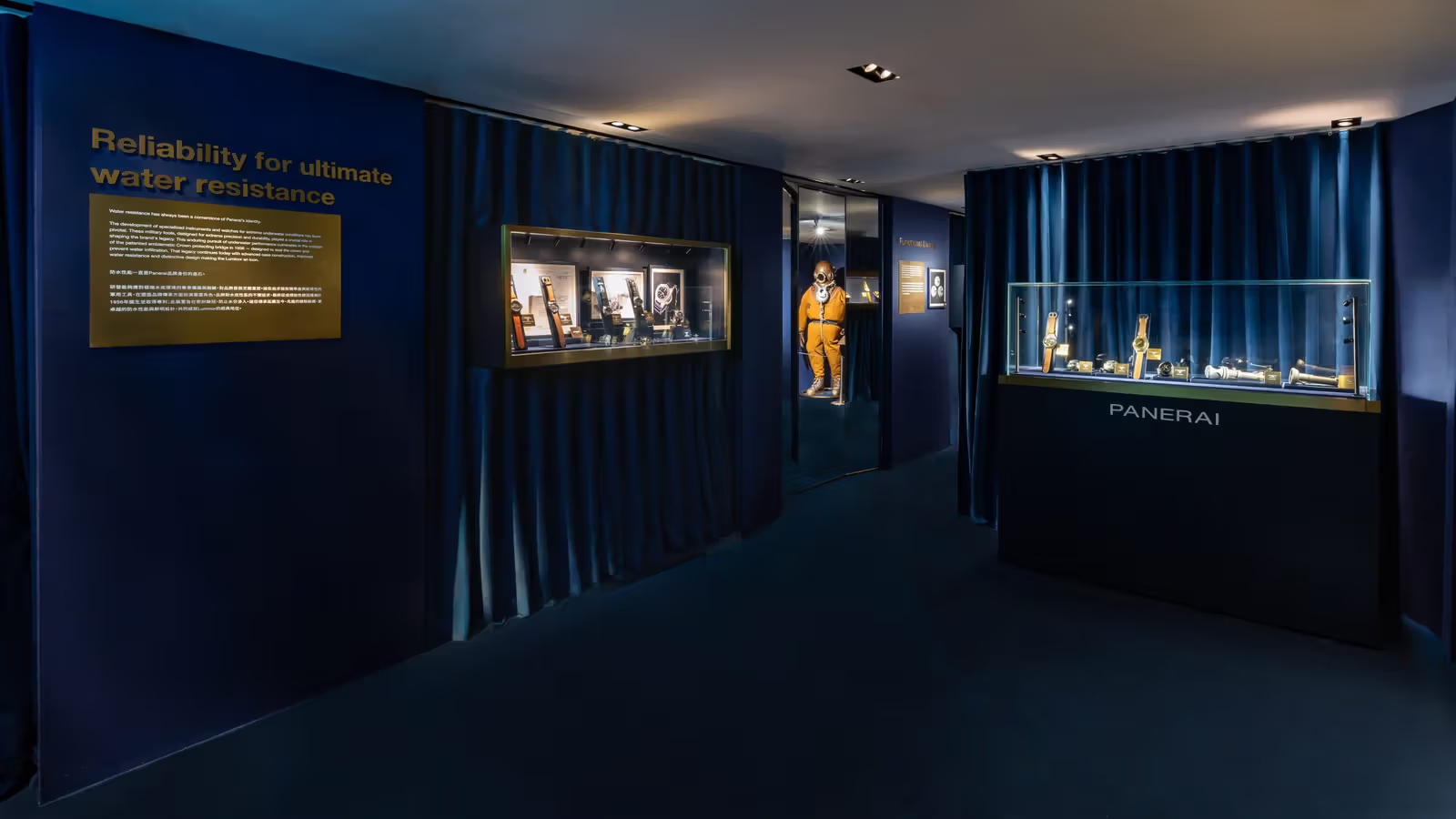
Technical themes connect different periods, including the evolution of Radiomir, Luminor and water-resistant cases. Low-light legibility explains the value of large displays and clear contrast. Changes in materials also remind viewers not to confuse historical luminous compounds with those used today. The crown-protecting bridge patented in 1956 began with operating and sealing requirements before becoming one of Luminor’s most recognisable outlines.
Documents and display routes connect the brand’s technical history.
Long power reserve offers another perspective: an instrument’s need to keep working during a mission encourages changes to both movement and use. Seen in context, a large case, bridge or bright markings become shapes left by a sequence of practical demands rather than styling choices alone.
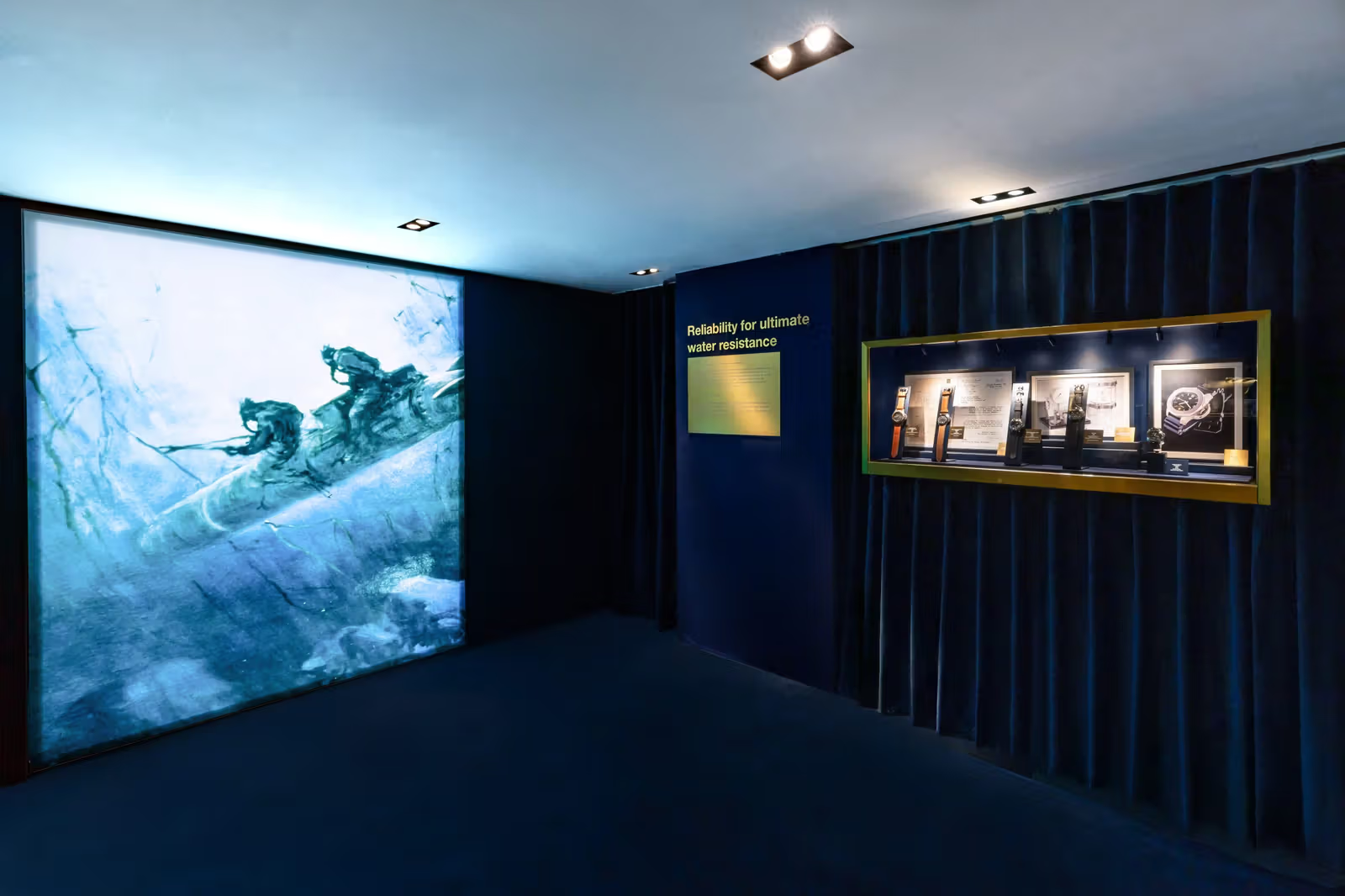
Moving imagery and objects present the naval origins together.
The 1993 civilian turning point and a 2026 comparison
September 10, 1993, marks an important move towards the civilian market. The exhibition connects this transition with historical pieces and presents a 2026 hand-wound watch inspired by the 1960s Ref. 6152/1, placing archives beside contemporary making. Loans from Hong Kong collectors add perspectives beyond the brand’s own holdings.
How can the Hong Kong exhibition be visited?
The address is 2 Canton Road, Tsim Sha Tsui, Kowloon, and the exhibition runs until October 25. Public visits require an appointment; available slots and entry arrangements should be confirmed with Panerai’s Hong Kong boutique. One useful route is to begin with instruments and drawings, then return to the dials and crown bridges. Connecting a function with a particular object can reveal more of the design history than photographing a whole row of display cases.
An exhibition case brings archives and watches together.