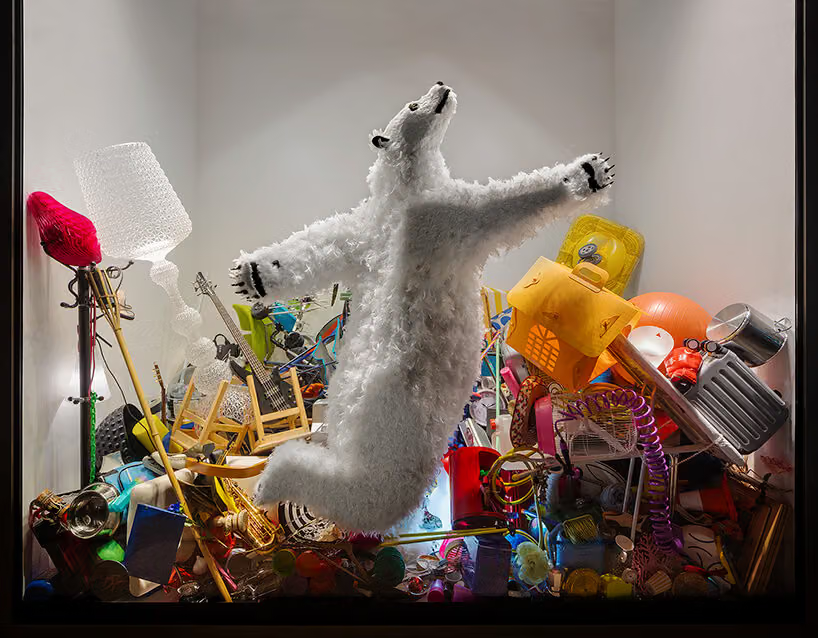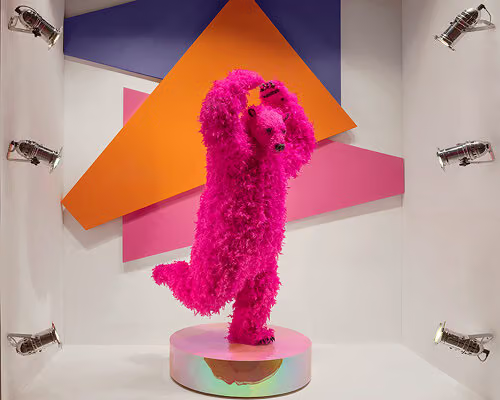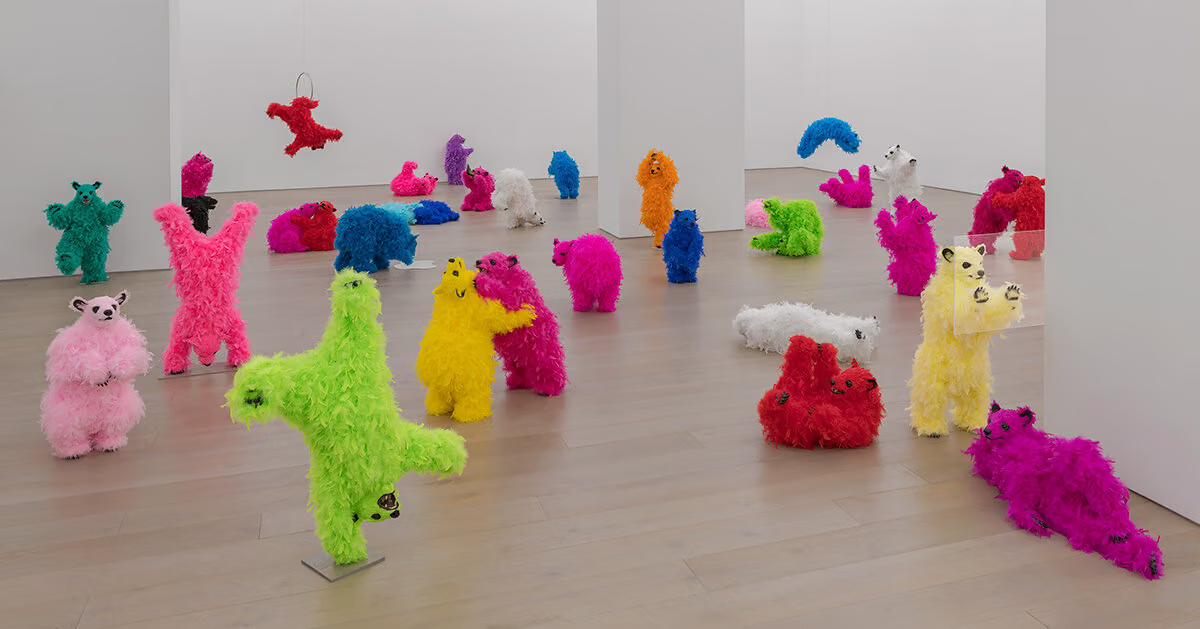
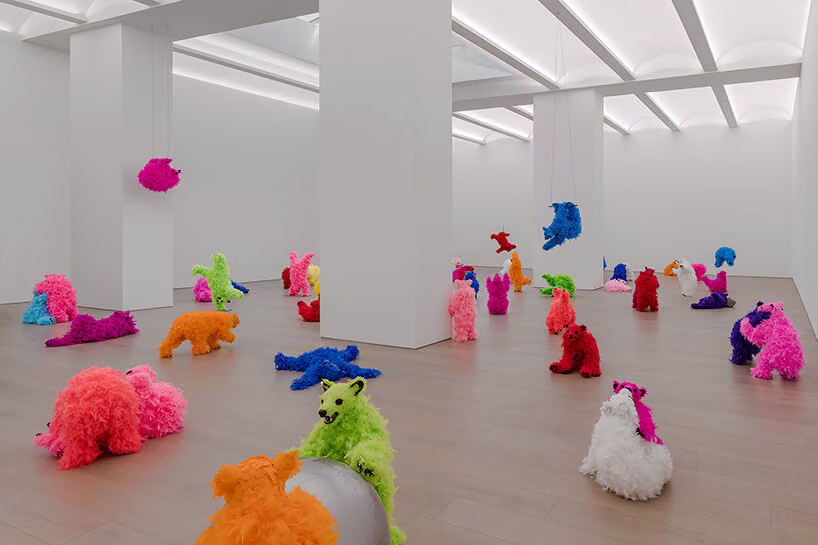
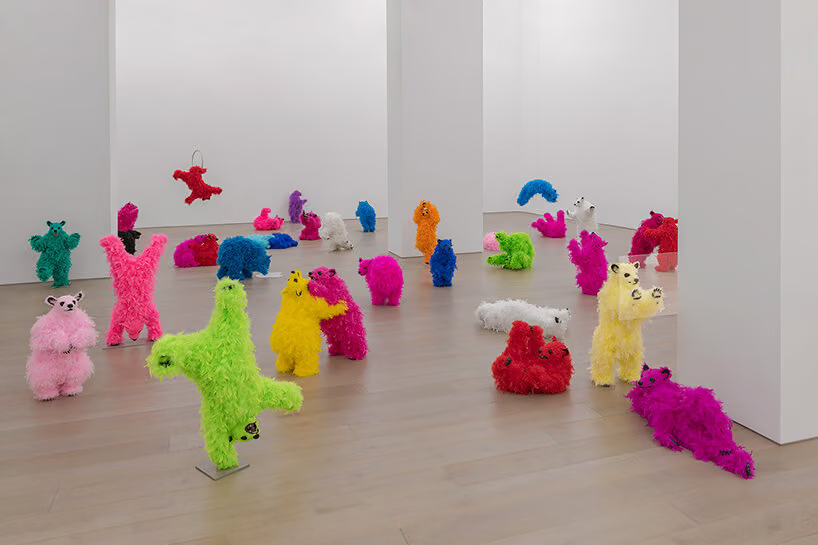
In a warehouse in Milan, wooden crates are stacked taller than a person, coated in dust that hasn't been disturbed in years. Paola Pivi and her longtime collaborator Matthew McPhillips climbed the crates bare-handed searching for something, their palms turning black, their clothes soaked through with sweat. Inside the boxes were props from her 2017 exhibition "Bad idea" at LaRinascente in Milan: a doghouse, a stroller, a tandem bicycle, a round trampoline, shovels, torches, a guitar—objects that had once been piled into a mountain, pinning a feather-covered polar bear inside a glass vitrine for her solo show "I am tired of eating fish." McPhillips remarked that day, "I wish people could see this side of the art world." Pivi considered bringing the trampoline home but decided to leave it where it was, as a stress-relief tool instead. Meanwhile, below them, her husband, composer Karma Culture Brothers, was absorbed in cleaning—he'd found four vacuum cleaners left over from various feather installations and was using one of them to clean the other three, completely lost in the task.
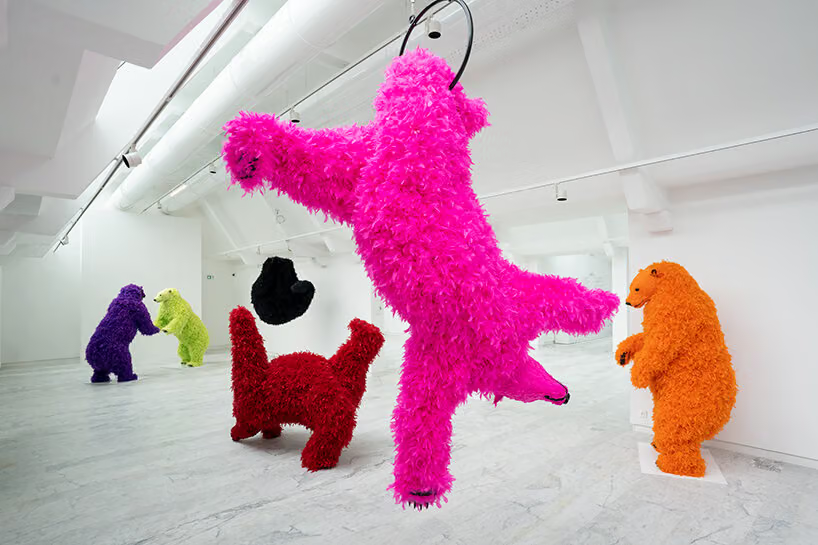
This scene appears in an essay Paola Pivi wrote for designboom's "PLAY" feature, published on August 10, 2026. What she wants to talk about isn't childlike wonder, but something sharper: the idea that this era has simply run out of room to play. She writes that every word we type, every sentence we speak, could be recorded and later used as evidence against us; even political beliefs feel unsettling now, since they might be pulled up and weaponized at a border crossing at any moment. Play once meant "trying something to see what happens, what you feel, what you think of"—an intellectual exploration built on freedom. She believes adults today no longer envy the free play of children not because that freedom doesn't matter, but because it has become so rare it's numbing.
The White Apartment Complex in Gallarate
Her childhood offers a counterpoint. Pivi grew up in the Ronchi area of Gallarate, Italy, in a large white apartment complex with deliberate architectural design and massing, set alongside a big lawn covered in white flowers and clover, where finding a four-leaf clover was a daily afternoon ritual. As the oldest among the "middle" group of kids by age, she was in charge of inventing and organizing games: all summer long, a pack of kids would play from morning until deep into the night, sometimes not heading home for dinner until close to midnight. They once squeezed themselves all into a small elevator, packed together like sardines, just to see what that felt like; they also played "cops and robbers," with a band of "robbers" sprinting between buildings, fleeing the one and only doorman. That doorman, from southern Italy, had a short temper and once hurled a wooden clog at them out of frustration—the kids knew he wasn't really aiming at anyone, but that uncertainty was exactly what sent their adrenaline through the roof.