Robin Williams' Instagram Revived After 12 Years of Silence, His Kids: Fighting AI Deepfakes with Real Footage
Twelve years after Robin Williams passed away, his three children Zak, Zelda, and Cody have reactivated his Instagram account—not for nostalgia, but to dilute the flood of AI deepfake content online with authentic material.
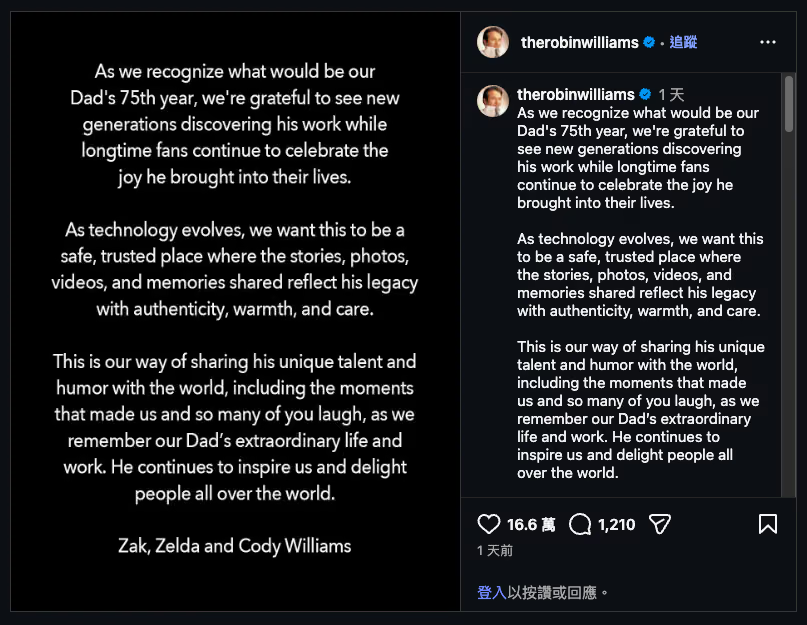
An Instagram account frozen since 2014, its post feed empty for a full twelve years, not even a single Story. Then on August 18, 2026, the account suddenly came back to life. The person posting wasn't him—Robin Williams passed away long ago—but his three children, Zak, Zelda, and Cody Williams. In a joint statement, they said they hope this page can become a "safe, trusted place," and that the photos and videos posted here going forward will reflect their father's life "authentically, warmly, and with care."
This isn't a sentimental tribute. Zelda put it more bluntly in her own Story: reviving this page is admittedly a bit strange and might make some people uncomfortable, but it's one of the most effective ways they've found to counter "the rampant misuse of his voice and likeness in AI content"—by turning this page into a place where people can find real pieces of their father.
From Pleading to Building Their Own Supply Source
Zelda actually spoke out publicly about this a year earlier. In 2025, she asked fans to stop sending her AI-generated videos of her father, writing that watching a real person reduced to something that merely "looks and sounds a little like him, that's really enough," and that the flood of crude TikTok content manipulating his image online was maddening.
A year later, the approach has shifted. Instead of continuing to plead with others not to create fakes, she's chosen to proactively supply the real thing herself—diluting the visibility of deepfake versions in the algorithm with credible, authentic material. In the post, the three siblings mentioned they'll be sharing their father's "unique talent and humor" with the world—a line that's both nostalgic and a line drawn in the sand: this is where the real him lives, everything else isn't.
The Law Hasn't Caught Up Yet, So the Family Is Stepping In First
What could actually change the situation is legislation still working its way through Congress. The Senate version of the NO FAKES Act passed the Judiciary Committee unanimously on June 18 this year and has been sent to the full chamber for review. The bill aims to establish, at the federal level, everyone's right over the use of their voice and likeness in "digital replicas"—not limited to celebrities—and this right wouldn't be extinguished by death. It could be authorized or transferred by heirs or estate executors, with posthumous protection lasting up to 70 years. The bill also proposes that platforms could be held liable if they knowingly host unauthorized digital replicas and fail to take action.
Until the bill actually takes effect, there's not much family members like Zelda can do except become content suppliers themselves—using an account silent for twelve years to fight against a technology that will always outpace regulation.