One Empty Seat, One Ruined Night: The Silent Cost and Deposit Dilemma Facing Shanghai Restaurants
From Ultraviolet, where all ten seats must be filled for the night to happen, to Taian Table, which requires six days' notice to cancel—a survey of 211 people reveals the real numbers behind the mutual distrust between diners and restaurants in Shanghai's reservation culture.
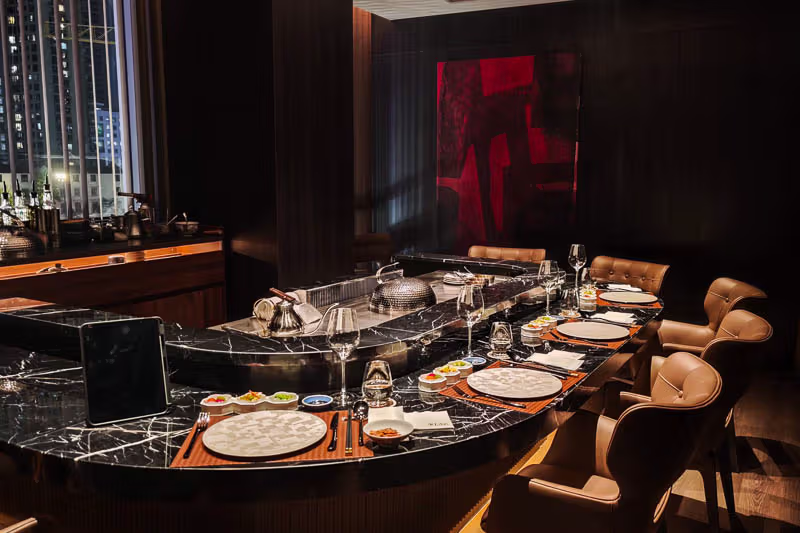
Ultraviolet by Paul Pairet had only ten seats, and the entire evening's menu was built around all ten guests dining together. If even one didn't show up, the whole night's rhythm broke. This now-closed three-Michelin-starred restaurant once required full payment of the entire menu price for same-day cancellations—amounting to as much as RMB 6,000. That wasn't excessive punishment; it was simply the survival logic of this kind of dining. An empty table isn't just lost revenue for one seat—it throws off the calculations for the entire night.
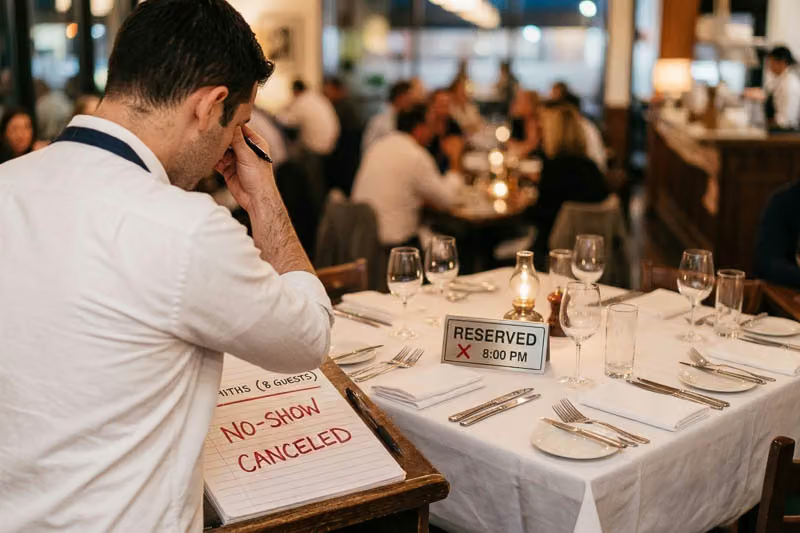
This report from NOMFLUENCE Shanghai lays that logic bare: a no-show without so much as a heads-up might seem like a small thing, but for restaurants it's the start of a chain reaction. Seafood is often ordered fresh that day, and meat may have already been marinating for days—an unfulfilled reservation wastes not just a seat, but ingredients and labor already committed.
How Much Does a Few Missing Parties Actually Cost in One Night?
The report runs the numbers using a 20-seat restaurant with an average check of RMB 300 per person and 1.5 turns per night: normal nightly revenue comes to around RMB 9,000. Two no-shows mean a loss of RMB 600—about 7%, still manageable. Six no-shows mean a loss of RMB 1,800—about 20%, a noticeable hit. If this happens every single day for a month, with two no-shows nightly, that adds up to RMB 18,000 in losses—a sum that restaurants already running on thin margins can barely absorb.
What makes it worse: the table left empty could have gone to someone else who was waiting for a spot. They have no way of knowing the table ultimately sat empty—all they know is they couldn't get a reservation, so they go elsewhere, sometimes venting their frustration in a review. The restaurant ends up labeled as "hard to book" or having "bad service" because of someone else's broken promise—arguably the most absurd part of the entire system.
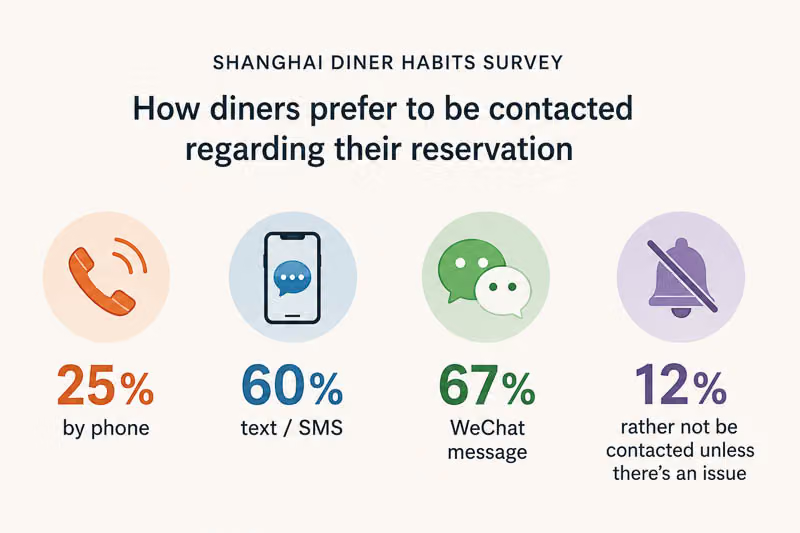
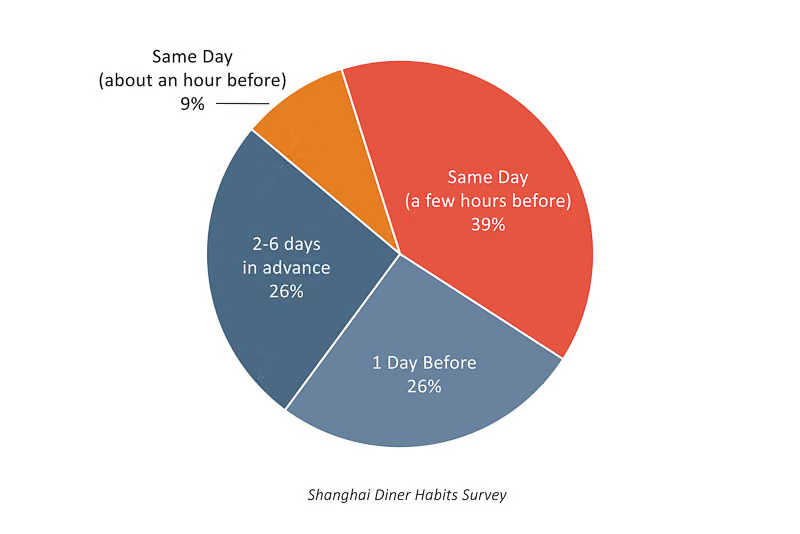
NOMFLUENCE conducted its own "Shanghai Dining Habits Survey," with most of the 211 respondents being Shanghai-based readers—more of a temperature check than a rigorous study. The results show that 9% admit to booking multiple restaurants for the same time slot just to keep their options open; 42% will straight-up ignore calls from unknown numbers, while only 30% say they answer all calls; 40% confess that cancellations are simply because they forgot—not malicious, but also not treating the reservation as something that mattered. Among those who did actually cancel, 26% gave a day's notice, 39% only informed the restaurant a few hours ahead, and 9% cancelled at practically the last minute—leaving restaurants almost no time to fill the spot.
Deposits Can Deter No-Shows, But Not Cover the Cost
When phone calls, texts, and WeChat messages all go unanswered, deposits become restaurants' last resort—especially for omakase and fine dining establishments. But the survey also shows this is a double-edged sword: 20% of respondents said deposits make them hesitate to book, and 27% flat-out said they won't book at restaurants that require deposits.
A few real examples show just how divided deposit policies can be. GEN collects a RMB 50 per-person deposit via WeChat mini-program—fully refunded if cancelled 24 hours ahead, converted into reservation credit valid for a month if cancelled within 24 hours, and fully forfeited for no-shows. Renhe Guan collects RMB 300 per booking through Dianping, automatically refunded within 24 hours after the meal, fully refunded if cancelled 2 hours before, forfeited after that—and even allows the restaurant to simply cancel the reservation if someone is late without notice. Three-Michelin-starred Taian Table requires RMB 2,000 per person, refundable only if cancelled six days in advance; after that, it's non-refundable but can be converted into a rescheduled or future reservation—protecting future revenue, but doing nothing to fill that night's empty seat in the short term. Ultraviolet had the strictest policy: a deposit equal to 50% of the menu price, with refund percentages shrinking the closer it got to the reservation date—no refunds within 7 days, and full charges for same-day cancellations.
In the survey, 60% of respondents believe cancellations made 24 hours in advance should be fully refunded, even for omakase or fine dining. That expectation is completely at odds with Taian Table's six-day window or Ultraviolet's thirty-day policy—for diners, a reservation is about "that day," so changing it the day before feels reasonable; for restaurants, preparation for that table may have started days earlier.
China's legal definitions add another layer of complexity. Under Article 586 of the Civil Code, a "deposit" (定金) cannot exceed 20% of the total contract value—anything beyond that is treated as a prepayment, unless both parties agree it can be fully converted for a rescheduled booking. A "security deposit" (押金), meanwhile, functions more like a guarantee and has no clear legal definition. For fine dining, 20% often doesn't even cover ingredient costs, let alone labor. Non-refundable deposits frequently result in negative reviews from customers who never actually dined there—even when the policy is clearly stated on the booking page. Customers who can't get their money back often swear never to return, meaning the restaurant loses twice.
The report offers no solution—only a lingering question: diners always have another option; restaurants don't. At the end of the day, the reservation system runs on mutual trust—and when a single cancellation notice goes missing, it's usually the restaurant's trust that breaks first.