Shanghai's Natural Wine Landmark SOiF Shuts Down: This Isn't the Death of Natural Wine — It's the Bubble Bursting
SOiF on Wuding Road quietly closed its doors in late June, marking the end of an era for Shanghai's natural wine wave. But global data shows the natural wine market is still growing — the real issue is that China skipped straight past understanding and went right to consuming the symbolism.
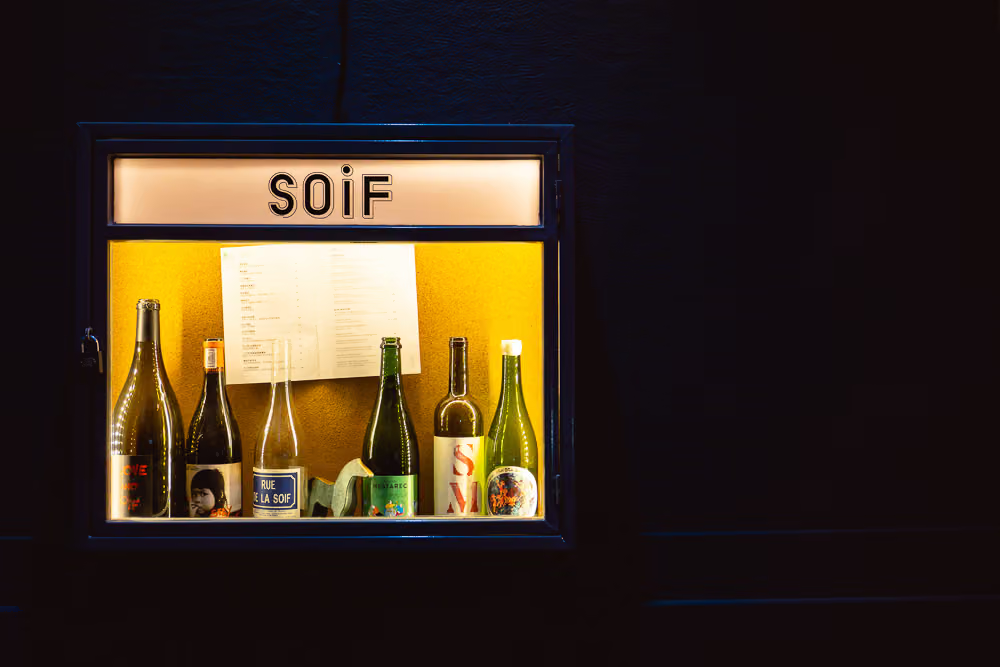
In late June, SOiF on Wuding Road shut down without a single farewell post. The bar, opened by the Vinism founding team in September 2020, was once called by writer Rachel Gouk one of the "rare forces driving a revival of Shanghai's bar scene," and had also been recommended as a must-visit by Star Wine List. In less than six years, it went from being the standard-bearer of a movement to a quiet announcement.
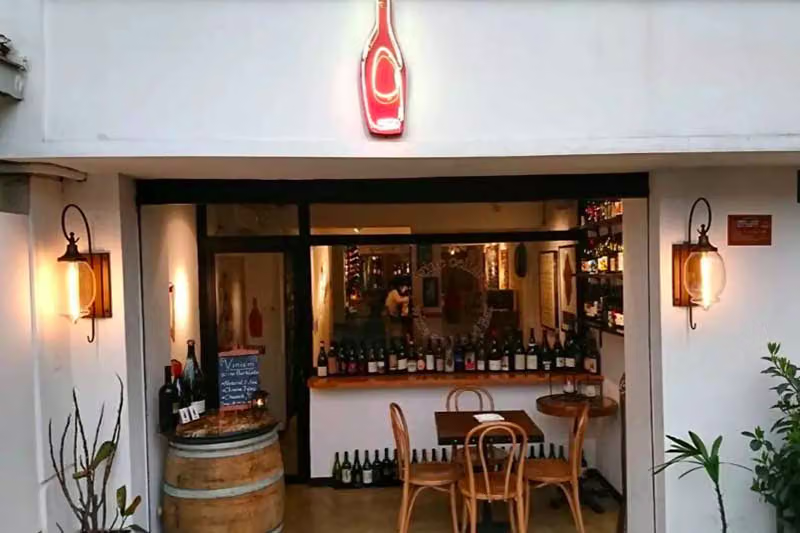
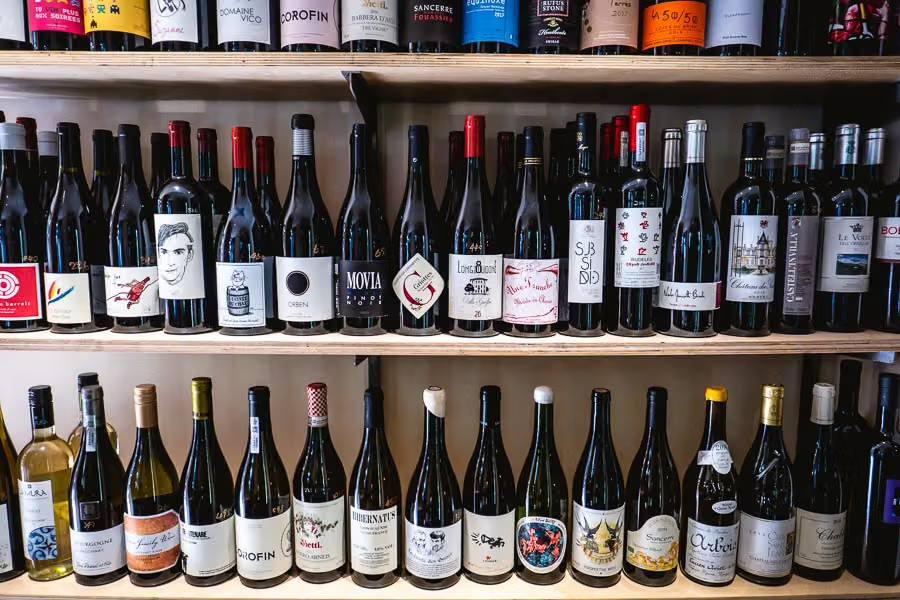
Around 2020, a search for "natural wine" (自然酒) on Dianping returned over 83,000 results — more than three times the 26,000 results for "craft beer." The craze spread from Shanghai to Guangzhou, Shenzhen, Chongqing, and Chengdu, at one point making natural wine over half the offerings on many new bars' menus. Vinism, opened in 2017, is widely regarded as the starting point of this nationwide movement.
But the boom didn't hold. According to data from iiMedia Research, about 5,700 bars closed across China during the pandemic, with the already-niche bar industry hit especially hard. In Shanghai, Vinism changed ownership, Ambra shut down, and RAC was acquired by coffee group M Stand. Chengdu fared just as badly: La La Land and Cosmos Bar both closed, and a wave of copycat natural wine bars couldn't survive. Stephen Yang, founder of Hō Wine Bar & Eatery, put it bluntly: alcohol revenue once dropped to around 70–75%, and has now slid further to about 60%. Unstable foot traffic combined with high operating costs makes it increasingly hard to survive in an environment of consumer downgrading.
Global Data Doesn't Support the "Natural Wine Is Cooling Off" Narrative
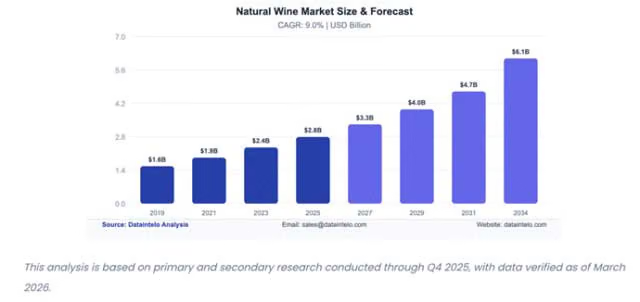
But interpreting China's cooldown as a sign of global contraction isn't backed by the numbers. According to a Dataintelo report, the global natural wine market was worth about $2.8 billion in 2025 and is projected to grow to $6.1 billion by 2034, at a CAGR of 9%. The organic wine market, which overlaps heavily with natural wine, already reached $12.9 billion in 2024 (InsightAce Analytic) and is expected to grow to $42.3 billion by 2034, at a CAGR of about 12.7%.
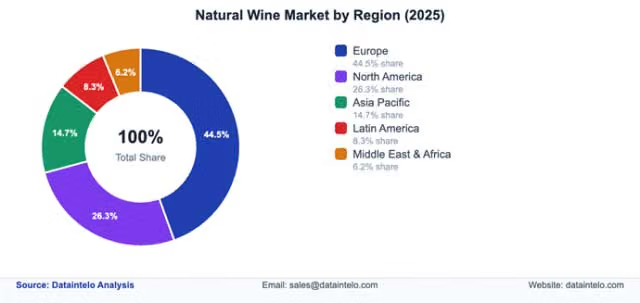
In Europe, 2025 saw 2,655 natural wine venues in France and 1,623 in Italy, with Paris alone accounting for 599 — a 36% increase from 2021. North America shows an even clearer trend: U.S. natural wine sales grew at a CAGR of 14.2% between 2022 and 2025, with retail SKUs up 38% over the same period. Even Asia, starting from a smaller base, is projected to grow 12.8% from 2026 to 2034 — but that's largely being driven by Japan, South Korea, and Australia, with China's weakness actually dragging down the overall Asia-Pacific figures.
So where did it go wrong? During the 2017–2020 boom, capital rushed in fast, and social media packaged natural wine as an attitude, a symbol — a prop for identity, content fodder for feeds. People weren't drinking the wine; they were drinking the image. The market skipped over the process of letting real consumption habits take root. Before consumers even understood what natural wine actually was, the category's value had already been distorted into "how photogenic is it." Capital chasing quick returns, paired with plenty of self-proclaimed experts, had no patience to explain that oxidation, brett (that funky barnyard yeast character), and volatile acidity aren't the signature flavors of natural wine. Once the capital finished cashing out and consumers stopped buying in, the hype died just as fast as it rose. As Simon Woolf, author of Amber Revolution, once put it: "natural" isn't a style, a taste, or a smell — it might be a cloudy, cider-like liquid with heavy volatile notes, or it might be an exquisitely refined creation. Paradoxically, both could count as natural, and neither might.
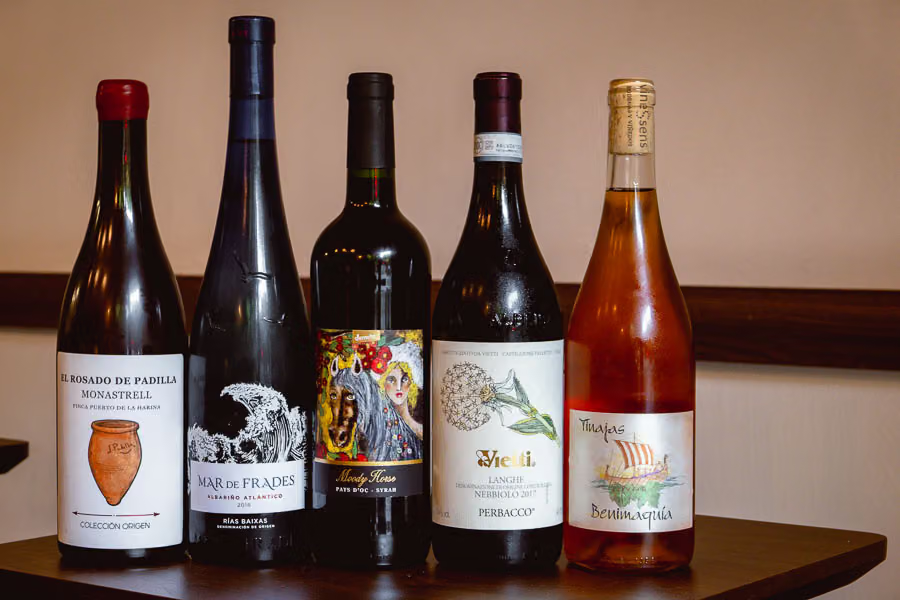
On the flip side, a Nielsen report shows that 30% of young people in China still say they enjoy natural, additive-free alcoholic beverages — up 12 percentage points from five years ago. Shanghai still has a group of restaurants keeping natural wine on their lists, including Pass Residence, RAC, Crave, TonAri, Babar, Rambu, Pur'aisin, Blaz, and Cila. None of these places brand themselves around "natural wine" — it's simply one option among many on the list. Zita Hu, co-founder of TonAri and a wine importer, offers this assessment: what's exiting the market now are the operators who lacked real understanding in the first place. The importers and restaurants that remain are becoming more selective about which wineries they work with and more thoughtful about presentation. Natural wine no longer needs to compete against commercial wine, nor does it need to prove what it represents — it's simply back in the market as one choice among many.