Shanghai Xiaolongbao Guide: Crab Roe, Paper-Thin Skins, Late-Night Stalls — Three Camps, Three Kinds of Loyalty
From crab roe xiaolongbao on Nanjing East Road to a basket of Manman soup dumplings for just RMB13 late at night, Shanghai has split the same dumpling into completely different eating experiences. This guide covers old-school names like Lai Lai, Jia Jia, and Fu Chun, plus chain options like Din Tai Fung and Paradise Dynasty.
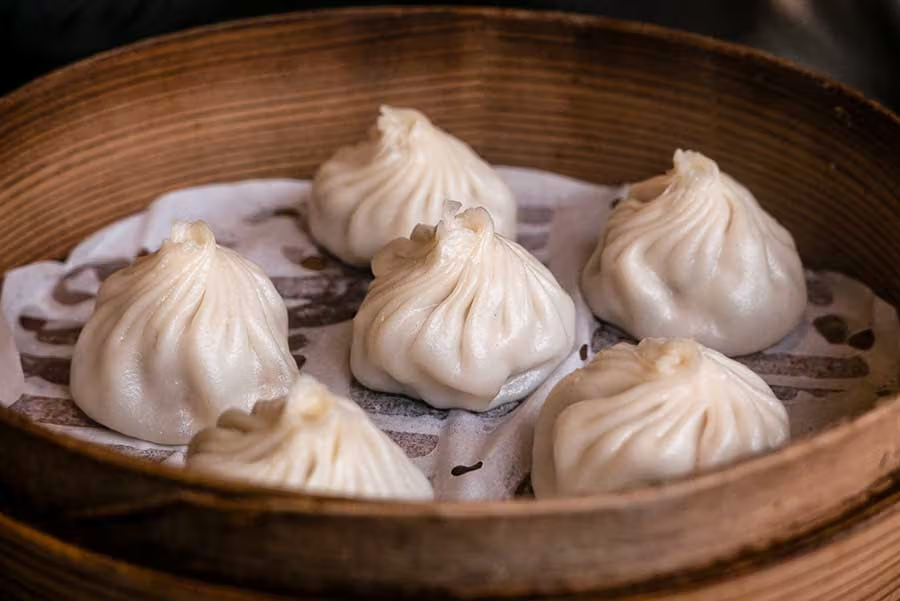
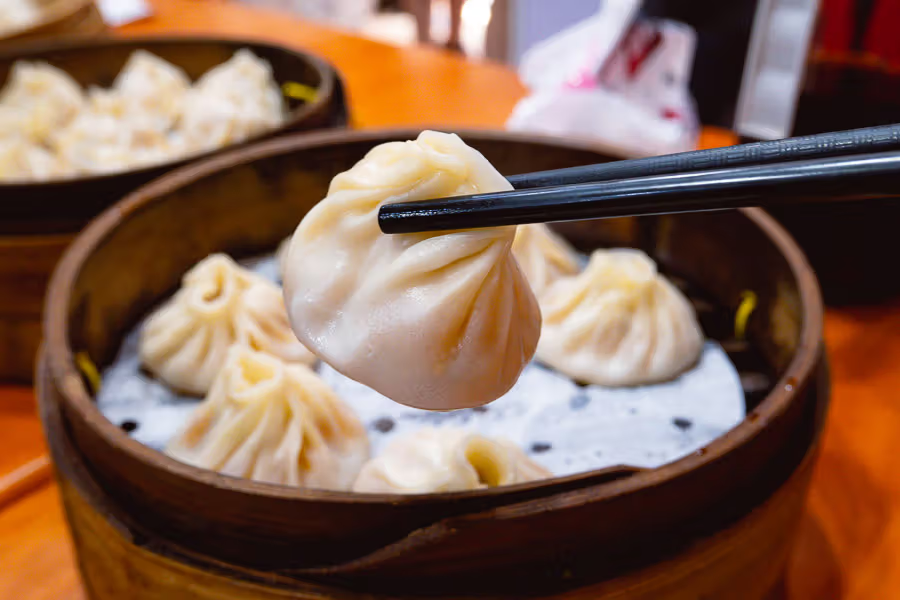
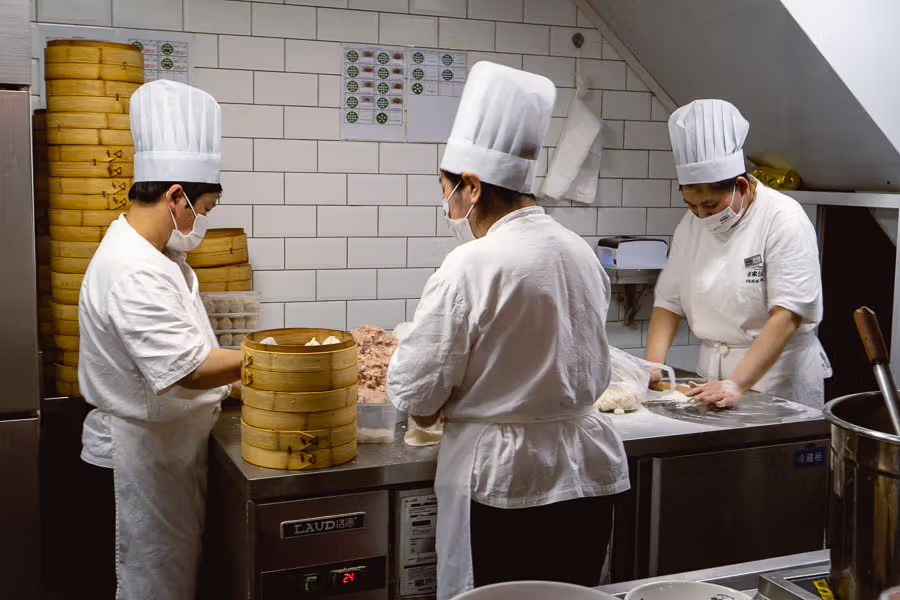
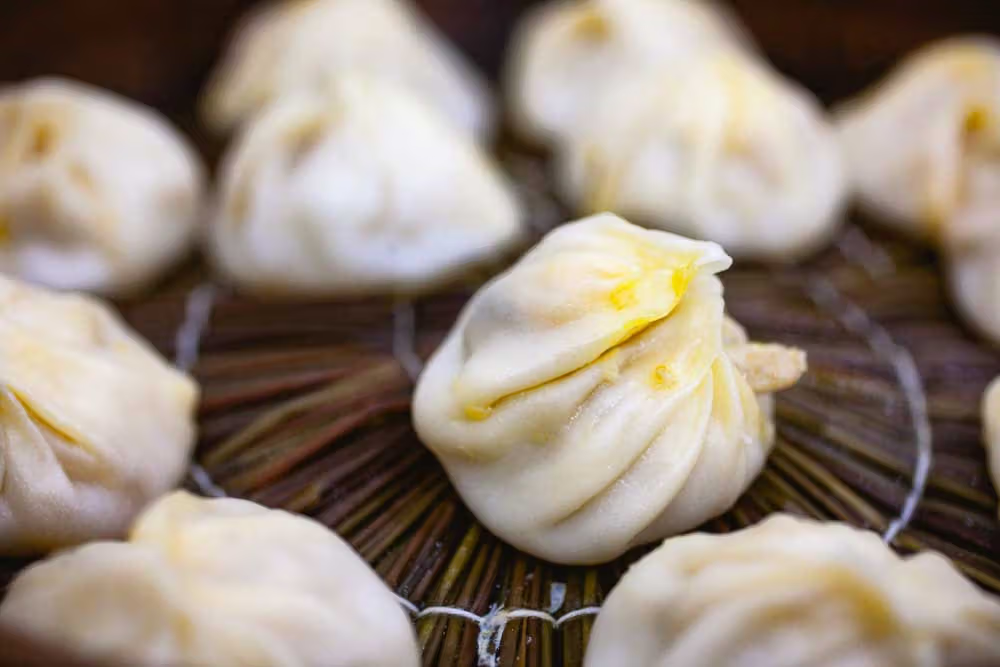
How big should a good xiaolongbao be? About the size of a ping-pong ball. The skin should be thin enough to see the soup jiggling inside — take a sip of the scalding broth first, then finish off the rest of the wrapper and filling together. This method of eating has been passed down in Shanghai for nearly two hundred years, reportedly originating in the Nanxiang area of Jiading, before making its way into the city proper via the Nanxiang Steamed Bun Restaurant in Yuyuan Garden, eventually becoming the city's signature snack. The technique looks fixed on paper: pork filling paired with aspic made by simmering pork skin until it sets, which melts into soup once steamed. But working from the same basic principle, Shanghainese people can argue over a dozen different versions of "authentic" — the thickness of the skin, the amount of soup, the ratio of filling — every shop has its own stance.
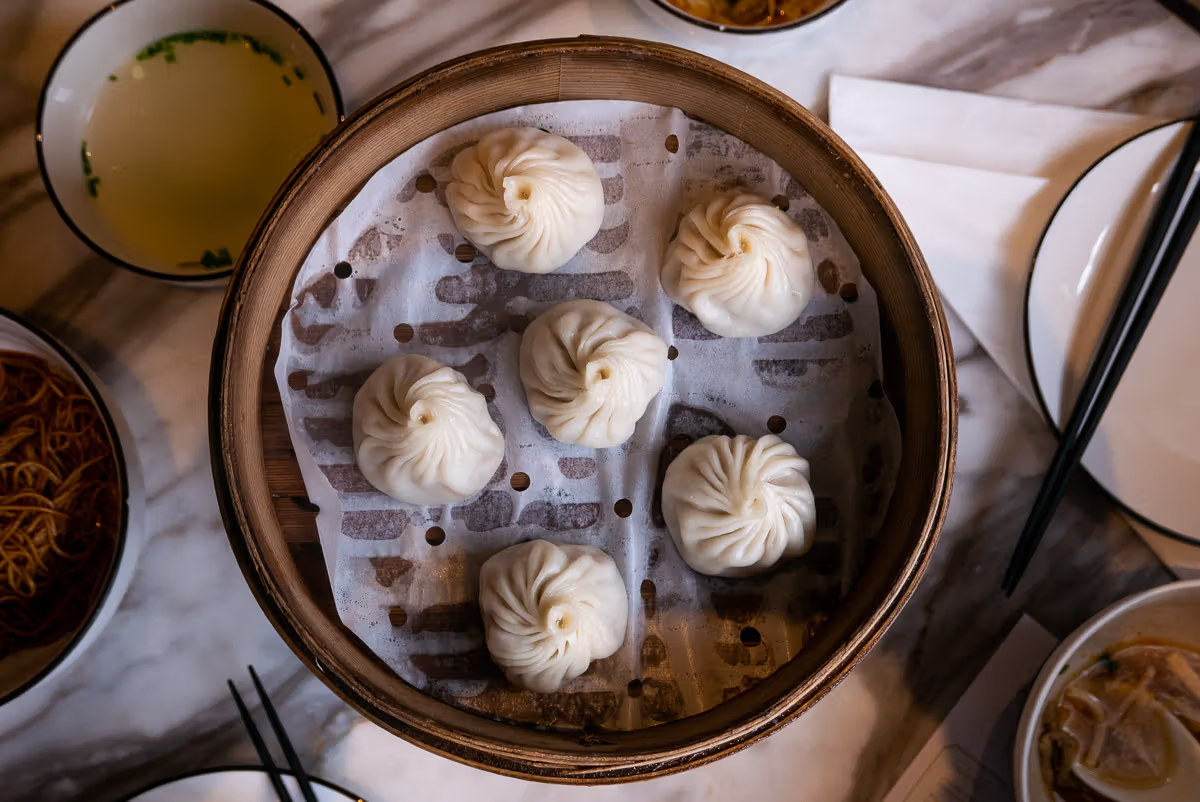
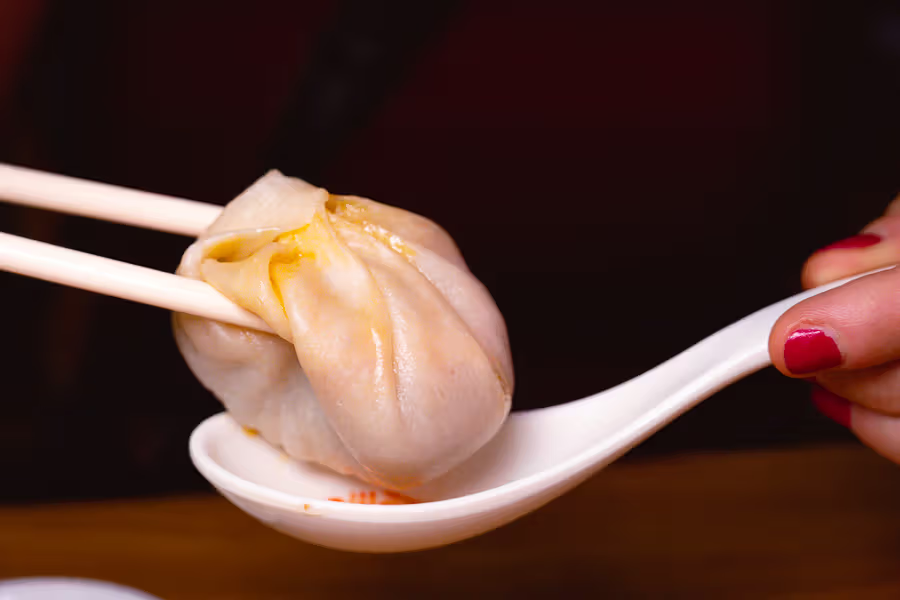
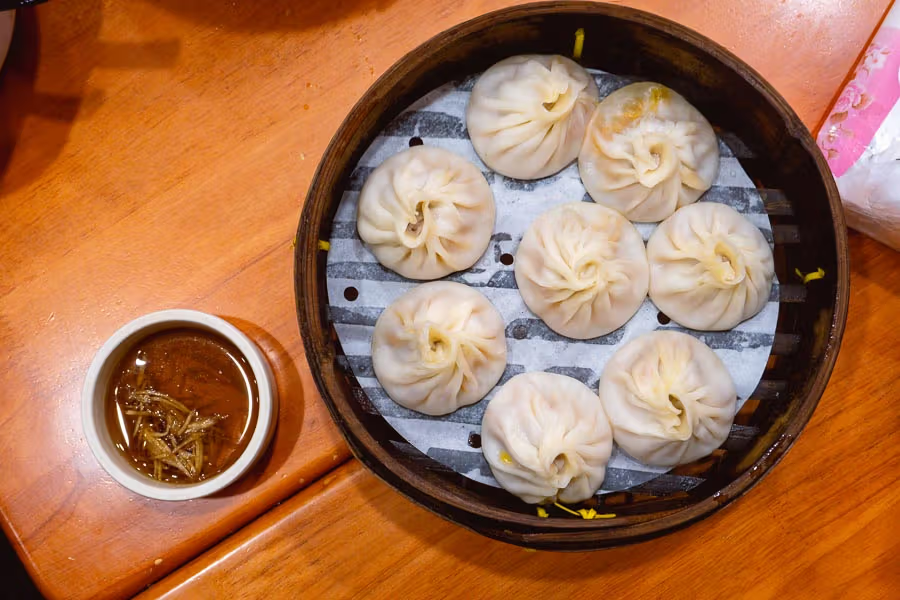
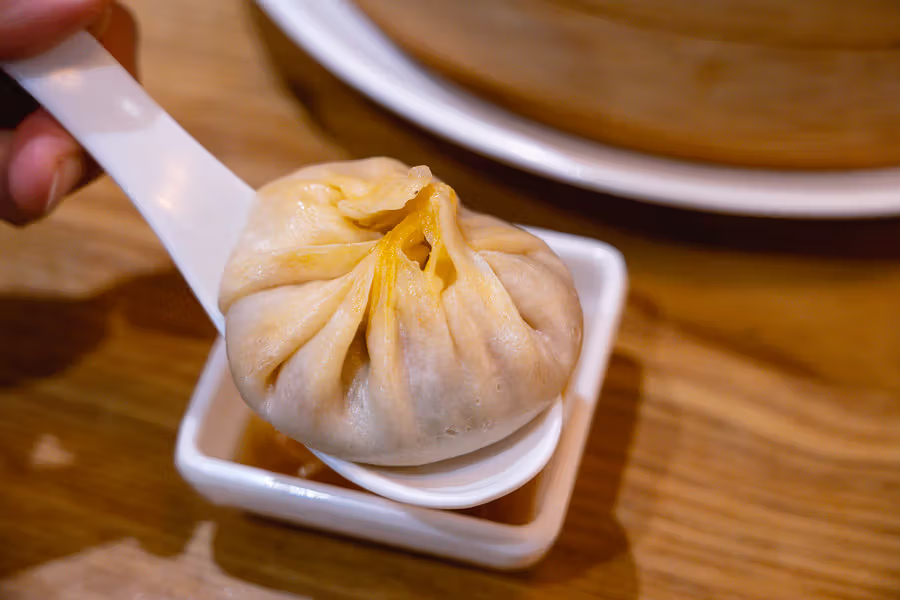
Xiaolongbao are priced and sold by the basket, but there's no standard number per basket — it could be five, six, or even twelve, so it's worth checking the menu's dumpling count before ordering. The eating ritual is also fixed: pick one up with chopsticks, dip it lightly in Zhenjiang vinegar mixed with shredded ginger, move it onto a spoon, bite a small opening, carefully sip out the scalding soup, and only then eat the whole thing — get the order wrong, and you're the one who gets burned.
Three Ways to Eat It, Three Camps of Loyalists
Lai Lai Xiaolong, which opened near the Nanjing East Road pedestrian street in 2006, is the top pick in Shanghai for crab roe xiaolongbao. The crab meat and pork filling combo is the signature dish — a basket of eight crab roe and pork dumplings runs RMB40, crab fat and pork is RMB70, pure crab roe (four pieces) is RMB78, pure crab fat (four pieces) is RMB158, and pork with matsutake mushroom (four pieces) is RMB39. There's also crab roe wontons at ten for RMB30, with ginger vinegar sold separately for RMB1. The original Tianjin Road location received a Bib Gourmand in the 2025 Michelin Guide Shanghai, and a new branch opened in Jing'an in April 2023. Seats are hard to come by at lunchtime — it's best to go after 1:30pm, and note the shop closes for an hour-long lunch break.
Jia Jia Soup Dumplings started as a small husband-and-wife shop in 1986 and now has nine branches across Shanghai, making it the second most popular choice after Lai Lai. The famous Huanghe Road location was originally at No. 90 but moved to No. 127 a few years ago — the old address is now occupied by an unrelated shop with a similar-sounding name, "Jia Le Soup Dumplings," so be careful not to walk into the wrong door. The Liyuan Road branch is equally good and usually has shorter lines. Every basket is made to order and steamed fresh, meaning at least a ten-minute wait — but the payoff is an extremely thin skin and a soup-packed bite. A basket of twelve pork dumplings is RMB23, pure crab roe is RMB108 for twelve or RMB55 for six, crab roe and pork together is RMB38 for twelve, and frozen wontons are available to take home.
Manman Soup Dumplings takes a completely different approach: an utterly unassuming little shop run by Chef Li, who has been making xiaolongbao in Shanghai since the 1990s and now runs the place with his son, also selling congee and tangyuan on the side. What sets it apart is that you can order delivery through Shansong, and in earlier years it was even open 24 hours a day. A basket of eight pork dumplings costs just RMB13 (2026 pricing), making it the cheapest option on this list, and it also offers a vegetarian shepherd's purse version rarely seen elsewhere. Congee and Shanghai-style breakfast items are served in the morning, the black sesame tangyuan is worth trying too, and drinks need to be bought separately at the convenience store next door.
The Old Guard's Philosophy on Soup
Fu Chun Xiaolong, founded in 1885, is recognized as a China Time-Honored Brand and is known for its notably rich pork flavor. Originally on Yuyuan Road, it now occupies a two-story shop in Xuhui District. The skin is a bit thicker than Lai Lai's, leaning toward a more rustic, handmade style — six pork dumplings cost RMB18, six crab roe dumplings cost RMB58, and the crab roe and crab meat topped noodles are a must-order for regulars. Run by the same team on Yanping Road, Fu Mai Baozi has a skin thickness somewhere between Jia Jia and Fu Chun — six pork dumplings for RMB16, crab roe for RMB38. The interior carries on Fu Chun's old 1930s style, and besides xiaolongbao, it also serves baozi, shumai, and crab meat noodles.
Lin Long Fang has been making xiaolongbao in Shanghai for 20 years. Its Zhapu Road location in Hongkou is livelier than the Changning Changhua Road branch, while the original Jianguo Road shop closed during the pandemic. It's often compared to Jia Jia because of its similarly thin skin, though whether the two are actually connected remains unconfirmed. Twelve pork dumplings cost RMB20, twelve crab roe and pork cost RMB38, six pure crab fat cost RMB55, and there's a mixed "family set" of twelve featuring pork, salted egg and pork, and crab roe and pork for RMB35. The skin is thin enough that it eats more like a delicate snack than a staple food — the salted egg yolk version has a somewhat grainy, salty texture, good for variety but not the top pick. The house vinegar leans sweet, and adding shredded ginger costs an extra RMB2.
Chains, Budget Picks, and the Distant Birthplace
Nanxiang Steamed Bun Restaurant, founded in 1900, earned a Michelin Bib Gourmand at its original Yuyuan Garden location and is regarded by many Shanghainese as the true origin of xiaolongbao. After a rough patch, business has stabilized, and the dining areas on the second and third floors are clean and modern. Six pork dumplings cost RMB42, crab meat and pork RMB72, matsutake and pork RMB108, clam and pork RMB48, and there's also an oversized crab meat and crab fat dumpling for RMB42, eaten by sipping the soup through a straw. The lines here are mostly tourists, but if you happen to be near Yuyuan Garden, it's worth a stop.
Din Tai Fung was founded in Taiwan roughly fifty years ago by Yang Bingyi, a native of Shanxi, and has no historical ties to Shanghai — it built itself into a global chain by standardizing xiaolongbao production, with fixed specifications for skin thickness and the number of pleats. Critics say it lacks personality; supporters say it's clean and consistent. Shanghai branches include IFC, Xintiandi Style, Grand Gateway 66, Qiantan Taikoo Li, and Taikoo Hui, and delivery is also available. Singapore-based Paradise Dynasty takes a different tack, offering eight-color xiaolongbao for RMB72 a basket, with spicy, cheese, truffle, and foie gras versions each dyed a different color of wrapper. Original pork flavor comes at RMB29 for five or RMB42 for eight, chili wontons are RMB36, and there's a branch in Xintiandi.
Shanshan Xiaolong at No. 749 Kangding Road takes the budget route, with a thicker skin — six pork dumplings for RMB10, four sweet Wuxi-style dumplings for RMB10, open from 6am to 8:30pm. The chains Lao Sheng Chang Soup Dumplings and Lao Sheng Xing Soup Dumpling House both serve a sweeter, soy-sauce-forward style of xiaolongbao with similarly thick skins, good for a change of pace. Wanshou Zhai at No. 123 Shanyin Road in Hongkou, near Lu Xun's former residence, is lively and often requires sharing tables — the dumplings here are smaller than average with a milder flavor, and quite a few Shanghai locals consider it the best in the whole city. It's open from 5am to 9pm. For those determined to trace things back to the source, take Metro Line 11 to Nanxiang Town, where several old shops cluster near Guyi Garden. Guyi Garden Restaurant, at No. 218 Huyi Highway and reputedly the birthplace of xiaolongbao, keeps a rougher, more hand-made style and is open from 8am to 8pm.