Hong Kong’s Soft Borders runs through November 7: hair embroidery, bamboo and metal stitching by six artists
Blindspot Gallery brings together six artists working with thread, beads, bamboo, hair and metal. Explore Adams’s tapestry, Miyamoto’s string construction, Su’s calendar and Bi’s stitching, with appointment details for Wong Chuk Hang.
Blindspot Gallery’s Soft Borders in Hong Kong continues through November 7, bringing together Igshaan Adams, Bi Rongrong, Kazuko Miyamoto, Angela Su, Aiko Tezuka and Yee I-Lann. Their weaving, embroidery and entanglements extend beyond fibre to beads, wire, bamboo, hair and metal. The group exhibition poses a question: how can a line move from a soft surface into space, become a counting system or trace a connection between people?
Tapestry and cotton string: paths become spatial depth
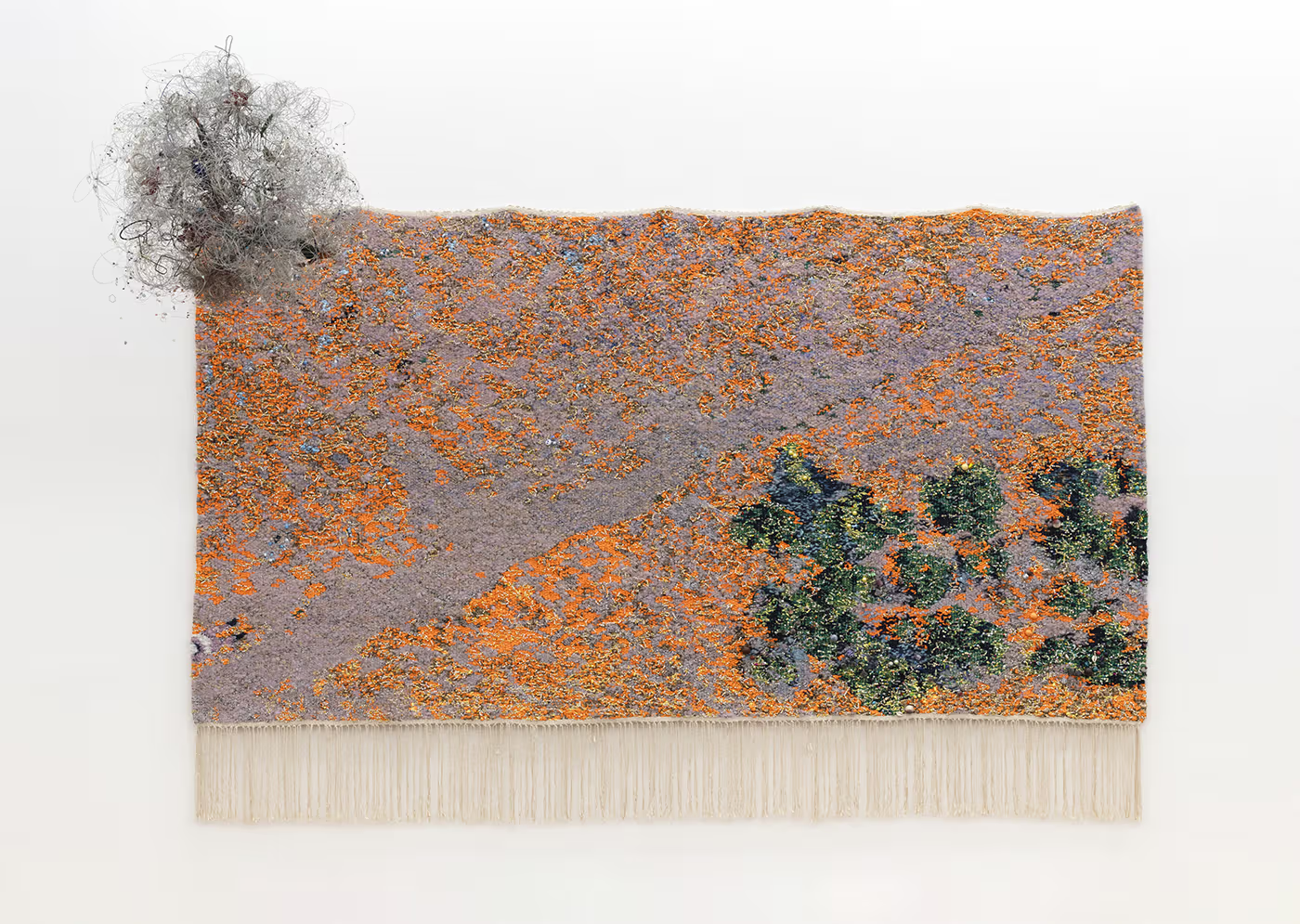
Igshaan Adams’s Nama stap (ii) (2026) combines a tapestry measuring 215 × 322 cm with a suspended cloud measuring 80 × 90 × 90 cm. Cotton and sisal twine, braided rope, various beads and metal wire produce shifts in density and reflection. The gallery connects the work to the landscape of South Africa’s Namaqualand and traces left by walking. In the artwork image, small orange marks and dark areas initially suggest a map; closer inspection reveals different threads and beads joined together.
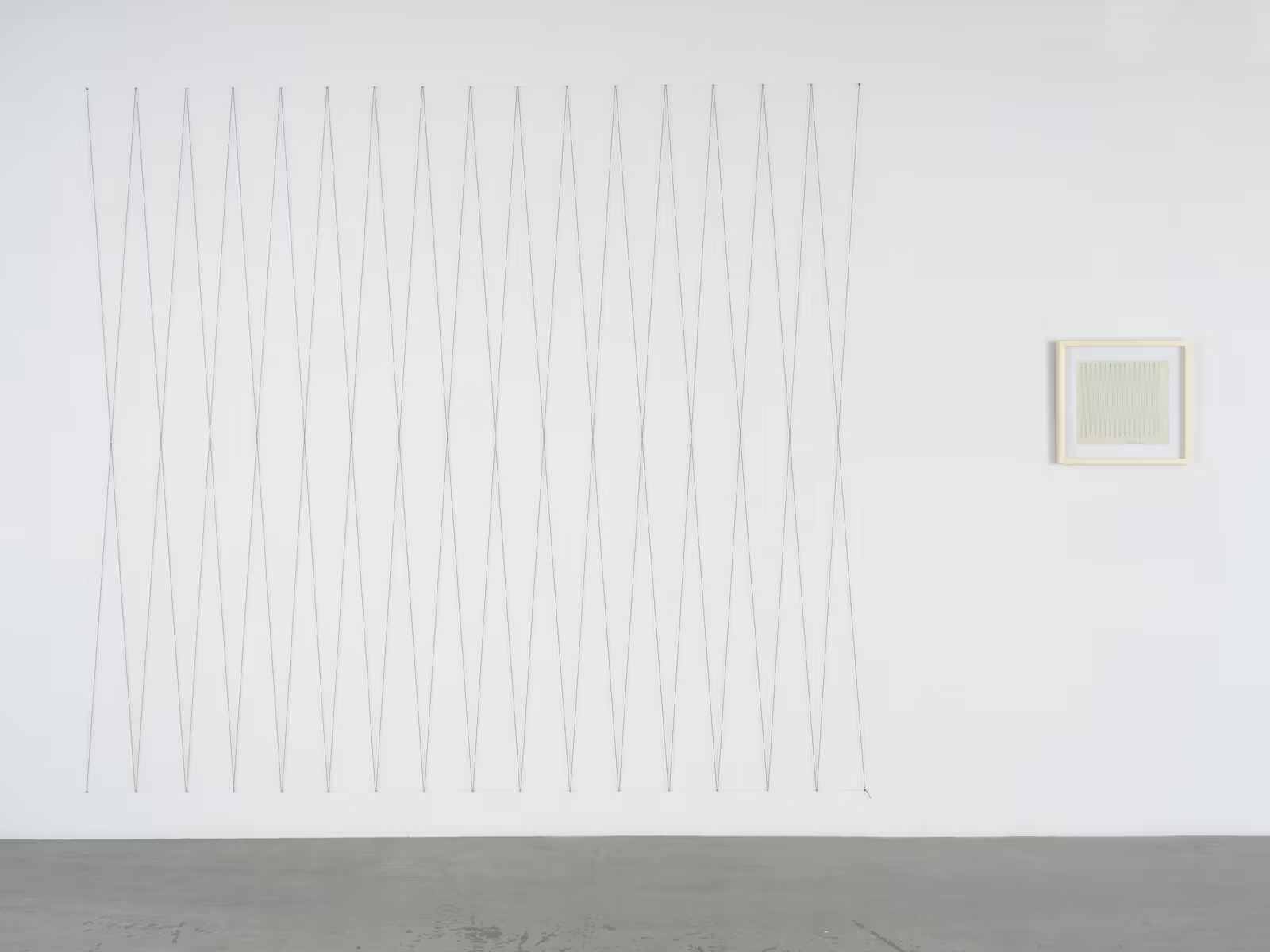
Kazuko Miyamoto’s Two Dimensional Accordion uses industrial cotton string, nails, pencil and a plan to form a geometric construction. Conceived in 1978, it was first realised in 2019. Crossing lines overlap their own shadows on the wall, giving an apparently flat grid an outward depth. The lines are orderly, while tension and gravity introduce differences in each presentation. Comparing the adjacent plan with the string construction helps distinguish the proposed structure from what happens when the material meets the wall.
Kazuko Miyamoto’s Two Dimensional Accordion uses string, nails and wall shadows to turn a geometric plan into a spatial experience.
Hair embroidery, calendars and overlapping images
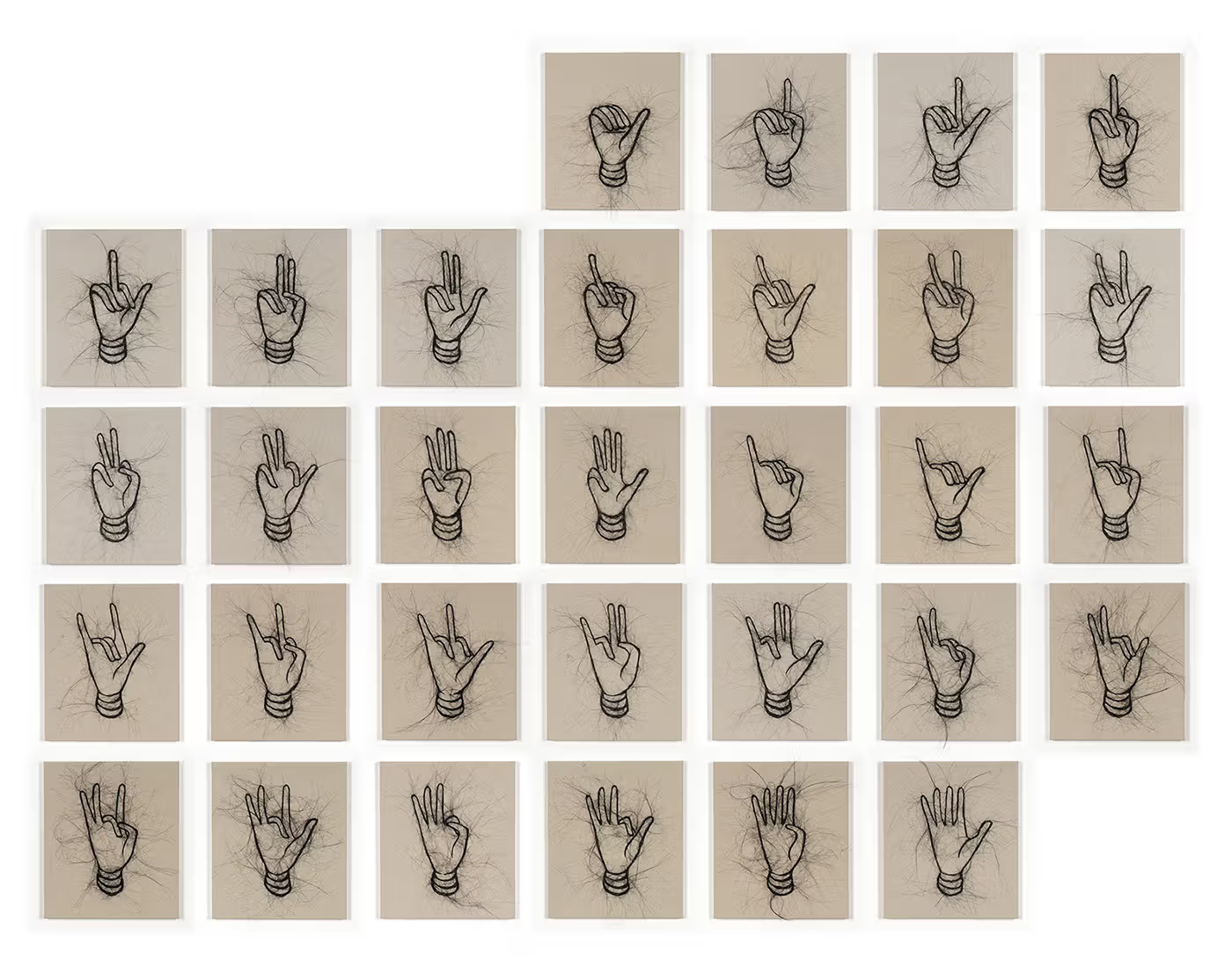
Angela Su’s The Fabric of Time (2026) brings gestures and computation together. The ensemble includes a programmed real-time clock, a calendar consisting of 31 hair-embroidered hand gestures, and a single embroidered gesture representing zero. The clock uses stop-motion animation of embroidered gestures to express finger binary counting, rather than simply placing a ready-made animation on an ordinary clock face. The Days, shown in the photograph, arranges differently extended and folded fingers into a calendar, reconnecting abstract numbers with the body and time-consuming handwork.
Angela Su’s The Fabric of Time: The Days (2026) forms a calendar from 31 hair-embroidered hand gestures.
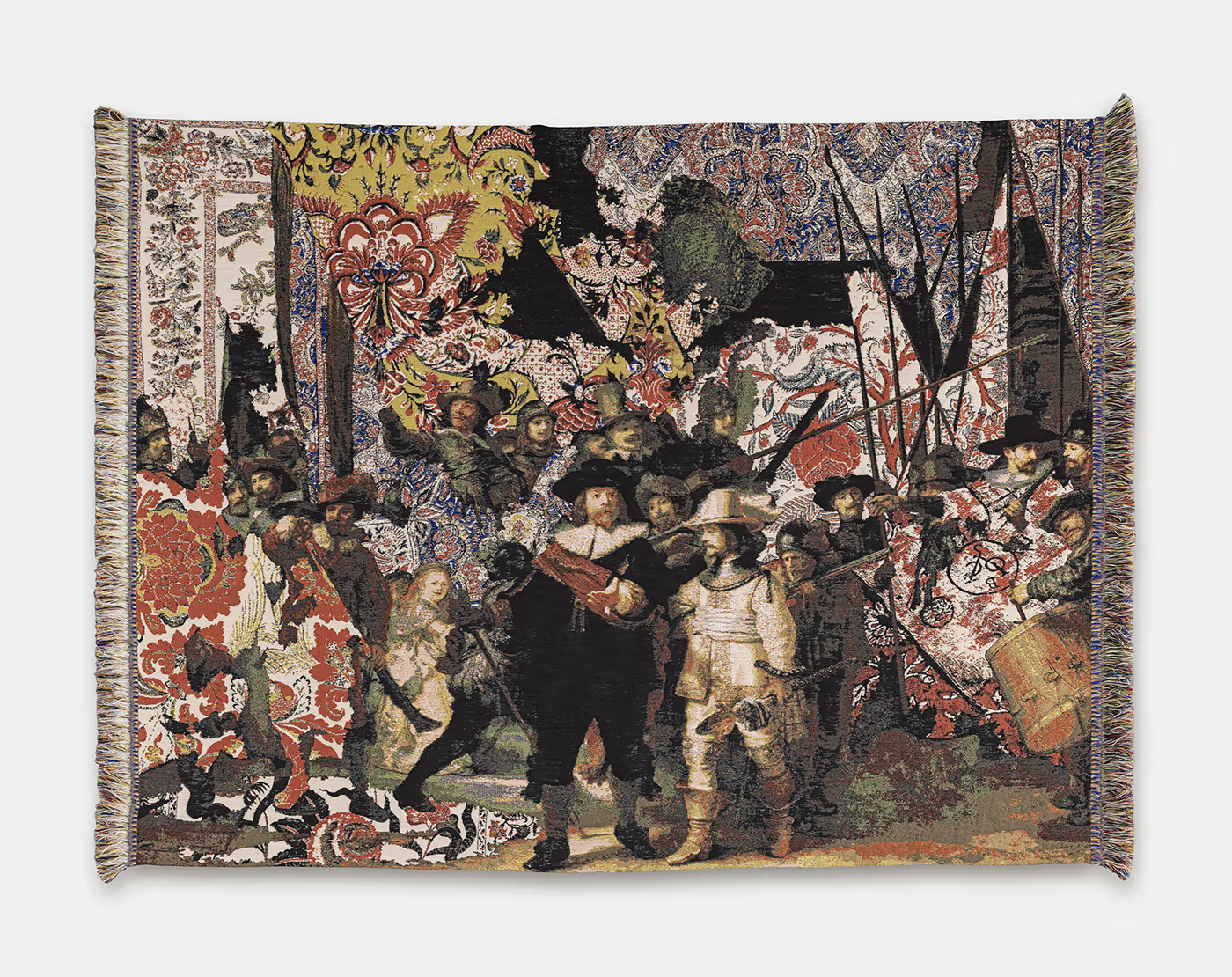
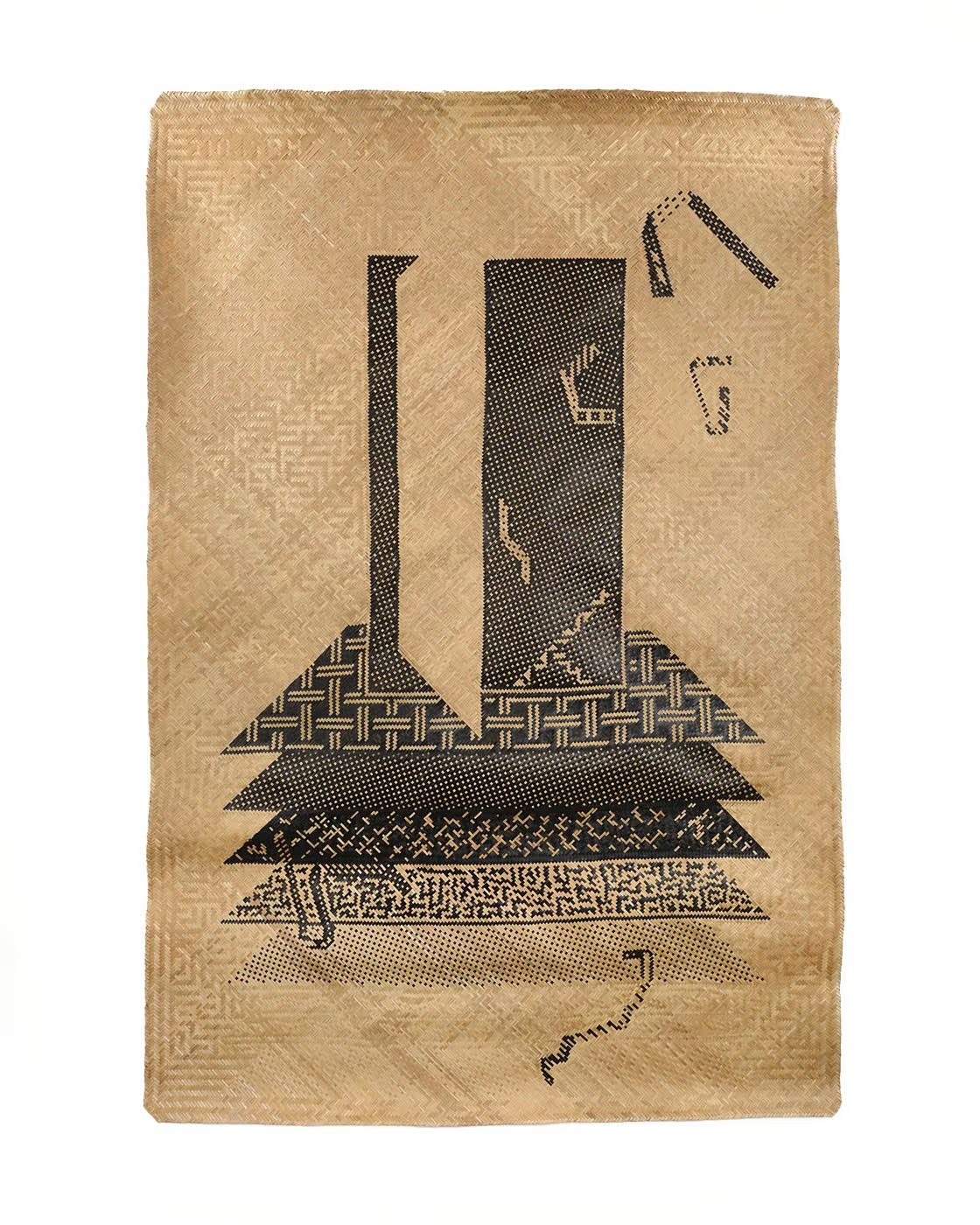
Aiko Tezuka’s Flowery Obscurity (The Night Watch – 02) (2019) uses jacquard weaving to overlap figures from The Night Watch with dense floral textile patterns, shifting attention between people and ornament. Yee I-Lann’s Doormatic Glide Refractor uses woven split bamboo and black natural dye, turning geometric patterns on the mat into a structure concerned with memory and collaboration. Both reward comparisons at different distances: one layers images, while the other sets woven textures and black shapes in dialogue.
Aiko Tezuka’s Flowery Obscurity (The Night Watch – 02) (2019) layers figures and floral textile imagery in jacquard weaving.Yee I-Lann’s Doormatic Glide Refractor connects a natural woven bamboo surface with black geometric patterns.
When metal behaves like cloth: details and appointments
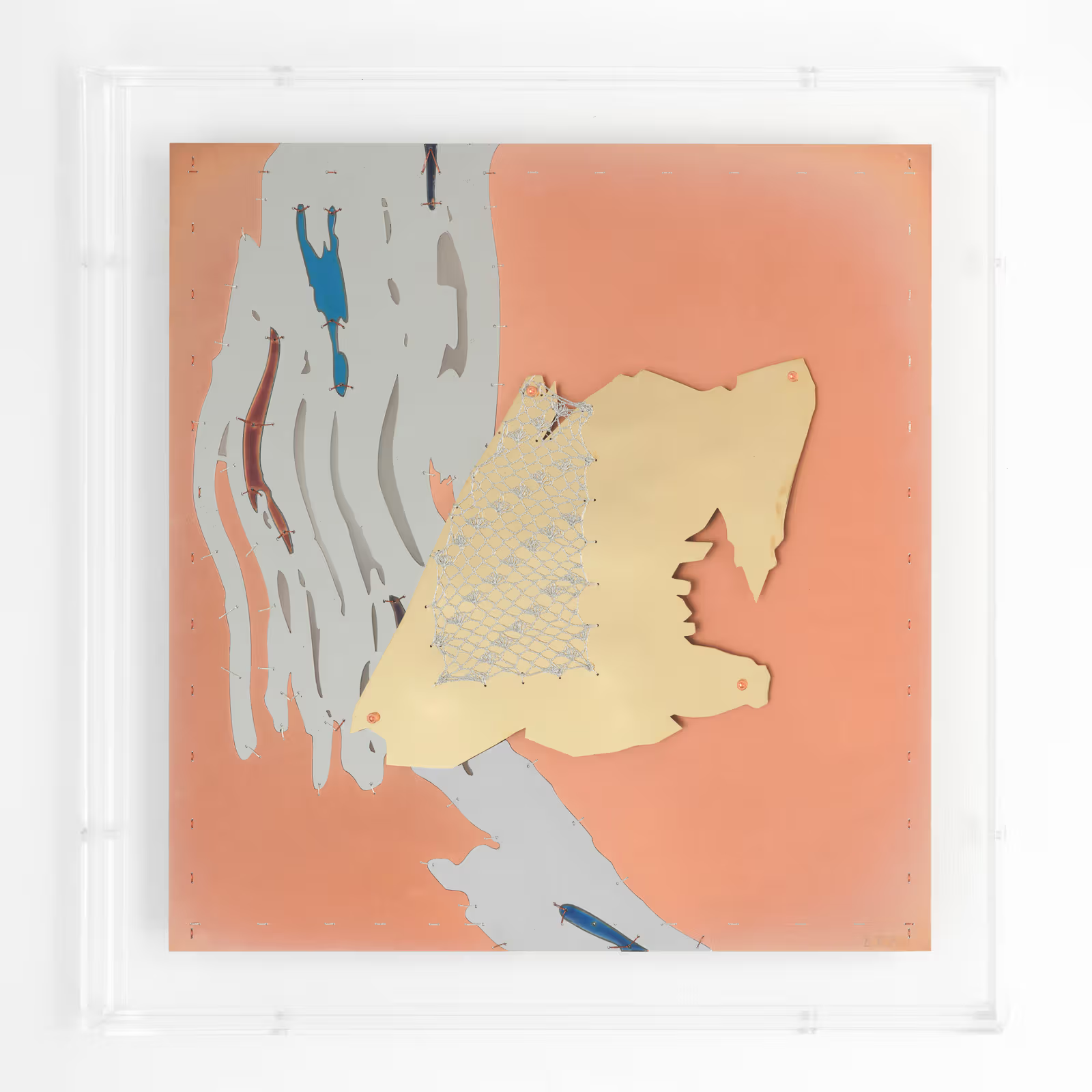
Bi Rongrong’s The North, The South—To Stitch (II) (2026), measuring 50 × 48 × 6 cm, combines copper, copper oxide, brass, mirror-finish stainless steel, enamel and knitted textiles, among other materials. Stitching and mesh connect orange, grey and pale-yellow forms. Metal plates resemble cut cloth, while textiles enter hard surfaces. Here, flexibility concerns more than softness to the touch: it also describes how components remain connected while leaving openings between them.
Bi Rongrong’s The North, The South—To Stitch (II) (2026) connects metal, textiles and stitching while leaving openings.
The exhibition runs from September 15 to November 7, 2026, at Blindspot Gallery, 15/F, Po Chai Industrial Building, 28 Wong Chuk Hang Road, Hong Kong. Official hours are Tuesday–Saturday, 10:30–18:30, closed on public holidays, with access by invitation and appointment only; telephone +852 2517 6238. Before visiting, browse the official exhibition and artwork page to identify materials to compare, then contact the gallery to arrange a visit. Together, these six practices make textiles an entry point for reading images, structures and the time embedded in handwork.