SpaceX Launches Two Falcon 9 Rockets From East and West Coasts 38 Minutes Apart, Breaking Its Own Record
On August 15, SpaceX launched two Falcon 9 rockets—one from Florida, one from California—just 38 minutes apart, beating its own previous record by 27 minutes. The two missions couldn't have been more different in nature.
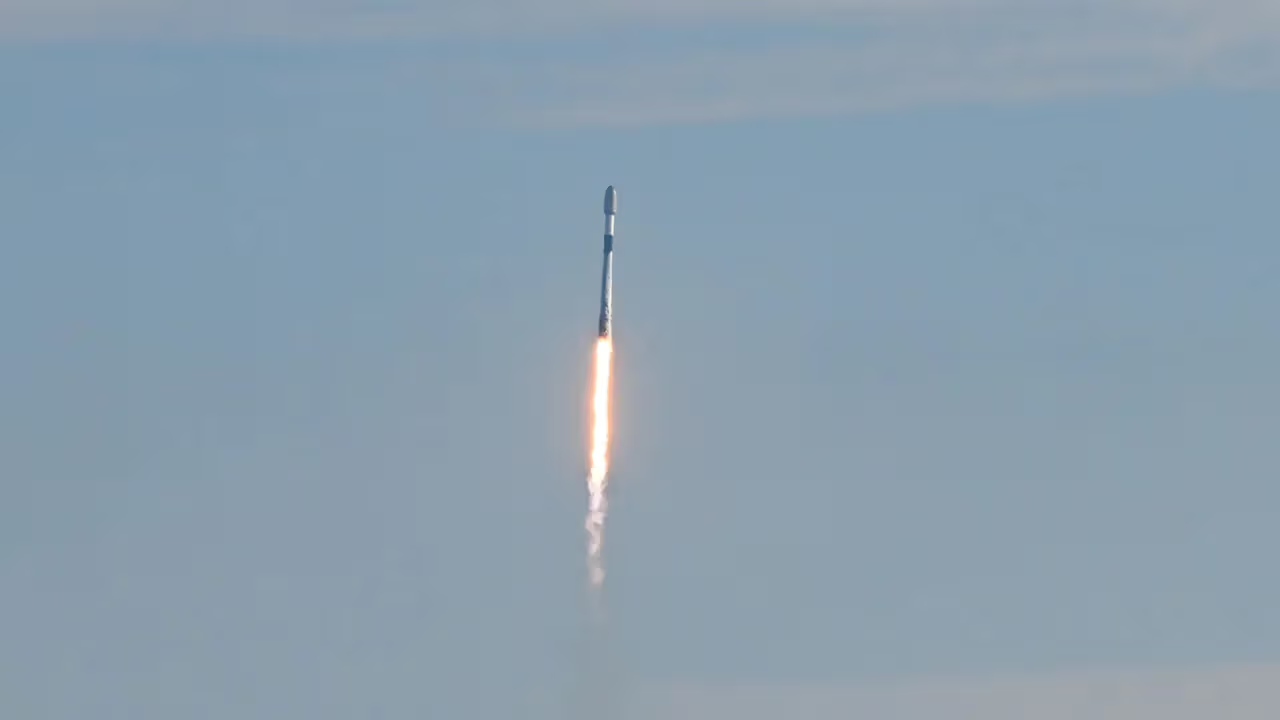
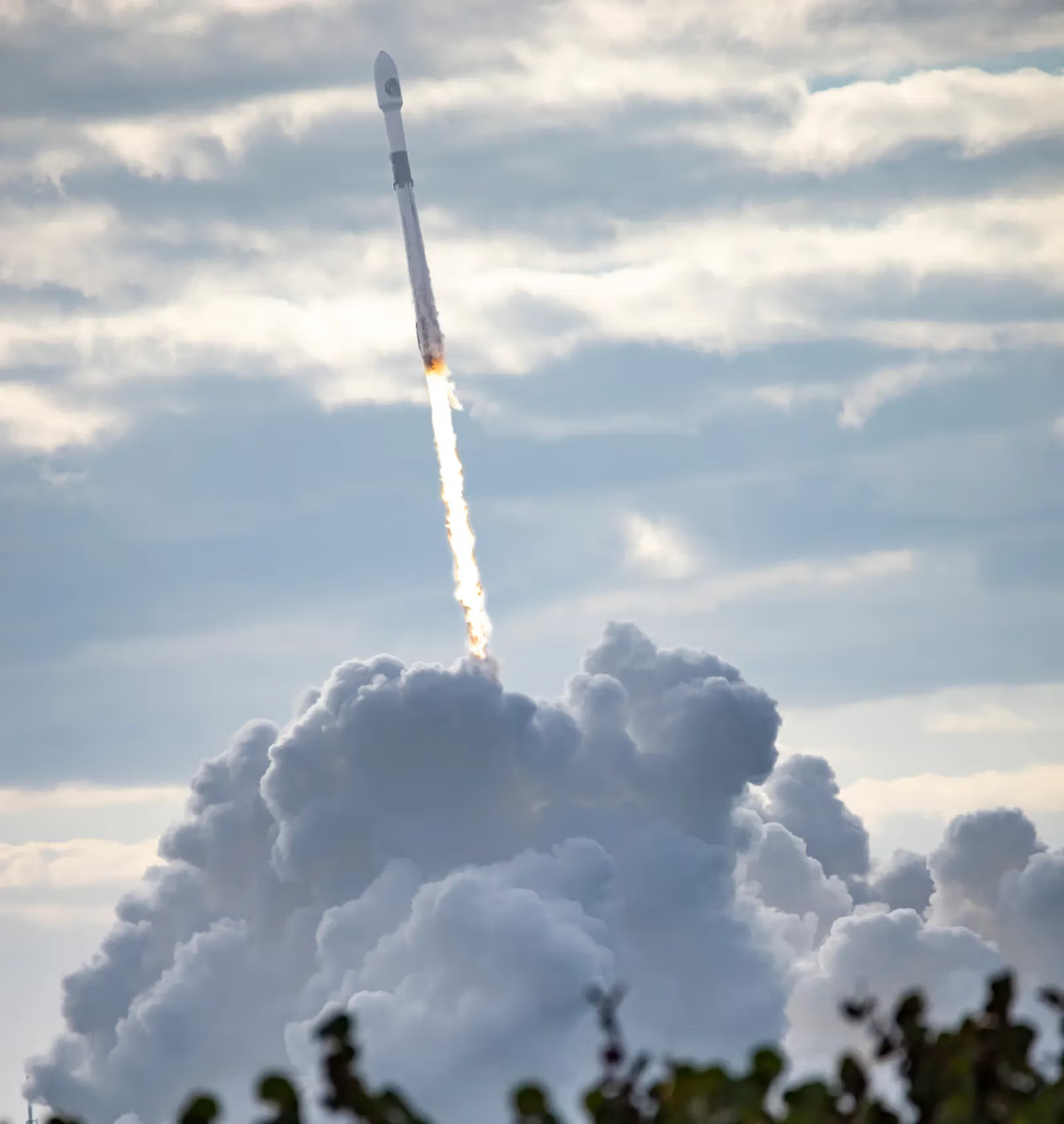
9:12 PM in Cape Canaveral, Florida. 6:50 PM in Vandenberg, California. Different time zones, nearly identical scenes—on Saturday, August 15, SpaceX launched a Falcon 9 from each end of the country, with just 38 minutes separating the two liftoffs.
The first rocket, launched from Cape Canaveral, carried out the Globalstar mission, delivering 8 satellites into orbit for the private telecom company. The satellites were successfully deployed to low Earth orbit about 57 minutes after liftoff. The rocket's first-stage booster also returned to Cape Canaveral for recovery roughly 8 minutes after launch, marking its 14th flight.
Almost simultaneously, a second Falcon 9 lifted off from Vandenberg Space Force Base, carrying out a classified mission for the U.S. Space Force designated USSF-366, with SpaceX revealing few details. This rocket's first-stage booster separated smoothly and landed on the droneship "Of Course I Still Love You" in the Pacific Ocean, completing its 18th flight. One mission delivered commercial satellites into orbit, the other carried out a classified military payload—yet only 38 minutes apart.
This turnaround beat SpaceX's previous record by 27 minutes. The prior record was set on August 31, 2024, when both missions involved deploying Starlink satellites. After breaking the new record, SpaceX quickly announced the achievement on X.
The Numbers Behind the Launch Frenzy
So far this year, SpaceX has completed 96 Falcon 9 launches, roughly three-quarters of which were for deploying Starlink satellites, with 5 more missions scheduled for the rest of August. At this pace, SpaceX is averaging a launch about every 2.4 days this year; for comparison, Falcon 9 completed 165 orbital launches in all of 2025, averaging one every 2.2 days—and that's before factoring in Starship's 5 test flights, which push the overall launch count even higher. This kind of cadence relies almost entirely on the maturity of reusable first-stage boosters—the two boosters used this time were on their 14th and 18th flights, respectively.
Starship is a different story altogether. The massive rocket completed 5 test flights in 2025, though not all were successful; so far this year, it has completed 2 test flights from Starbase in Texas. Starship technology is a key part of NASA's Artemis program, with a lunar variant slated to serve as the landing craft for future crewed missions back to the Moon. NASA is targeting mid-2027 for the Artemis 3 mission, which will test lunar landing systems from both SpaceX and Blue Origin—assuming both are ready by then. Falcon 9 has turned launches into something close to routine; whether Starship can reach that same level of maturity is the next thing to watch.