Tada Hengsapkul’s Bangkok wax paintings explore lotus flowers, faith and surfaces at 100 Tonson
Open since October 17, the artist’s first painting exhibition runs through April 11, 2027. Explore encaustic materials, the imagery, weekend hours and directions.
Wax can become an object of devotion or the surface of a painting. Thai artist Tada Hengsapkul’s first painting exhibition, Has anyone ever asked you where the wind comes from?, opened at Bangkok’s 100 Tonson Foundation on October 17, 2026, and runs through April 11, 2027. Curated by Earth Songsriwilai, it uses encaustic painting and mixed-media installation to ask how faith moves between material objects and consumption.
What is encaustic painting? Start with pigment and surface
The technique is called encaustic painting. The Getty’s Art & Architecture Thesaurus describes pigments dispersed in molten wax, applied while warm and fused onto the surface with heat. With that in mind, the haziness in an image becomes more than a colour scheme: colour and the material covering it are intertwined. Look at where the surface obscures an image and where it allows it to emerge again. This offers a way to understand the material, rather than an invitation to touch the exhibits.
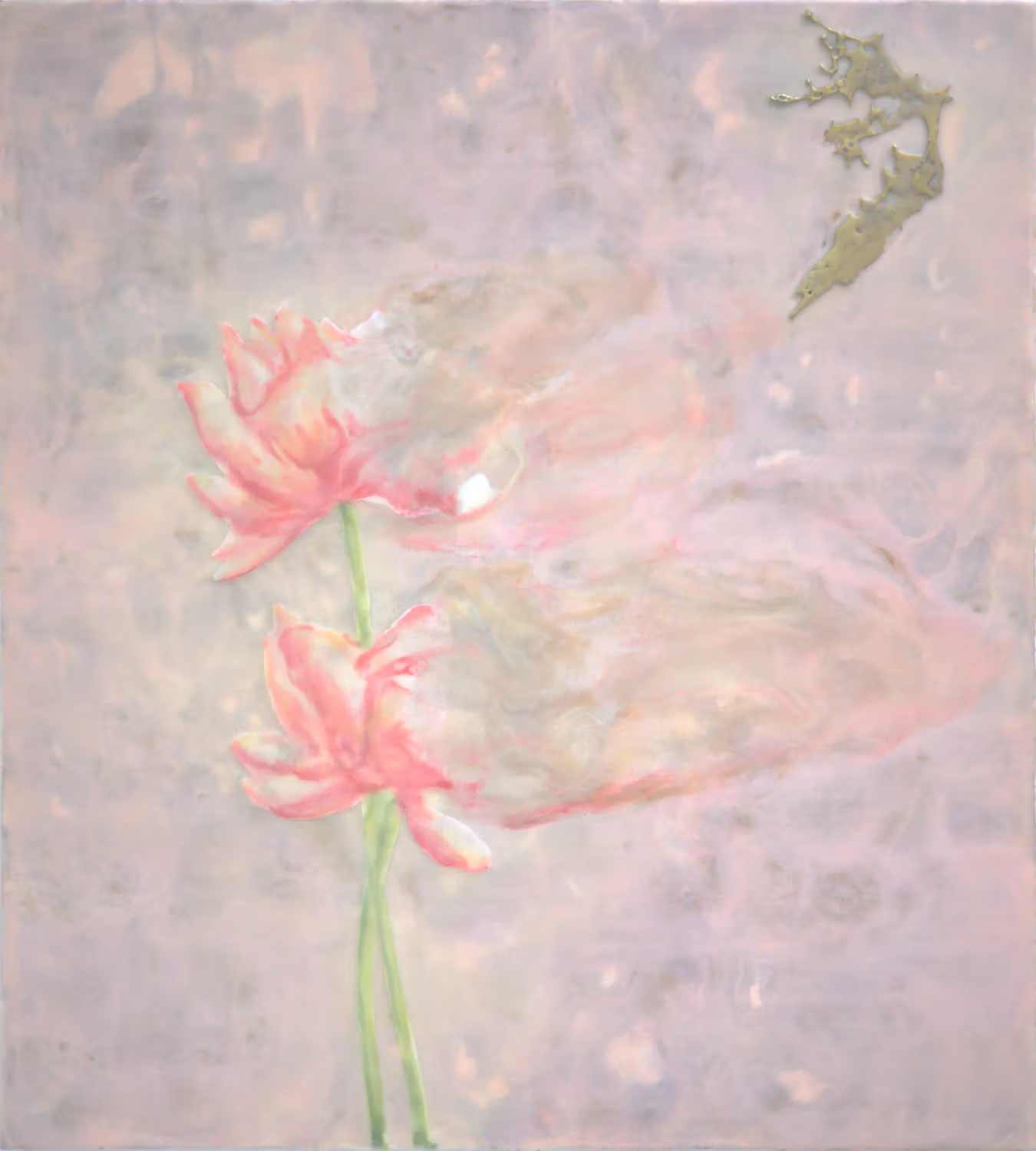
In the artwork image released by the foundation, two pink lotus flowers rise along the left side. Their green stems remain distinct against a grey-pink background, while the petal edges seem to loosen beneath a thin mist. An irregular golden-brown shape in the upper right contrasts with the softness of the flowers. Look first at the blossoms, then at the broad surrounding space: the image draws its strength from the distance between recognition and dissolution, rather than a profusion of detail. No specific title or dimensions accompany the image, so the description stays with the visible forms.
Beyond the lotus: how objects acquire value
The exhibition addresses “spiritual capitalism” in contemporary Thailand. When one object is given spiritual value, a ritual purpose and a market price, does the object change, or does our way of seeing it? Wax can be shaped, scraped and stripped away, allowing formation and removal to inhabit the same material. Rather than treating the lotus as a quiet decoration alone, carry that question into a comparison of the imagery, the material surface and the exhibition space.
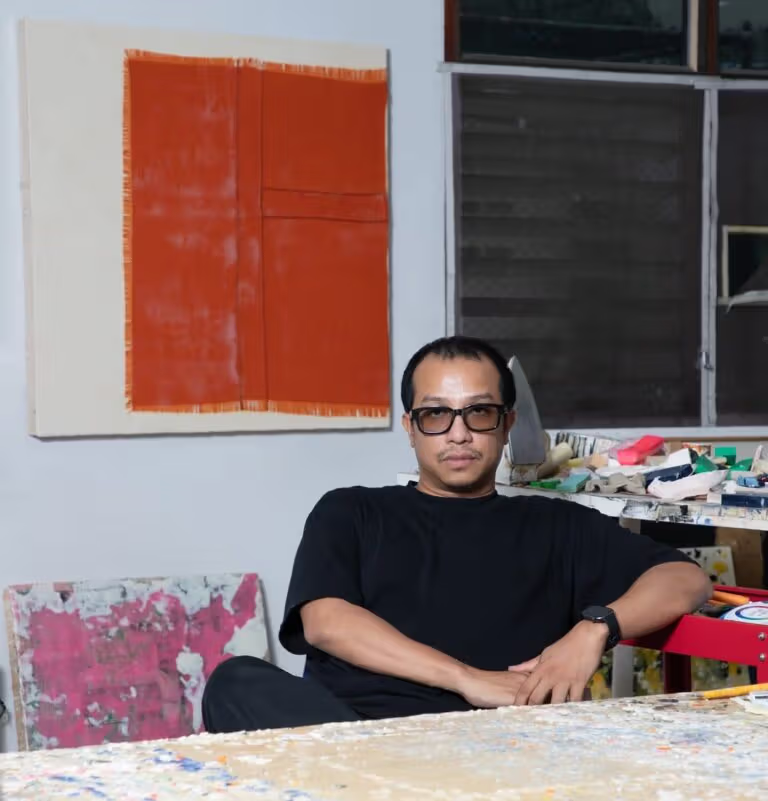
Born in Korat in 1987, Tada trained in photography at Pohchang Academy and now lives and works in Bangkok. Photography and moving images were important starting points for his practice. His “first painting exhibition” therefore does not mean his first solo exhibition or an artistic debut. In the official artist portrait, he sits in a working environment with paint marks on the table and artworks and tools nearby. It provides background on the maker, rather than a complete view of this exhibition’s installation.
Tada Hengsapkul sits among artworks and tools, behind a table marked with paint.
How long does it run, and when can you visit?
The foundation’s programme spans roughly six months and also anticipates encaustic workshops, music events and talks, with individual dates and participation details to be announced. Anyone hoping to combine an event with a gallery visit should check the current programme instead of expecting a workshop every day. For visitors who simply want to look at the work, connecting the material, the lotus imagery and the exhibition’s question about the commodification of faith already provides a practical route into it.
100 Tonson Foundation is at 100 Soi Tonson, Ploenchit Road, Lumpini, Pathumwan. Its current official hours are Thursday and Friday, 10am–6pm, and Saturday and Sunday, 11am–7pm. One approach is from Exit 1 of BTS Chit Lom, continuing into Soi Tonson. Consult the official exhibition page for the full programme and future events; workshop times and fees that have not been announced are not included in this visit plan.